
Whitehat Hacker Recovers $1.5M in DeFi’s First Major 2025 Breach

Hackers stole $2.5M from DeFi platform Moby, but whitehat Tony Ke recovered $1.5M using the hacker’s own mistake.


This year’s first big crypto hack really packed a punch when hackers siphoned off $2.5 million from Moby, a DeFi options platform on the Arbitrum network. A hacker was able to exploit a proxy contract with a leaked private key and managed to enable an emergency withdrawal function that grabbed assets such as 207 WETH and 3.7 WBTC. But wait-this story gets wild.

Enter Tony Ke, a self-proclaimed “noob engineer” and MEV researcher at Solayer Labs/Fuzzland, who swooped in like a crypto superhero. Ke’s MEV bot spotted a loophole in the hacker’s contract, which the attacker left unsecured after exploiting Moby’s private key. Ke seized the opportunity, executing a counter-hack to recover $1.5 million in USDC from the thief’s contract.

The remaining $1 million in WETH and WBTC is still out there, but Moby has vowed to cover all the losses and make things right for their users.

While this drama unfolded, another crypto mishap occurred: Virtuals Protocol’s Discord server was breached after a mod’s private key was leaked, allowing hackers to spread phishing links. Fortunately, Virtuals patched things up.

The Moby hack shows how fast things can turn in crypto—high-stakes drama, whitehat heroes, and the race to recover stolen funds.

Also Read: U.S. Government Conducts Test Transfer of Silk Road Bitcoin

Ripple vs. SEC: Court Grants Request to Seal Critical Documents

Ripple scored a win after the judge approved sealing key docs in its SEC battle. XRP price rose slightly amid appeal prep.


The Ripple-SEC saga just took yet another dramatic turn, as Judge Phyllis J. Hamilton granted the seal of some pivotal court documents. This move has been in the pipeline, pushed by Ripple CEO Brad Garlinghouse and the SEC, in a bid to keep sensitive information close to their chests as the case heats up for appeals. Sealed documents will include exhibits tied to summary judgments and expert testimonies.

Both Ripple and the SEC made solid arguments under the Ninth Circuit’s “compelling reasons” rule, which balances privacy with public access. Ripple asked to seal eight exhibits related to their wins and 56 opposing the SEC’s motions. Plus, the SEC wanted parts of its expert testimony hidden. The judge called it fair, especially with the stakes so high.

Ripple snagging this small victory keeps the momentum on their side. Remember when Ripple won the major ruling that XRP isn’t inherently a security? That was a huge L for the SEC. But the SEC isn’t backing down, with a big appeal in the works that could reshape crypto regulation.

XRP prices climbed 1.7% and hit $2.31, plus analysts are also predicting more movement soon. And those wild rumors about Trump meeting Garlinghouse? If true, it might flip the script in Ripple’s favor. Stay tuned—this case is a game-changer for crypto.

Also Read: Thailand Police Bust Bitcoin Mining Operation Stealing Millions in Power

U.S. Government Conducts Test Transfer of Silk Road Bitcoin
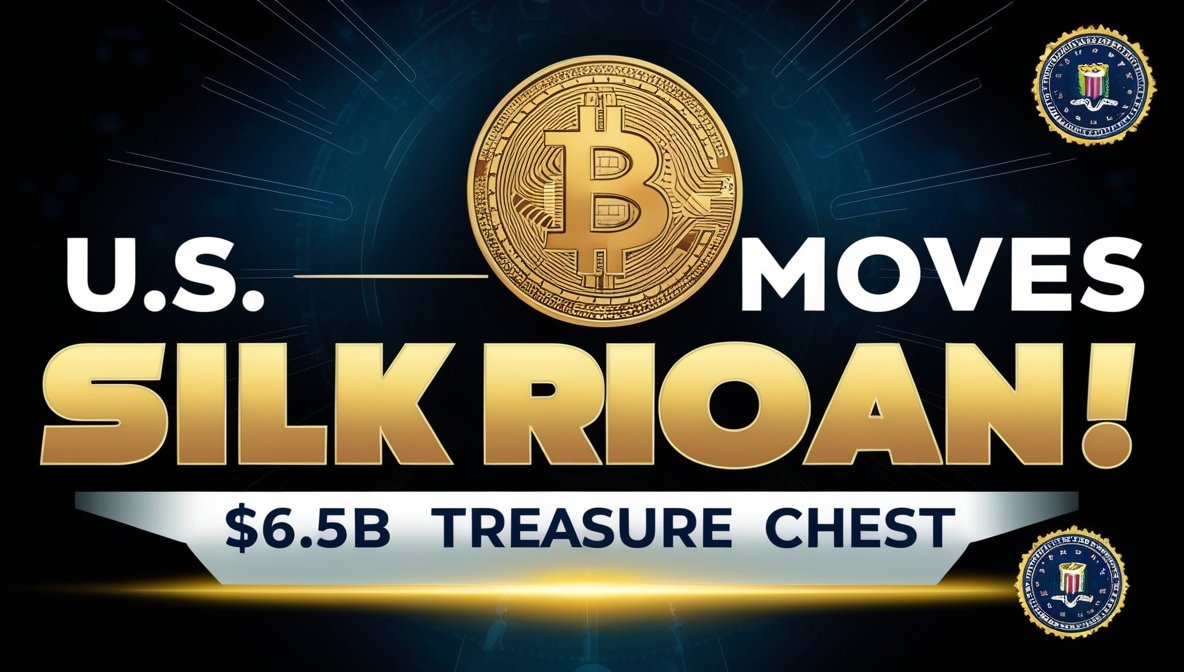
The U.S. government tested moving seized Silk Road Bitcoin (0.00000546 BTC) ahead of selling 69,000 BTC worth $6.5B.


The U.S. government just made a tiny Bitcoin move from the FBI-controlled wallet holding Silk Road’s seized stash. On January 10 of this year, a small test transaction of 0.00000546 BTC (around $0.51) popped up on the blockchain, hinting at prep work for bigger moves. It’s basically the government dipping its toes in the water to ensure smooth transfers later.

This wallet isn’t just any wallet—it’s a treasure chest of about 69,000 Bitcoins, valued at a jaw-dropping $6.5 billion. These were confiscated from someone who snagged them from the infamous Silk Road marketplace, a dark web hub for illegal deals back in the day.

Why does this matter? Well, the FBI has the green light to offload these coins. And this test suggests the big sell-off could be just around the corner. When such a massive amount of Bitcoin enters the market, it’s bound to stir things up, potentially shaking Bitcoin’s price.

For now, though, the move is more about logistics than market impact. But keep an eye out—when Uncle Sam starts cashing out billions in Bitcoin, it’s going to be a headline-grabber. For the crypto space, this is a major flex and a moment to watch.

Also Read: 70-Year-Old Woman Loses Crypto Fortune in LA Wildfire

70-Year-Old Woman Loses Crypto Fortune in LA Wildfire

It has also been one of those really sad twists of fate when a 70-year-old lady from Los Angeles lost her cryptocurrency savings to the ravaging Southern California Wildfires. This is according to the story given by the nephew on X, earlier known as Twitter, where, even though the lady’s Bitcoin wallet was intact, the private key necessary for gaining access to the wallet got lost during the fire.

She had been storing the private key to unlock them on paper, tucked away somewhere in her home-with no backup and no recovery method. Without it, her crypto-she is predominantly holding Bitcoin-was essentially gone forever.

YOU MIGHT ALSO LIKE: Thailand Police Bust Bitcoin Mining Operation Stealing Millions in Power

That loss is another, even more significant, spark for online conversations about cryptocurrency storage security and redundancy. These incidents have experts again encouraging people to consider options ranging from metal backups for private keys and multi-signature wallets to even newer, seedless wallet technologies that afford added layers of security.

The story painfully reminds us of how digital assets can become so vulnerable when natural disasters strike. With the fires still burning across areas such as Malibu and Pasadena, many more are likely to have sustained similar losses, both in their homes and their crypto investments.

YOU MIGHT ALSO LIKE: $760 Million in Bitcoin Lost Forever in UK Landfill

While technology brings great freedom to finances, this incident is a strong reminder of how important planning for the unexpected is.

Thailand Police Bust Bitcoin Mining Operation Stealing Millions in Power

Thailand’s police have raided a large-scale illegal Bitcoin mining facility in Chon Buri, seizing 996 rigs of computer miners and finding the operation siphoning millions of dollars’ worth of electricity. The joint operation by the Crime Suppression Division and Provincial Electricity Authority targeted a facility operated by JIT Co. on January 8.

Authorities said JIT Co tampered with power meters to run the mining rigs without detection, operating on stolen electricity at night and switching to legal power during the day. While the site had solar panels installed, they were not connected to the mining equipment. The stolen electricity is estimated to have cost the state over $2.88 million (hundreds of millions of baht).

YOU MIGHT ALSO LIKE: $760 Million in Bitcoin Lost Forever in UK Landfill

Mining Bitcoin in Thailand is notoriously expensive, with the cost to mine a single Bitcoin coming in at around $17,930 — 825 times the average monthly electricity bill for a Thai household.

Although the Bangkok Post identified JIT Co. as being linked to the operation, investigators have yet to name suspects, adding that arrest warrants are sought, sources said.

There have been various reports of crypto mining crimes across Southeast Asia. Malaysian authorities estimated the value of the electricity used by crypto mining companies to be about $723 million from 2018 until 2023 – equipment seized by the authorities there usually faces a crushing end.

YOU MIGHT ALSO LIKE: Bitcoin Freedom Act: A Step Toward Payment Flexibility in Oklahoma

Meanwhile, Thailand is going another direction. The country tests crypto payments as a pilot in Phuket in hopes of luring back foreign tourists. Former PM Thaksin Shinawatra recently called on the government to open up to cryptocurrency if it wanted to be globally competitive.

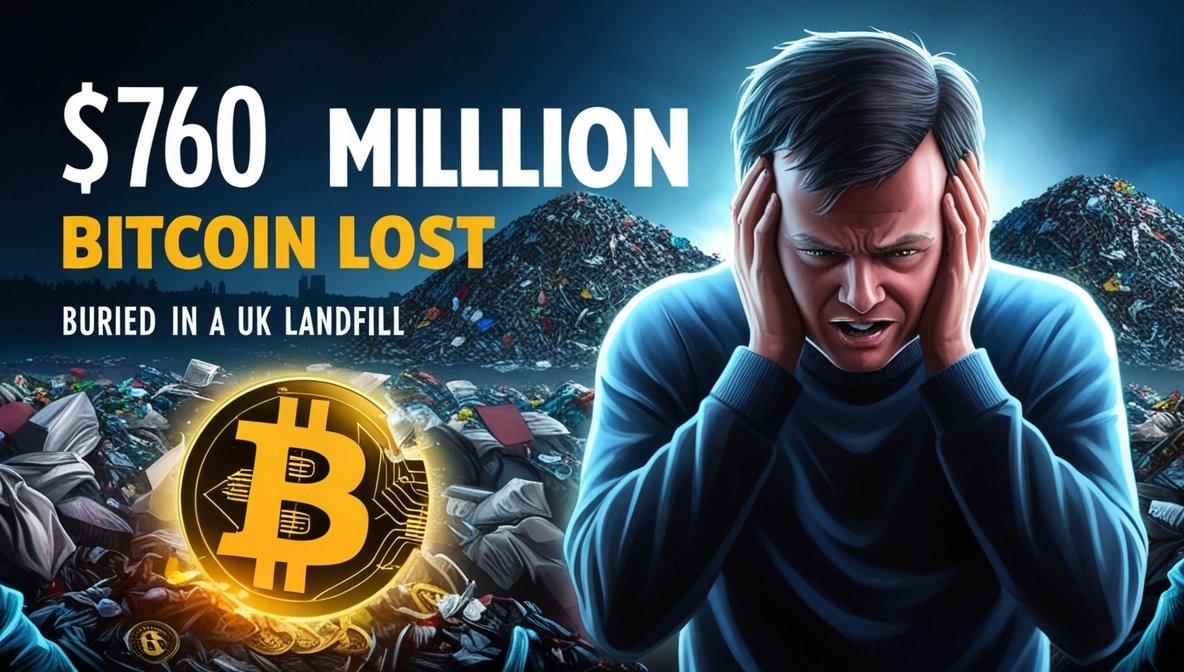
$760 Million in Bitcoin Lost Forever in UK Landfill

A UK court has rejected a decade-long quest by a British man to recover a hard drive containing Bitcoin worth over $750 million, in which he asked to excavate a Newport landfill.

James Howells, an IT worker who became a Bitcoin millionaire on paper, accidentally threw it away during one of his office clean-ups in 2013. It was worth a couple of thousand dollars at the time. Fast-forward to today, and that same drive boasts an eye-watering $760 million in value of digital gold, now buried beneath tons of waste.

YOU MIGHT ALSO LIKE: Bitcoin Freedom Act: A Step Toward Payment Flexibility in Oklahoma

Howells suggested a hazardous, $12.3 million excavation plan; he promised that 10% of the funds recovered would be given to the local council and community. However, due to considerable ecological hazards-the possible digging up of the landfill, ecological damage, and breach of laws on the environment-the Newport Council refused to permit the excavation.

Undeterred and frustrated, Howells took the matter to court, requesting either access to the landfill or $608 million in damages. The council said it was right because the hard drive, upon being thrown away, became its property. The court, emphasizing environmental concerns and the rules of ownership for a landfill, sided with them.

YOU MIGHT ALSO LIKE: User Faces $208k Fee for Solana Transaction Shocker

But even then, that did not deter Howells, and he is considering creative options of tokenizing the lost Bitcoin into some new cryptocurrency. The treasure hunt isn’t over just yet for him.

Bitcoin Freedom Act: A Step Toward Payment Flexibility in Oklahoma

Oklahoma State Senator Dusty Deevers has filed the “Bitcoin Freedom Act” in order to make the nascent technology applicable to everyday life. The would-be law, SB 325, if enacted would allow workers in Oklahoma to get paid in Bitcoin and permit businesses to take Bitcoin for payment by customers. Participation would be completely voluntary, making it meet any definitions of free-market principles.

This is a growing trend in the U.S., as states consider the potential of decentralized currencies such as Bitcoin. The bill could mean a way to greater financial flexibility and a signal of Oklahoma’s readiness to adopt modern forms of paying for goods and services.

YOU MIGHT ALSO LIKE: User Faces $208k Fee for Solana Transaction Shocker

Adding a twist to the crypto conversation, the recent victory of Donald Trump brought a whole new angle into discussion. Though Trump personally has been a vocal critic of Bitcoin, his last year campaign proved very open toward innovative financial technologies. This may affect federal policies related to cryptocurrency and probably speed up mainstream Bitcoin adoption once Trump assumes office in 2025.

YOU MIGHT ALSO LIKE: Mark Cuban Chooses Bitcoin Over Gold as an Economic Hedge

As Oklahoma’s state legislature heads into its next session this coming February 2025, the nation will be watching. Should it pass, the Bitcoin Freedom Act could set a national model on how states balance innovation with regulation, further advancing the role of cryptocurrency in the evolving financial landscape.

Mark Cuban Chooses Bitcoin Over Gold as an Economic Hedge

Billionaire entrepreneur and owner of the Dallas Mavericks Mark Cuban once again has come up with a strong endorsement for Bitcoin. While speaking of its value, he confidently stated, “I think it (BTC) has more value,” and made it crystal clear he’d choose Bitcoin over gold during an economic crisis.

That created a new, emergent view: Bitcoin as “digital gold,” or, differently said, the renewed version of this very old metal. Unlike gold-traditional refuge during turbulent times-Bitcoin boasts some extraordinary advantages: it is portable and divisible, and it can be transmitted across borders without storage and physical movement.

YOU MIGHT ALSO LIKE: Zypto Integrates Pi Network Wallet for Enhanced User Experience

Cuban’s optimism about Bitcoin is not new, though. During the year 2024, he expressed and doubled down on his support for both Bitcoin and Ethereum and strongly and very firmly made other investors aware and warned them off meme coins he called “a game of musical chairs.”

YOU MIGHT ALSO LIKE: Andrew Tate Launches BRUV Party with Bitcoin Agenda

With more investors looking for alternatives to traditional assets, Cuban’s endorsement points to a way where Bitcoin can reshape the future of finance. Because of its decentralized nature and growing adoption, Bitcoin is rapidly emerging as a cornerstone of a digital and resilient economy.

Bank of America Adopts XRP for All Internal Transactions

Bank of America might be using XRP for all internal transactions, signaling a major crypto-banking collab. Future = 🔥!

Ripple’s XRP is trending again, and this time, the buzz is big. David Stryzewski, CEO of Sound Planning Group, spilled on FOX Business that Bank of America (BoA) might be using XRP for all internal transactions. If true, this could be a massive W for crypto adoption in traditional banking.

BoA and Ripple go way back, being part of RippleNet for years. This global payment network uses blockchain to make international transfers lightning-fast and super secure. While BoA hasn’t officially confirmed the XRP claims, they’ve filed 83 patents related to Ripple’s blockchain tech. Translation: they’re serious about this collab.

Fun fact—BoA’s been into blockchain since 2017, with patents for a real-time settlement system tied to Ripple’s ledger tech. Now, XRP could be their secret sauce for streamlining operations.

Stryzewski didn’t hold back, calling XRP the tech that’ll “run everything” in global finance for years. Ripple’s also dropping big moves, like their new stablecoin RLUSD, proving they’re not slowing down despite legal drama.

If true, this could shake up the banking world and make other institutions rethink crypto. BoA + Ripple = a crypto-powered banking glow-up.

Also Read: Thailand Pilots Crypto Payments for Tourists in Phuket

Thailand Pilots Crypto Payments for Tourists in Phuket

The new bold idea being tried by Thailand: letting tourists pay with cryptocurrency while in Phuket. Led by Deputy Prime Minister Pichai Chunhavajira, this initiative is being taken to make the life of travelers a bit easier while trying to keep the country ahead in this competitive game.

This program is designed such that it still has to follow current Thai law, so no new regulations are required. Tourists will verify their identities through local crypto exchanges, and a system will automatically convert Bitcoin into Thai baht for merchants. “We won’t do anything illegal,” Pichai reassured this while doing a seminar which was organized by the Marketing Association of Thailand.

YOU MIGHT ALSO LIKE: Andrew Tate Launches BRUV Party with Bitcoin Agenda

Phuket is an ideal place for this experiment because it is a popular tourist destination. It already has a sizeable population of foreign nationals, including refugees from the Russia-Ukraine war. According to Pichai, Bitcoin might be used for large transactions, such as buying real estate, to make things easier for them.

Crypto giant Binance, too, is making big bets on Thailand, praising its friendly regulations as it pushes to make crypto mainstream. But the safety concerns linger. Just this month, a Russian man in Phuket was violently robbed of $20,000 in a crypto-related dispute-a face to the risks tied to digital assets.

YOU MIGHT ALSO LIKE: Ripple’s RLUSD Stablecoin Sees 2,000% Jump in Trading Volume

Still, the crypto scene keeps developing in Thailand. Even now, a small town already makes everyday purchases in Bitcoin Lightning in the province of Kalasin-a sure-fire indicator that the future of crypto is bright in Thailand.

Exit mobile version