Trivago Teams Up with Travala to Enable Crypto Payments for Travel

Trivago partners with Travala, letting users book hotels with crypto. Crypto travel demand is booming, making blockchain adoption more mainstream!

Big news for travel and crypto lovers—Trivago just partnered with Travala, bringing crypto payments to hotel bookings! This means millions of Trivago users can now find, compare, and book over 2.2 million Travala properties worldwide and pay with 100+ cryptocurrencies, including Bitcoin, Ethereum, and AVA.


Timo Itterbeck, Trivago’s Head of Account Management, made it clear that their mission has always been to give travelers the most choice, and adding crypto with Travala.com definitely does that. The NASDAQ-listed Trivaga operates in more than 190 countries with upwards of 3 million monthly active users who would now be directly exposed to cryptocurrencies.

Meanwhile, Travala is killing it: sales last year reached $100M, doubling from last year, while a full 78% of its bookings were paid in Bitcoin-a clear indicator that crypto travel is trending.

Travala CEO Juan Otero sees this as a huge step toward mainstream crypto adoption. He says real-world use cases like travel legitimize crypto and make it more practical for everyday transactions.

Experts agree—mass adoption needs real-world blockchain applications. The Open Network Foundation’s Justin Hyun believes user-friendly apps like Telegram Mini Apps could be the Trojan Horse that brings in the next 500M crypto users.

Also Read: WLFI and Crypto Holdings Plunge as Market Crash Hits, Despite Trump’s Backing

Trivago and Travala Link Up: Crypto Payments Now a Travel Option

In a nutshell, Trivago just did a big thing in the travel world: It partnered with Travala, a Web3 travel booking platform, which allows users to book upwards of 2.2 million properties using crypto. That is huge for ease of spending Bitcoin, Ethereum, and other forms of digital currencies on actual travels.

Trivago, one of the biggest hotel search engines, is now giving its users access to Travala’s crypto-powered booking system. If someone picks a Travala-listed hotel on Trivago, they’ll be redirected to complete their booking and pay with one of over 100 cryptocurrencies. This is a huge step in making crypto a legit way to pay for everyday things, not just an investment or a speculative asset.

YOU MIGHT ALSO LIKE: Crypto Market Crash: Trump’s Tariffs or Overheated Top Signals?

Trivago has millions of users, so this partnership is exposing tons of people to crypto payments in a super practical way. Travala’s CEO, Juan Otero, pointed out that this isn’t just about bookings—it’s about pushing crypto adoption forward. The fact that 78% of Travala’s 2024 bookings were paid in crypto shows that people are already on board with the idea.

YOU MIGHT ALSO LIKE: February’s Top 5 Cryptos to Watch: XRP, Solana, Trump Coin, Dogecoin, and Pi Network

Experts say mainstream crypto adoption depends on real-world use cases like this. Justin Hyun from The Open Network Foundation believes easy-to-use applications, like Telegram Mini Apps, could be the key to getting 500 million more users into crypto. If more companies follow Trivago’s lead, using digital assets could become just as normal as swiping a credit card.

Pectra Hard Fork Set to Double Layer-2 Throughput, Says Vitalik

Ethereum’s Pectra upgrade drops in March, doubling Layer-2 capacity, cutting fees, boosting staking, and making wallets smoother. ETH already pumping!

Ethereum’s next major upgrade, the Pectra hard fork, is dropping in March 2024, and it’s bringing some serious upgrades. Vitalik Buterin just confirmed that this update will double Layer-2 capacity by increasing the blob target from 3 to 6—meaning faster transactions and lower fees.

If you’re wondering, blobs are huge data chunks introduced in the Dencun hard fork last year. They help Layer-2 networks handle more transactions without blowing up gas fees. With Pectra, Ethereum will scale even further, making it more efficient and affordable to use.

Originally, Pectra was packed with 20 upgrades, but devs split it into two parts for a smoother launch. Besides boosting blob space, it’ll also increase validator staking limits and improve wallet experiences.

Meanwhile, Ethereum’s gas limit is back in the spotlight. Some think raising it will lower costs, while others worry about network stability.

Vitalik also floated an idea-let stakers vote on future blob capacity instead of relying on hard forks. That would make Ethereum more flexible, future-proof.

Market’s already reacting-ETH up 10% in a day and swinging back hard. The hype for Pectra is real, and Ethereum’s future is looking lit!

Also Read: Crypto Market Crash: Trump’s Tariffs or Overheated Top Signals?

WLFI and Crypto Holdings Plunge as Market Crash Hits, Despite Trump’s Backing

Trump-backed WLFI lost $51.77M as crypto crashed, while his memecoin tanked 64%, wiping billions—analysts blame tariffs and market hype.


World Liberty Financial, Inc. (WLFI), the crypto investment firm endorsed by Donald Trump, was among those that suffered most from the market crash. Between January 19 and 31, WLFI had invested $242.77 million in several cryptocurrencies, the value of which decreased by 21%. That means a loss of $51.77 million to the firm, with major holdings such as Ethereum (ETH) and Wrapped Bitcoin (WBTC) being badly affected.ETH, the company’s largest investment, was down 24.45% and shed $36.67 million, while WBTC suffered a 12.07% decline that took more than $8.07 million off its value. Ethena, with a plunge of 43.72%, was the worst performer and burned more than $2 million. Other big losers were TRON (TRX), AAVE, and Chainlink’s LINK.

Not even Trump’s personal crypto portfolio could avoid the bloodbath of carnage: his very memecoin, once heaping $55 billion onto the net worth he had, fell 64% since January 20, pulling $35 billion off its market value. He gave crypto too, after falling below the $5-million mark-while most of that is made out of memecoins.

Analysts are pointing fingers at the newly imposed tariffs by Trump, which could have contributed to the market downturn and wiped out almost $500 billion in value. According to some, the crash was inevitable due to an overheated market, but the tariffs might have accelerated the collapse.

Also Read: Taiwan Just Banned DeepSeek—Here’s Why

Russia Cracks Down on Crypto Miners – Registration Now Mandatory

Brief Summary: Russia is subjecting crypto miners to the requirement of registering their installations until November 1, 2025, in relation to increased government control. The financial watchdog Rosfinmonitoring will monitor mining activities using a centralized database. Mining without registration will be prohibited, and reporting to taxes will be more strictly regulated.

It was until November 1, 2025, when the regulation of crypto mining in Russia finally went all-in and became illegal, without registration. Rosfinmonitoring introduces a database that follows the operation of every mining rig so that every operation is on the government’s radar.This comes months after an earlier ban issued in six regions over concerns of power shortages, including parts of occupied Ukraine. This ban is supposed to be in order for the next 6 years, till the month of March, to make sure that the mining activities get streamlined in a proper way.

YOU MIGHT ALSO LIKE: Gang Token Drama: Allegations, Mockery, and a Market Crash

With that in mind, Russia’s Federal Taxation Service, FNS, has set up an online platform where miners will be forced to report proceeds using a qualified electronic signature. Taxes are fixed, too. Miners that earn up to 2.4 million rubles, which is about $23,976, will face a tax rate of 13%, while owners with higher revenues will pay 15% taxes.. Reports on income should now be filed on a monthly basis, and it is impossible to dodge taxes any longer.

What Russia is trying to say with this law is that miners can’t continue acting in the shadow anymore. A miner has either to play according to the law or face some serious legal repercussions.

YOU MIGHT ALSO LIKE: Is XRP Heading for a Price Correction in February?

Taiwan Just Banned DeepSeek—Here’s Why

Overview: Taiwan has officially banned its government agencies from using DeepSeek, a Chinese AI startup, citing major security risks. The Ministry of Digital Affairs claims DeepSeek’s AI services could lead to data leaks and potential cyber threats. Other countries, including Italy, South Korea, and France, are also keeping a close eye on DeepSeek’s data handling practices.

Taiwan is doubling down on cybersecurity, especially when it comes to Chinese tech. The government has already banned risky communication and IT products for 6 years now, but now, AI is the latest battleground. DeepSeek’s new chatbot, R1, has been making waves, claiming to be just as powerful as top US AI models but at half the cost.That is nice, but Taiwan is not buying it. Concerned by the cross-border data transfer and the espionage threat it poses, the officials take no chances.

YOU MIGHT ALSO LIKE: Japan’s Banks Are Adopting Ripple Tech, But Will They Actually Use XRP?

It isn’t just Taiwan that’s raising an alarm: from South Korea, Ireland to even Italy, regulators of personal data protection, in one form or another, have raised various questions regarding the policy on DeepSeek data. Italy went a step further this week, straight-up banning DeepSeek from processing Italian user data and removing its AI from the App Store and Google Play. France and Australia are also looking into the issue. With AI regulation heating up globally, this could be the start of even stricter crackdowns on Chinese tech.

YOU MIGHT ALSO LIKE: Crypto Tax Crackdown: India Slaps 70% Penalty on Unreported Gains

Binance Pay Teams Up with xMoney to Bring Crypto Payments to 20K+ European Businesses

Wrap-up: Crypto payments finally catch a big break in Europe. This cooperation between Binance Pay and xMoney will give users the power to splash crypto on everything-from bespoke shopping, travel, even to public services by more than 20,000 different enterprises across diverse industries-make crypto seamless, cheaper, and mainstream.

It basically means that users of Binance Pay can spend their crypto on everything, from high-end brands to online stores, even government services in places such as Lugano and Liechtenstein. Over the last year, xMoney has been scaling up its merchant network, meaning that more and more businesses could receive digital currencies without the usually painful process fraught with high commissions and slow speeds.

YOU MIGHT ALSO LIKE: Kraken to Drop USDT & 4 More Stablecoins in Europe—Here’s Why

For Jonathan Lim, Global Head of Binance Pay, this will be a game-changer, with crypto payments growing bigger in everyday life. The CEO of xMoney, Greg Siourounis, on his part, said the move bridges traditional finance with blockchain to make crypto payments further approachable-and trusted.

Numbers say it all: from 8,900 two years ago, to more than 12,000 in just last year, the explosive growth of the Binance Pay merchant network will now be over 32,000 companies across the globe. The increased crypto adoption translates into easier-to-use digital assets for everyday spending thanks to such partnerships and ultimately proves that crypto is for living, not just investing.

YOU MIGHT ALSO LIKE: Japan’s Banks Are Adopting Ripple Tech, But Will They Actually Use XRP?

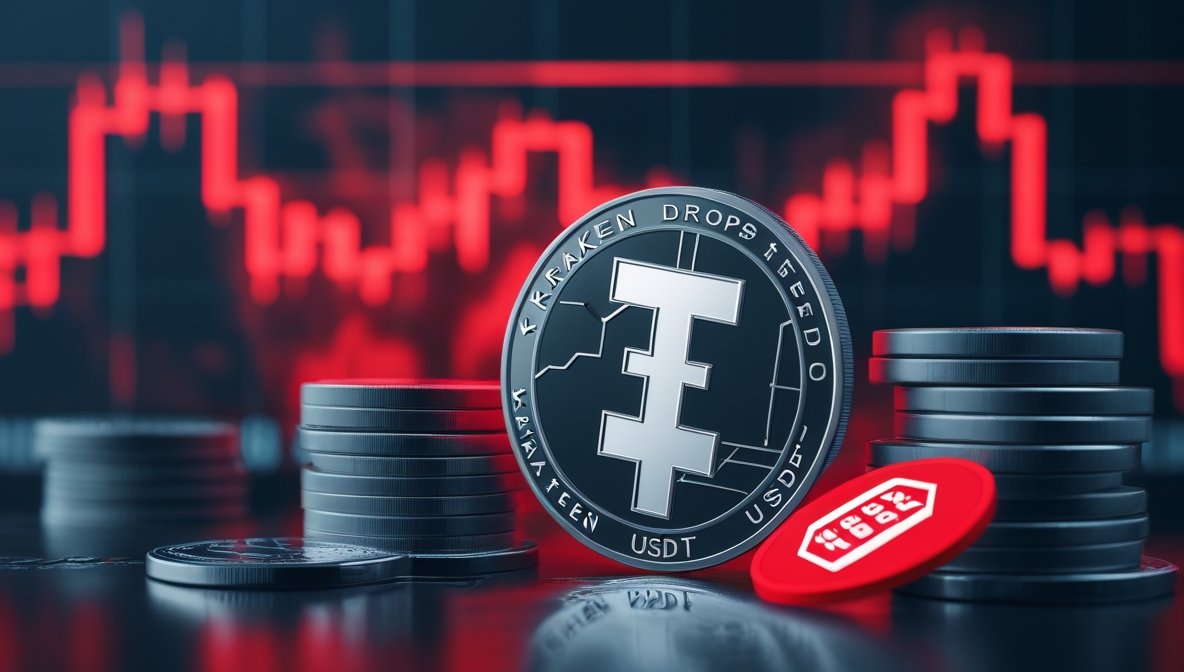
Kraken to Drop USDT & 4 More Stablecoins in Europe—Here’s Why

Summary: Kraken is officially pulling the plug on Tether (USDT) and four other stablecoins in Europe, thanks to strict new crypto rules under MiCA. The delisting will happen in phases, with a final deadline of March 31 of this year. Users in the EEA region (which includes Germany, France, and Spain) will have time to swap their assets before they get automatically converted into a compliant alternative.

Kraken isn’t just dropping USDT—it’s also saying goodbye to PayPal USD (PYUSD), Euro Tether (EURT), TrueUSD (TUSD), and TerraClassicUSD (UST). The exchange says it’s all about staying on the right side of European regulations, which are cracking down hard on stablecoins. To help users adjust, Kraken has laid out a clear timeline: margin trading will switch to “reduce-only” mode on February 13, meaning no new positions can be opened. By the end of February, users will only be able to sell, and forced liquidations for margin positions will hit during March.

YOU MIGHT ALSO LIKE: Gang Token Drama: Allegations, Mockery, and a Market Crash

By the end of March, spot trading will be fully shut down, and after March 31, any leftover stablecoin balances will be auto-converted into a compliant alternative. Kraken is making it clear—this move only affects users in the EEA. Meanwhile, other big exchanges like Coinbase and Crypto.com are making similar moves, signaling a major shift in how stablecoins will operate in Europe.

YOU MIGHT ALSO LIKE: Is XRP Heading for a Price Correction in February?

Japan’s Banks Are Adopting Ripple Tech, But Will They Actually Use XRP?

Summary: Japan’s SBI Remit and SBI Shinsei Bank collaborate in upgrading cross-border payments, leaving some elbow room in the process that could be curbed with the help of Ripple’s technology. Even though they have used RippleNet for faster settlement, the million-dollar question is now whether they are integrating XRP or future Stablecoin RLUSD from Ripple.

SBI Remit has, for the last decade, been right at the forefront of Japan’s remittance space, especially where foreign residents seek to send money back home. They have used Ripple’s blockchain already, enabling smoother and less expensive transfers. The most recent deal with SBI Shinsei Bank could see them expand even further-a potential development that might extend Ripple’s ecosystem into more traditional banking services.

YOU MIGHT ALSO LIKE: Crypto Tax Crackdown: India Slaps 70% Penalty on Unreported Gains

Another key angle would be that SBI Shinsei Bank participates in Project Agorá, dedicated to the exploration of CBDCs and blockchain-based cross-border payments. This directly fits into the plans of Ripple to extend its technology to the mainstream financial world, making XRP or RLUSD one of the most prospective live use cases.

Japan is still catching up when it comes to fintech and banking collaborations, but this move sets a precedent. SBI Remit and SBI Shinsei Bank are paving the way for Ripple-powered solutions in Japan’s financial sector, and if they go all in on XRP or RLUSD, it could be a game-changer for crypto-backed remittances.

YOU MIGHT ALSO LIKE: Gang Token Drama: Allegations, Mockery, and a Market Crash

Crypto Tax Crackdown: India Slaps 70% Penalty on Unreported Gains

Overview: The Indian government has begun clamping down on crypto traders by imposing an unbelievable 70% tax penalty for unreported crypto gains. Under the new stringent rule, which is included under Section 158B of the Income Tax Act, comes the 2025 Union Budget aimed at tightening reins over the explosively growing crypto market.Investors who have failed to disclose their gains might well face severe fines, as the government looks back four years for undeclared gains. Crypto, for example, is now classified as a Virtual Digital Asset, or VDA, thereby making it akin to cash, gold, and jewelry for tax purposes in India.

Crypto exchanges and financial platforms are required to report transactions, making it tough to fly under the radar. Last year, the government unearthed $97 million in unpaid Goods and Services Tax from crypto exchanges, putting all major scrutiny on platforms like Binance and Bybit-forcing Bybit to shut down operations in India altogether. It’s not alone in this.

YOU MIGHT ALSO LIKE: Gang Token Drama: Allegations, Mockery, and a Market Crash

The U.S. IRS, too, is raising its crypto tax game, imposing more stringent reporting requirements starting in 2025. Some crypto groups even sue the IRS on grounds of unconstitutionality of the new regulations. As governments around the world increase their stranglehold on digital assets, crypto traders will have to keep their wits about them-and be compliant-unless they want to pay the price.

Exit mobile version