Binance Brings Back USD Deposits and Withdrawals After 18 Months

Almost a year and a half afterwards, Binance.US eventually reopened USD deposits and withdrawals, a big step up for the exchange.

In a recent blog post update, Binance.US stated that customers will once more be able to deposit and withdraw USD through bank transfers (ACH). The feature will be available to all worthy customers within the next several days. To go along with this, the website is also returning fee-less ACH transactions, crypto staking, OTC trading, and a feature which enables customers to turn small cryptocurrency balances into usable cash.

YOU MIGHT ALSO LIKE: Dave Portnoy Banks $258K on GREED Memecoin, Unveils GREED2 for Round Two

Interim CEO Norman Reed called the move a major milestone. “We are thrilled to restore fiat rails as we gain momentum in the new year,” he said, adding that this moment is one of the most unexpected comebacks for Binance.US since its struggles two years ago.

The exchange halted USD transactions in June last year after the SEC sued Binance and its founder, Changpeng “CZ” Zhao, accusing them of breaking securities laws and mishandling billions in customer funds. By October, Binance.US had stopped accepting USD entirely.

And then in November, the company resolved with U.S. regulators in a record-breaking $4.3 billion agreement, one of the largest in history. Under the agreement, Binance committed to adhering to regulatory requirements.

YOU MIGHT ALSO LIKE: Is 2025 the Year of Altseason? Outset PR’s Founder Reveals How Crypto Projects Can Benefit

Today, with regulations evolving and maybe a shift of government policy later this year, Binance.US is restarting full fiat services, possibly a turning point for crypto in the United States.
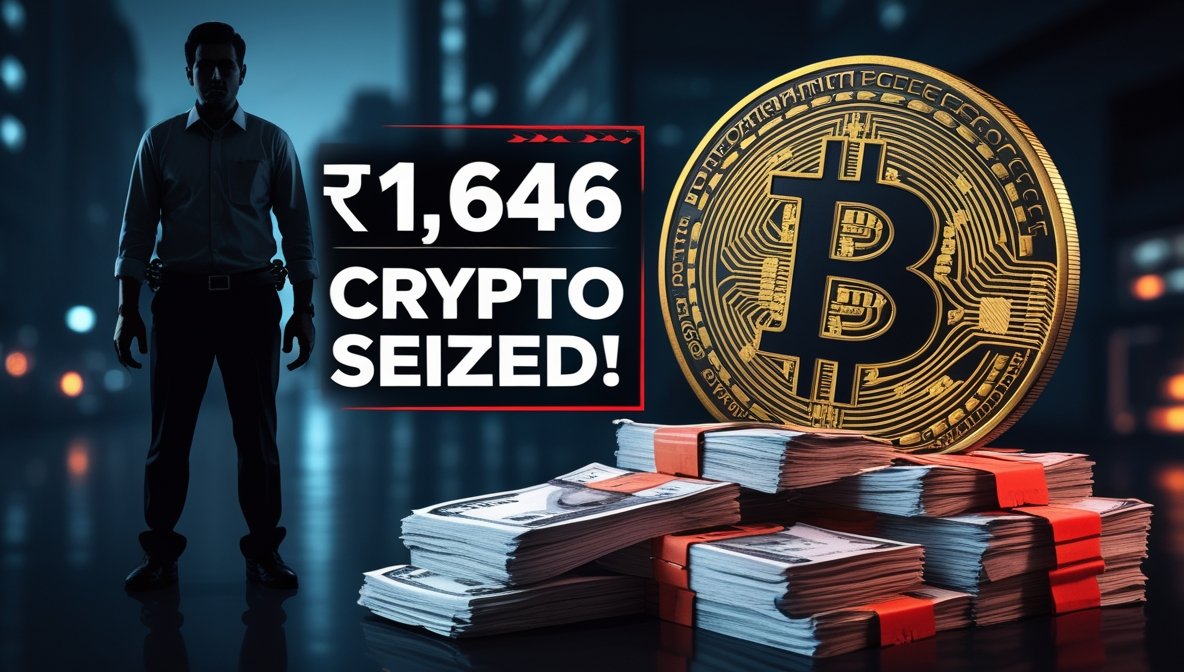
ED Seizes ₹1,646 Crore in Crypto from Ahmedabad Man Tied to BitConnect Scam

Summary: Indian officials have confiscated ₹1,646 crore ($197 million) of cryptocurrency from an Ahmedabad resident connected to the BitConnect Ponzi scheme. The Enforcement Directorate (ED) also seized cash, a luxury sports utility vehicle, and digital devices as part of its ongoing investigation.

India’s Enforcement Directorate (ED) has conducted one of its biggest crypto seizures, freezing ₹1,646 crore ($197 million) in digital assets in relation to the BitConnect scam. Besides crypto, authorities also froze ₹13.50 lakh in cash, an SUV, and various digital devices in their raid in Ahmedabad.

YOU MIGHT ALSO LIKE: Ethereum Sees $1.1B Stablecoin Surge as Solana Loses Ground

BitConnect, a well-known international Ponzi scheme established by Satish Kumbhani, attracted investors with a guarantee of 40% returns every month through a so-called “volatility software trading bot.” Investors sent in Bitcoin (BTC), which was exchanged for BitConnect’s own token BCC. The Ponzi scheme also used multi-level marketing (MLM) strategies, in which users were compensated for recruiting new investors.

YOU MIGHT ALSO LIKE: Hong Kong Asia Holdings’ Stock Explodes 93% After Unexpected Bitcoin Purchase

After operating between 2016 and 2018, BitConnect fell apart after regulators stepped in, causing investors across the globe to lose billions. The ED has been probing the case since 2018, earlier seizing ₹489 crore worth of assets. Officials have also confirmed foreign involvement, and Kumbhani is still under US federal investigation.

Geth Calls on Ethereum Validators to Upgrade to Latest Version for Network Stability

Geth released an emergency update—validators running v1.15.1 need to upgrade as soon as possible to v1.15.2 or lose block rewards and fee!


Ethereum validators, pay attention—Geth recently released an emergency update! If you’re currently on v1.15.1, you must upgrade to v1.15.2 as soon as possible, or you’ll be missing out on block rewards and transaction fees!.

Why? Turns out v1.15.1 had a critical bug messing with block creation on the Ethereum mainnet. This means validators miss slots, lose rewards, and basically get rugged by their own setup. Not ideal.

The fix? Geth pushed v1.15.2 on February 17, this year, patching the issue and bringing back Discv5 and DNS peer discovery protocols, which help nodes stay connected and functional. These were accidentally disabled in v1.14.9, making this update even more crucial.

Geth devs are not kidding at all. They are seriously saying this update is required if you need to keep your validator running and you’re sure about securing your bag. Delaying can lead to lost ETH, so do not be slow—update as soon as possible.

The whole experience is a reminder that staying updated in crypto is not all hype, it is a survival. Validators, keep your software updated, or lose out in a big way!

Also Read: Is XRP Partnering with Elon Musk to Hit $600? Fact or Fiction?

Hackers Impersonate Saudi Crown Prince, Launch Fake $KSA Memecoin

Summary: Scammers hacked an account pretending to be Saudi Arabia’s Crown Prince Mohammed bin Salman, using it to promote a fake memecoin, $KSA, and another token, $FLCN. The tweets vanished quickly, and officials confirmed the hack.

In another wild crypto scam, hackers took control of an account impersonating Saudi Crown Prince Mohammed bin Salman and used it to launch a fake Saudi Arabia Memecoin ($KSA). The tweet went out at 15:00 UTC, luring in unsuspecting investors.

YOU MIGHT ALSO LIKE: Ethereum Stablecoin Market Expands by $1.1B in Just One Week

But that wasn’t enough for the scammers. Shortly after, they promoted another token, FALCON ($FLCN), directing users to a suspicious website, FLCN.meme. The posts stirred up some hype before vanishing into thin air.

Now, the hacked account has been drained, and police confirmed that it had indeed been hacked. It was the classic crypto scam playbook: impersonate a prominent person, generate buzz, present fake coins, and disappear before the victims can figure out what happened.

YOU MIGHT ALSO LIKE: Nayib Bukele and Michael Saylor Meet in El Salvador, Discuss Bitcoin’s Future

These scams are becoming more common, preying on hype and FOMO. When you see an “official” memecoin announcement out of nowhere, pause—because more often than not, it’s another rug pull in the making.

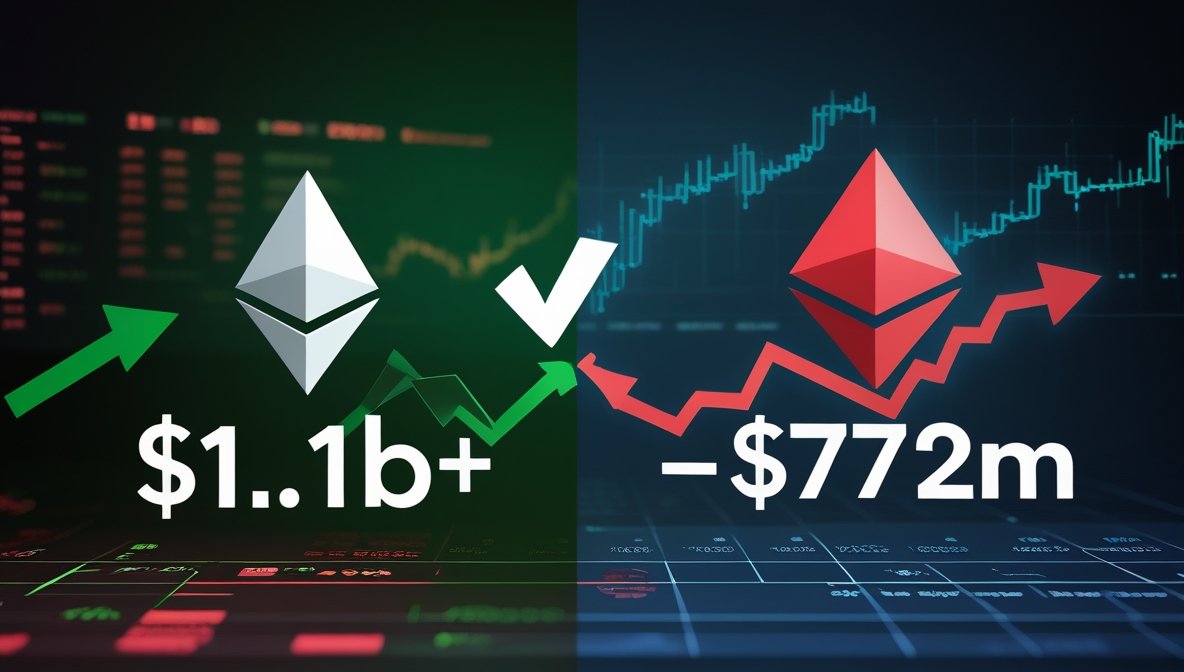
Ethereum Sees $1.1B Stablecoin Surge as Solana Loses Ground

Summary: Ethereum’s stablecoin supply jumped by $1.1 billion in just a week, while Solana saw a $772 million decline. Analysts say Ethereum’s lower gas fees and technical improvements are driving demand for USDT and USDC on the network.

Ethereum is seeing a fresh wave of stablecoin activity, with on-chain data showing a $1.1 billion increase in USDT and USDC supply over the past week. Concurrently, Solana has witnessed a precipitous fall of $772 million, with questions raised regarding changing market trends.

YOU MIGHT ALSO LIKE: Nigeria Government vs. Binance’s Tigran: A Clash Over Corruption Allegations

Ethereum and Solana dominate the stablecoin market to a great extent, but recent patterns indicate Ethereum taking momentum back, as per blockchain analytics platform Lookonchain. The drop in gas fees and continuous improvements in Ethereum’s infrastructure have made it a more attractive option for stablecoin transactions, bringing fresh liquidity back to the network.

Meanwhile, Solana has lost nearly $780 million in stablecoin supply, with no clear explanation.Others believe network stability problems and changing user needs may be pushing funds elsewhere.

YOU MIGHT ALSO LIKE: Is XRP Partnering with Elon Musk to Hit $600? Fact or Fiction?


Data from DefiLlama shows Ethereum still leading the stablecoin market with over $122.9 billion in supply, or 54.63% of the total supply. Solana, however, has just 5.15%—around $11.58 billion.

These shifts reflect the constantly shifting nature of crypto markets, in which small fluctuations in cost, speed, and reliability can quickly influence where consumers would rather transact.

Hong Kong Asia Holdings’ Stock Explodes 93% After Unexpected Bitcoin Purchase

Hong Kong Asia Holdings’ stocks rose 93% just to buy 1 BTC—crypto mania does exist, but will it last?


Hong Kong Asia Holdings recently made waves in the market with its stock going up 93% after announcing that it bought one Bitcoin. Yes, just one BTC—and investors still lost their minds.

The company, not really known for crypto moves, casually dropped the news in a filing, and suddenly, the market was all in. Some people think this could be the start of a bigger crypto play, while others say it’s just classic hype. Either way, the stock price pumped hard, proving once again that even the smallest crypto connection can send investors into a frenzy.

This isn’t the first time a company saw its stock moon over a crypto headline. It happened before when businesses hinted at blockchain adoption—even if they didn’t actually do much with it. But the real question is: Is this pump legit, or just another hype-fueled spike?

If Hong Kong Asia Holdings actually goes deeper into Bitcoin or blockchain, this could be a game-changer. But if not, this rally might fade just as fast as it came. For now, the market’s vibing with crypto, and the bulls are running.

Also Read: Nigeria Government vs. Binance’s Tigran: A Clash Over Corruption Allegations

Nigeria Government vs. Binance’s Tigran: A Clash Over Corruption Allegations

Tigran Gambaryan accuses Nigeria of blackmail and torture, while the government denies the claims, sparking a heated online dispute.

The drama between Binance’s former exec Tigran Gambaryan and the Nigerian government is heating up. Gambaryan, who was arrested in February one year before while in Nigeria for a meeting with government officials about Binance, spent eight months in jail before being released on humanitarian grounds. During his time in custody, he was charged with money laundering and tax evasion.

After returning to the U.S., Gambaryan went off, accusing Nigerian officials, including those from the DSS (Nigeria’s State Security Services), of trying to extort $150 million in crypto from Binance. He claims he was tortured while in jail, even though he was in poor health, and that he was used as a scapegoat in the whole mess.

Of course, the Nigerian government is having none of it. They denied all of Gambaryan’s claims, calling them “falsehoods” and stating that his first visit wasn’t even official. They also said that his release wasn’t because of any humanitarian reason but due to diplomatic intervention. They even alleged that Binance tried to pay a $5 million ransom to free him, but it was rejected.

Gambaryan shot back on X (formerly Twitter), calling the government’s statement lies and promising more legal action in the future. This saga is only getting messier.

Also Read: Near Protocol Ex-Employee Accidentally Leaks Nudes on Livestream, Apologizes to Girlfriend

Nayib Bukele and Michael Saylor Meet in El Salvador, Discuss Bitcoin’s Future

Summary: El Salvador’s President Nayib Bukele met with MicroStrategy’s Michael Saylor at the presidential palace. While details of their discussion remain private, both are known Bitcoin advocates. Their meeting coincides with El Salvador adding another Bitcoin to its reserves, now totaling 6,077 BTC.

El Salvador President Nayib Bukele received MicroStrategy co-founder Michael Saylor for a meeting at the presidential palace on Tuesday. The country’s National Bitcoin Office confirmed the visit, but did not offer details. Both of them being Bitcoin enthusiasts, discussion was likely centered on worldwide acceptance, regulations, and investment strategies.

YOU MIGHT ALSO LIKE: Near Protocol Ex-Employee Accidentally Leaks Nudes on Livestream, Apologizes to Girlfriend

Both Saylor and Bukele posted pictures of their conversation, with Saylor hinting that El Salvador could be a force pushing forward the acceleration of Bitcoin adoption worldwide. The timing of their meeting is interesting, coming as it does after El Salvador just bought another Bitcoin to join its national reserves, its holdings now totaling 6,077 BTC—equivalent to about $590 million at present prices. In turn, MicroStrategy has also increased its holdings, purchasing 7,633 BTC and adding up to 478,740 BTC, which is more than $46 billion. Despite its pro-Bitcoin policy, El Salvador had to compromise on some policies in order to qualify for a $1.4 billion loan from the International Monetary Fund (IMF), which warned against monetary risks tied to the country’s crypto approach. Under these restrictions, the discussion between Bukele and Saylor might have included regulation problems, investment opportunities, and Bitcoin payment possibilities in El Salvador.

YOU MIGHT ALSO LIKE: Argentina’s $LIBRA Crypto Controversy: The Winners and Losers Revealed

SEC to Evaluate NYSE’s Proposal for Grayscale’s Ethereum ETF Staking

NYSE wants SEC approval for Grayscale’s Ethereum ETF to stake holdings, boosting returns without extra risks, pending regulatory decision.

The New York Stock Exchange (NYSE) is pushing to let Grayscale’s Ethereum ETFs stake their Ether holdings and earn rewards. If the U.S. SEC approves this move, it could change the game for Ethereum-based ETFs.

Grayscale’s Ethereum Trust ETF (ETHE) and Ethereum Mini Trust ETF (ETH) would stake their Ether, possibly boosting returns for investors while keeping the funds efficient. The proposal, filed on Feb. 14, aims to make Ethereum ETFs more competitive by adding staking rewards.

Grayscale made it clear that staking will bring extra income, but they’re not promising fixed returns. They also clarified that this doesn’t involve “delegated staking” or “staking as a service.” Investors would still be exposed to Ethereum price changes but could earn extra rewards on top.

This move follows similar plans by 21Shares, who recently tried to add staking to its Ethereum ETF. While the SEC initially blocked Ethereum ETF staking in 2024 over regulatory concerns, with a new, potentially crypto-friendly SEC, things could change.

If approved, Grayscale’s ETFs could generate passive income through staking, adding more value for investors while tracking Ethereum’s price. The decision could be a big step in how crypto ETFs evolve.

Also Read: Near Protocol Ex-Employee Accidentally Leaks Nudes on Livestream, Apologizes to Girlfriend

Bitcoin Pushes Toward $100K as TRUMP Memecoin Surges 40%

Summary: Bitcoin continues to rise, trading in excess of $98,000 with hopes of reaching six figures soon. Meanwhile, the memecoins are making waves, with TRUMP rising 40% to trade in excess of $20. XRP is also making a robust recovery, rising 10% in the previous 24 hours.

Bitcoin is heading in an uptrend trend to a high of $98,600 following the increase by 4.36% from its weekly low of $94,500 on 12th of this month. The market players are attempting to shatter the $100,000 benchmark with consistent trend as the weekend looms ahead.

YOU MIGHT ALSO LIKE: Binance’s Tigran Gambaryan Speaks Out: Detained in Nigeria, Family in Distress

Beyond Bitcoin, the memecoin space is hot. DOGE, WIF, and PNUT have all gained 6%, 13%, and 15% respectively. But the real winner here is Donald Trump’s very own TRUMP token, which has increased by over 40% and is now trading just under $21—its highest level since the initial round of mania.”.

XRP is also higher by 10% over the last 24 hours and 17% over the last seven days. MANTRA (OM) is also a top gainer with a 39% rise, followed by XDC with an 11% rise, and WIF with a 10% rise.

YOU MIGHT ALSO LIKE: XRP Eyes $8 Amid Growing ETF Approval Speculation

According to CoinMarketCap, the total crypto market cap stands at $3.24 trillion at the moment and has experienced a daily trading volume of $106 billion. With Bitcoin growing stronger and memecoins being popular, the weekend could witness even higher volatility in the market.

Exit mobile version