
Bitcoin Crash Wipes Out $2.16B, Recent Buyers Hit Hardest

Summary: Bitcoin’s price dip below $90,000 triggered $2.16 billion in realized losses, with most of the damage suffered by recent buyers, according to Glassnode. Long-term holders remained largely unaffected.

Bitcoin’s sharp drop on February 25 led to massive losses, particularly for those who bought in just before the downturn. Glassnode’s analysis shows that from February 25 to 27, traders lost over $2.16 billion, with short-term holders bearing the brunt of the crash.

YOU MIGHT ALSO LIKE: FBI Links North Korea to Record-Breaking $1.5 Billion ByBit Hack

Investors who bought BTC within a week of the crash suffered the most, losing $927 million—42.5% of total realized losses.Those who purchased during the previous month suffered losses of $678 million (31.3%). Traders who entered just 24 hours prior to the drop contributed $322 million (14%).

Long-term investors fared much better. Those who had BTC for six months or longer lost only $6.5 million (0.3%), while those who had purchased a year ago suffered losses of just $3.2 million (0.15%).

YOU MIGHT ALSO LIKE: Ethereum’s Pectra Upgrade Hits Snag on Testnet, Mainnet Timeline Uncertain

Glassnode further indicated that February 26 was the largest one-day crypto plunge in 2025 thus far since realized losses reached $1.13 billion 25% larger than the former largest loss on February 3. Although the fall has been precipitous, long-term holders continue to own, while newcomers cannot sell.

FBI Links North Korea to Record-Breaking $1.5 Billion ByBit Hack

Summary: The FBI blamed North Korea’s Lazarus Group for orchestrating the record $1.5 billion ByBit crypto exchange hack. The money was reportedly traded for Bitcoin and other cryptocurrency, with the potential that it will be laundered into fiat.

The FBI officially attributed the hacking of ByBit’s $1.5 billion cyber theft last month to North Korea’s Lazarus Group. In its official statement, the agency spelled out how pilfered assets were laundered through thousands of blockchain addresses by hackers, or “TraderTraitor.”.

YOU MIGHT ALSO LIKE: DOJ Cracks Down on $LIBRA Crypto Scam as Investors Suffer Huge Losses

ByBit CEO Ben Zhou confirmed on X that the attack targeted the exchange’s ether cold wallet, leaving all other wallets unaffected and withdrawals functioning as usual. Despite the massive breach, the platform’s total assets remain at $5.3 billion.

YOU MIGHT ALSO LIKE: Bitcoin Falls 4.9%, Dips Below $85K to Lowest Level Since November

Crypto entrepreneur Mario Nawfal called the ByBit hack the largest crypto heist in history. With North Korean cyber threats escalating, global authorities are intensifying efforts to combat digital asset theft.

Ethereum’s Pectra Upgrade Hits Snag on Testnet, Mainnet Timeline Uncertain

Summary: Ethereum’s much-anticipated Pectra update hit a snag in its Holesky testnet deployment on Feb. 24, holding up the originally planned mainnet debut. Developers are working on a fix, but timing remains unclear.

Ethereum’s Pectra update, heralded for such critical improvements as higher staking thresholds, better scaling, and wallet smart features, has encountered trouble. The upgrade went live on the Holesky testnet on February 24 but ran into a critical finalization issue—nodes failed to agree on the next block, halting progress.

YOU MIGHT ALSO LIKE:DOJ Cracks Down on $LIBRA Crypto Scam as Investors Suffer Huge Losses

Georgios Konstantopoulos, a key contributor, explained that the problem stemmed from a bug in the deposit contract address, which disrupted block production.Ethereum coders soon set to work creating a patch and getting back to business.

Despite the glitch, the team remains optimistic. “Glad Reth & Erigon went off without a hitch, and in my opinion, NBD for other teams,” Konstantopoulos said, underlining that the ecosystem is going forward together.

YOU MIGHT ALSO LIKE: Bitcoin Falls 4.9%, Dips Below $85K to Lowest Level Since November

First, the release was to be done in phases, with Sepolia’s testnet going live on March 5 and mainnet on April. With this delay, however, the timeline becomes cloudy. It is being worked on by developers to be addressed as soon as possible, but the Ethereum community will have to wait slightly longer to witness Pectra completely rolled out.

Paytm Integrates Perplexity AI to Enhance App Capabilities

Paytm teams up with Perplexity AI to add smart search, making payments, finance tips, and info super easy—all in one app!


Paytm just leveled up! The fintech giant is teaming up with Perplexity AI to bring AI-powered search straight into its app. Now, you can ask questions in your own language, get real-time answers, and manage your money—all in one place.

This isn’t just about payments anymore. With Perplexity’s AI, Paytm is turning into your go-to financial assistant. Need to check market trends? Want budgeting tips? Curious about investment options? Just ask, and the app’s got you covered. It’s all about making financial knowledge super accessible for everyone.

Vijay Shekhar Sharma, Paytm’s CEO, is hyped about AI’s role in changing how Indians access information. “With Perplexity, we’re bringing AI to millions, making knowledge and financial services seamless and accessible,” he said.

Perplexity AI, which offers real-time, fact-based answers, is revolutionizing search engines. CEO Aravind Srinivas calls it a step towards an AI-first digital future. “Our AI-powered search enables users to make informed decisions effortlessly,” he further added.

For Paytm, this is more than just a cool new feature. It’s part of their bigger vision—using tech to make finance easy, smart, and inclusive for everyone.

Also Read: U.S. Recovers $31M From Uranium Finance Hack, But Many Questions Remain

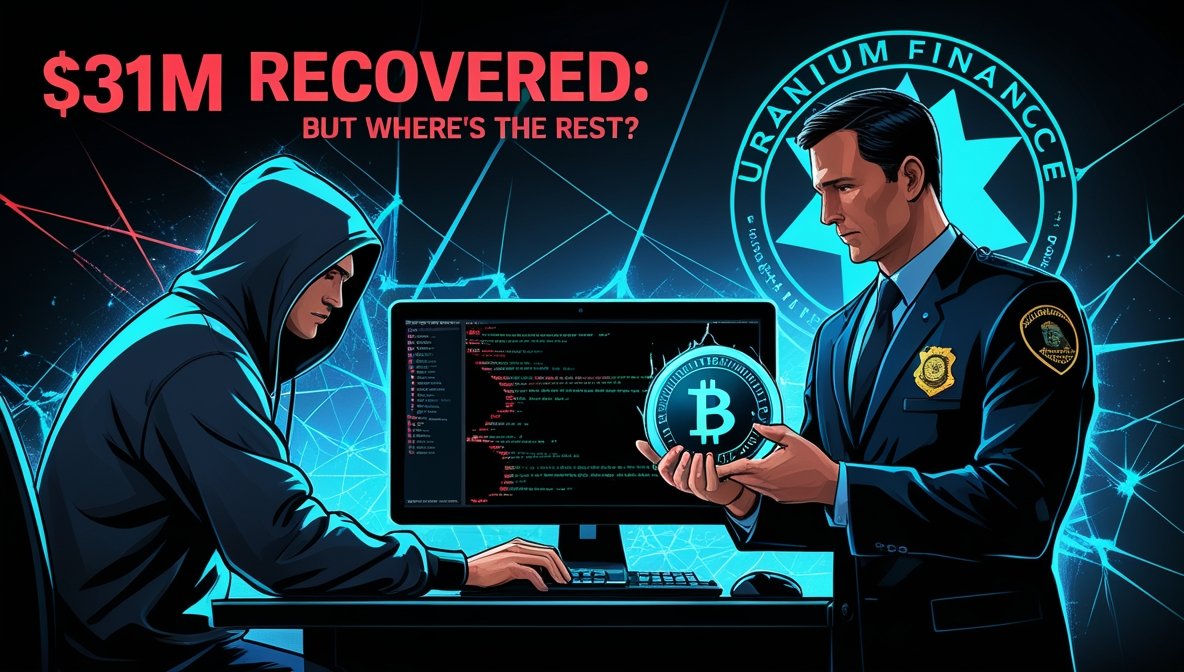
U.S. Recovers $31M From Uranium Finance Hack, But Many Questions Remain

Summary: Nearly four years after Uranium Finance was cyberattacked to the value of $50 million, U.S. authorities have recovered $31 million of looted funds. The operation, led by the Southern District of New York and Homeland Security Investigations, is a significant milestone. Nevertheless, most of the stolen crypto remains untraced.

On April 4 years earlier, Uranium Finance, a Binance Smart Chain automated market maker, was hacked because of a vulnerability in its smart contract when Version 2.1 was launched. The hacker quickly transferred the looted assets via Tornado Cash and AnySwap, which made them hard to track.The money was also said to have been spent on buying some of the limited edition trading cards.

YOU MIGHT ALSO LIKE: CBI Cracks Down on GainBitcoin Scam, Raids 60+ Locations Across India

The timing of the attack was indicative of an insider attack, as the project repository of contracts on GitHub went missing soon after. While the restitution of funds is some compensation, it still barely makes up for the losses made. This incident demonstrates how the authorities are increasingly capable of following stolen crypto back to its perpetrators, and that laundering is more and more hard for cyber criminals. But full justice remains unattainable for the vast majority of victim users.

YOU MIGHT ALSO LIKE: Grayscale Pursues SEC Approval for Polkadot ETF on Nasdaq

Ethereum Crashes to $2,300 but Analysts See a Massive Rally Ahead

Summary: Ethereum’s price fell to $2,300, a 13% depreciation within a 24-hour period. This decline did not deter experts, though, who think it may revert to $8,000 or even $10,000 within the coming months.

Ethereum’s price was severely hurt and went to $2,300 as Bitcoin dipped below the $90,000 mark upon the United States weekly market open. The quick dip, during which ETH decreased over 13% in just a single day, has stunned traders.

YOU MIGHT ALSO LIKE: Nansen Becomes Super Representative for TRON, Enhancing Blockchain Transparency

According to CoinMarketCap, ETH is now trading at about $2,420 after going as low as $2,330 earlier in the day. Although Ethereum hasn’t been able to hit new highs, unlike Bitcoin and some of the world’s leading cryptos that enjoyed record-breaking price rallies late in 2024 and early in 2025, market sentiment has slowly been becoming more positive.

Some analysts believe Ethereum is set to recover well, with some calling for a rally to $8,000. Some traders even foresee ETH bursting past $10,000, cementing its status as a leading player in the DeFi space.

YOU MIGHT ALSO LIKE: CBI Cracks Down on GainBitcoin Scam, Raids 60+ Locations Across India

Now, Ethereum is attempting to recover from its recent downfall, trending against the $2,600 to $2,800 level. But the most important job is to break the $3,000 resistance line before it can sustain with the rest of the market rally.

Nansen Becomes Super Representative for TRON, Enhancing Blockchain Transparency

Markets crashing: Crypto down 7%, stocks struggling. US trade policy fears and global instability causing panic.


Markets are crashing currently. Crypto has been battered, dropping 7% over the last 24 hours, wiping out approximately $1.48 billion.Bitcoin and Ethereum both saw massive liquidations, with traders who expected prices to rise being forced to sell at a loss. Solana and XRP weren’t safe either, and things are looking shaky with no clear bottom in sight.

It’s not just crypto in trouble. The US stock market is also in trouble. The S&P 500 and Nasdaq dropped, with tech shares like Nvidia, Meta, Amazon, and Tesla leading the declines. Investors are concerned about future earnings reports and the impact of US trade policies, especially with tariffs hanging over the market. February 23 of this year, was a brutal day, wiping out $927 billion in value.

In India too, the Nifty dropped for the sixth day in a row, and the mid-cap shares also took a beating. The Asian markets too dipped, with the Hang Seng Index and China’s CSI 300 both falling, as they felt the pressure of US-China policies.

What’s behind this drop? Rising fears of US tariffs, a potential slowdown globally, and uncertainty on earnings. The market’s on edge, and investors are waiting nervously for some sign of a bounce.

Also Read: Grayscale Pursues SEC Approval for Polkadot ETF on Nasdaq

CBI Cracks Down on GainBitcoin Scam, Raids 60+ Locations Across India

Summary: India’s Central Bureau of Investigation (CBI) is conducting massive raids in various cities to unmask the whole magnitude of GainBitcoin scam. The raid is for tracking robbed money and putting the culprits in the dock.

The CBI is raiding more than 60 locations in India as part of its probe into the GainBitcoin scam, a Ponzi scam that defrauded thousands of investors. Raids are being carried out in major cities like Delhi NCR, Pune, Chandigarh, and Bengaluru against those who have indulged in financial fraud and money laundering.

YOU MIGHT ALSO LIKE: Grayscale Pursues SEC Approval for Polkadot ETF on Nasdaq

GainBitcoin was founded 10 years ago by Amit Bhardwaj, who has since passed away, and his brother Ajay Bhardwaj. It lured investors with promises of 10% monthly Bitcoin returns through so-called cloud mining contracts. The scheme followed a multi-level marketing (MLM) model, where payouts relied on recruiting new investors. Initially, participants received Bitcoin, but as the operation began to collapse 8 years ago, payouts were switched to an in-house cryptocurrency called MCAP, which had little to no value, leaving investors with heavy losses.

As multiple fraud cases piled up across different states, the Supreme Court of India directed the CBI to investigate. The agency is now working to trace the stolen funds, including those transferred overseas, and identify everyone involved.

YOU MIGHT ALSO LIKE: Cardano (ADA) Plummets 11%: Is a Drop to $0.50 Inevitable or Can It Recover?

During the searches, investigators seized cryptocurrency wallets, critical digital evidence, and email records stored on cloud platforms. The CBI has stated that the investigation will continue until all those responsible are brought to justice.

Nexo Partners with Acapulco Tennis Open, Strengthening its Presence in Latin America

Summary: Nexo has teamed up with the Abierto Mexicano Telcel presented by HSBC, commonly known as the Acapulco Tennis Open, the biggest ATP 500 tournament, to increase its international presence and push digital asset adoption.

Nexo has debuted its collaboration with the Abierto Mexicano Telcel presented by HSBC, also known as the Acapulco Tennis Open, a top ATP 500 event. The event will take place from February 24 to March 1, 2025, at Arena GNP Seguros in Aguilar, Mexico.

This collaboration highlights Nexo’s commitment to integrating digital assets into global sports events. The company sees parallels between the discipline required for success in tennis and the long-term strategies needed for wealth creation.

YOU MIGHT ALSO LIKE:

Summary: Nexo has teamed up with the Abierto Mexicano Telcel presented by HSBC, commonly known as the Acapulco Tennis Open, the biggest ATP 500 tournament, to increase its international presence and push digital asset adoption.

Nexo has debuted its collaboration with the Abierto Mexicano Telcel presented by HSBC, also known as the Acapulco Tennis Open, a top ATP 500 event.

Nansen Joins TRON as a Super Representative, Boosting Blockchain Transparency

Summary: Blockchain analytics firm Nansen has been voted a Super Representative of the TRON network. Nansen, as a Super Representative, will assist in governing TRON, maintaining its security, and creating blocks while providing detailed insights into network activity. Nansen will guide TRON users and developers in gaining access to more transparent data on smart contracts, wallet activity, and transactions. The move aligns with TRON’s mission of decentralization and could enhance transparency across its ecosystem.

Nansen, a well-known blockchain analytics platform, has officially joined TRON as a Super Representative, reinforcing its role in improving blockchain transparency.

YOU MIGHT ALSO LIKE: Raydium Sinks 24% as Pump.fun Unveils Competing AMM

By becoming an SR, Nansen will actively participate in block production and network governance, helping secure TRON while ensuring smooth operations. More importantly, its data analytics tools will give developers, investors, and the community clearer insights into transactions, smart contracts, and overall network activity.

Nansen CEO Alex Svanevik believes this partnership will help make blockchain data more accessible and valuable for the TRON ecosystem. “We’re excited to support TRON’s growth with our analytics expertise,” he said.

TRON founder Justin Sun welcomed Nansen’s role, stating that its deep analytics will improve the network’s transparency and integrity. TRON has grown significantly since launching its mainnet in 2018, with over 277 million users and a total value locked (TVL) of $24.6 billion.

YOU MIGHT ALSO LIKE: Solana Drops Under $160 Amid FTX Unlock Fears – More Selling Ahead?

With this partnership, Nansen will help push DeFi and Web3 adoption on TRON while setting a new standard for transparency in blockchain governance.

Exit mobile version