
Breaking ! Ghana’s Blockchain Revolution: 5 Game-Changing Ways It’s Transforming Gold Tracking

Ghana’s stepping up its gold game by rolling out a blockchain-based tracking system aimed at tackling illegal exports and revamping the entire gold industry. Here’s what’s popping:​

Ghana Blockchain

1. Blockchain to the Rescue

The government’s introducing a blockchain system to trace gold from miners to exporters. This tech ensures every transaction is recorded, making it tough for illegal gold to slip through the cracks. ​

2. New Gold Board in Town

A proposed Gold Board will oversee gold purchases from small-scale miners, set fair prices, and fight smuggling. This move aims to clean up the industry’s act. ​

3. Big Bucks at Stake

Illegal gold exports have cost Ghana about $2 billion each year, money that could’ve funded public projects. The new system aims to plug this financial leak. ​

4. Tracking Every Nugget

Each licensed miner will get a spot in a national database, and every gold batch gets a unique digital code. As gold moves through the supply chain, each step is logged on it, boosting transparency.

5. First-Ever Nationwide Blockchain Rollout

If the bill passes, this will be Ghana’s first nationwide use of blockchain in the mining sector, setting a precedent for tech-driven industry reforms. ​

This initiative positions Ghana as a pioneer in modernizing gold industry practices, aiming for a more transparent and profitable future.

Also Read: 5 Big Ways Bitpanda’s VARA License is Changing Crypto in the UAE

5 Big Ways Bitpanda’s VARA License is Changing Crypto in the UAE

Bitpanda Just Got the Green Light in Dubai—Here’s What It Means

Bitpanda just made a massive power move! The crypto platform locked in a Broker-Dealer license from Dubai’s Virtual Assets Regulatory Authority (VARA), making it their first fully licensed expansion beyond Europe.

Bitpanda, UAE

This means UAE investors can soon trade over 500 digital assets on Bitpanda, including crypto indices and savings plans.

Dubai has been flexing as a global crypto hub, and VARA’s got its back with clear regulations and investor protection. It wants in on the action, setting up a regional HQ at the DMCC Crypto Centre and building a dedicated team for the UAE market. Onboarding for investors is set to roll out in the coming months.

🔹 Why It Matters: In January, Bitpanda also got a MiCA license from Germany’s BaFin, allowing them to operate across all 27 EU countries under a single regulatory framework. With this Dubai expansion, they’re making big moves outside of Europe too.

💬 What They’re Saying:
Deputy CEO Lukas Enzersdorfer-Konrad is hyped about making secure and compliant digital investing accessible in the UAE. Meanwhile, General Counsel Fabian Reinisch praised VARA’s fast-tracked approval, proving that its regulatory-first approach is paying off.

Bitpanda already holds multiple licenses across Europe, including UK FCA registration, a PSD2 E-money license, and MiFID II approval. Now, with VARA in their pocket, they’re leveling up in the Middle East.

The question is: Will Bitpanda’s UAE entry change the game for regional crypto traders? Time will tell. 🚀

You might also like: 5 Shocking Ways Bybit Hackers Crashed ETH Below $1,900—Panic Selling Ensues!

Coinbase-Backed Web3 Security Platform Harpie Shuts Down—Here’s What Users Need to Do!

Harpie Calls It Quits

Harpie, the Web3 security powerhouse known for its real-time theft prevention, has officially shut down—effective immediately. The team cited an unsustainable business model as the reason behind the tough decision, leaving users scrambling for solutions.

Harpie

A Farewell Message to the Community

In an emotional farewell post on X (formerly Twitter), the Harpie team expressed gratitude to their users and the broader crypto space.

“We attempted to create a theft-free crypto ecosystem but unfortunately could not create a sustainable business model around it. We hope we inspired new companies to take the torch of solving this problem.”

While they may be shutting its doors, its vision for a safer Web3 could still influence future crypto security innovations.


What Users Need to Do Now

With services ending immediately, it has issued some critical steps for users:

  1. Fix Transaction Failures – If you’re experiencing transaction issues, disconnect your wallet from Harpie RPC using your wallet’s network switcher.
  2. Recover Vaulted Assets – It has promised a utility tool will be released soon to help users retrieve any locked assets.
  3. Stay Updated – The team will honor all outstanding giveaways from Harpie Season 1 and referral programs. Further updates will be shared via Discord.

Harpie’s Impact on Crypto Security

It wasn’t just another Web3 tool—it was a top-tier security platform backed by OpenSea and Coinbase. The platform provided real-time wallet monitoring and actively prevented crypto theft before it could happen.

Even though Harpie is gone, its legacy will live on, pushing the next wave of Web3 security solutions to evolve. The fight for a safer crypto space is far from over.


Final Thoughts

Harpie shutting down is a massive loss for the Web3 security space. But with crypto scams on the rise, the need for theft-proof solutions is bigger than ever. Whether new players step in to fill the gap remains to be seen.

For now, make sure you disconnect your wallet, recover your assets, and stay updated. The Web3 world never stops moving, and neither should you.

You might also like: Hamster Kombat March 27 Cipher & Combo Card: Boost Your Token Rewards Now!

Breaking !Ripple’s $50M SEC Victory: 5 Game-Changing Moves for Its U.S. Comeback!

SEC Lawsuit Finally Over

Ripple CEO Brad Garlinghouse has announced a major shift back toward the U.S. market after winning the company’s legal battle against the Securities and Exchange Commission (SEC).

Previously, 95% of Ripple’s customers were outside the U.S., but now, the company believes it can strengthen its position at home.

Ripple

A Long Legal Battle Ends

The SEC sued Ripple in December 2020, claiming XRP was an unregistered security. After years of legal fights, Ripple has officially settled the case. The SEC dropped its lawsuit, agreed to a $50 million fine, and withdrew its appeal.

With this victory, it can now sell XRP to institutional investors without any restrictions, which Garlinghouse called a huge win for the entire crypto industry.

Ripple’s Renewed U.S. Focus

Even during legal troubles, it continued expanding internationally. But now, with the lawsuit behind it, the company is refocusing on the U.S., where many businesses had hesitated due to regulatory uncertainty.

The crypto regulatory environment in the U.S. is changing, with Donald Trump’s administration pushing pro-digital asset policies. Trump recently launched a Crypto Advisory Council, and rumors suggest that Garlinghouse may play a role.

Challenges Still Remain

Despite its legal win, it faces tough competition. The crypto payments market is dominated by stablecoins like USDT and USDC, so Ripple must prove its tech is valuable to U.S. businesses.

Additionally, crypto regulations in the U.S. remain unclear. It must navigate these complexities while competing with other blockchain-based payment solutions.

Looking Ahead

With the SEC battle behind it and regulatory shifts in its favor, Ripple sees massive potential in the U.S. market. The company plans to use its technology, partnerships, and reputation to make XRP a key player in American finance.

Garlinghouse emphasized that Ripple never wanted this legal fight, but had to stand its ground. Now, with victory secured, the company is ready to move forward and establish itself as a major force in the U.S. crypto space.

You might also like: Google Play Blocks 17 Crypto Exchanges in South Korea Causing Havoc

Google Play Blocks 17 Crypto Exchanges in South Korea Causing Havoc

Google Play Blocks 17 Crypto Exchanges in South Korea

South Korea’s Financial Services Commission (FSC) has successfully pushed Google Play to restrict 17 unregistered overseas crypto exchanges operating in the country. This move aims to prevent money laundering and protect local users from potential financial risks.

List of 17 Google Play Blocks

Regulators Tighten Crypto Oversight

On March 21, the Financial Intelligence Unit (FIU) of the FSC signaled possible sanctions against exchanges that failed to register under the Specified Financial Information Act. By March 26, Google Play had blocked 17 platforms, including KuCoin, MEXC, and Phemex, restricting new downloads and updates.

More Restrictions on the Way?

The FSC is now coordinating with Apple Korea and internet regulators to extend access restrictions to the App Store and web platforms. Meanwhile, South Korea’s broader crypto crackdown continues, with authorities recently raiding Bithumb over financial misconduct allegations.

As regulatory scrutiny intensifies, the future of unregistered crypto exchanges in South Korea remains uncertain.

YOU MIGHT ALSO LIKE: Lightchain AI Nears $20M Presale as Mainnet Launch Approaches!

North Carolina Now Pushes 2 Crypto Bills to Tap 5% of Pension Funds

North Carolina Lawmakers Push Bills for Crypto Pension Investments

Crypto Bills considered by North Carolina as investments for public pension funds. Lawmakers recently introduced two bills that would allow up to 5% of certain funds to be allocated to digital assets, including cryptocurrencies, stablecoins, and NFTs.

Crypto Bill

Two Bills to Boost Crypto Exposure

House Bill 506, filed by Representative Brenden Jones, and Senate Bill 709 aim to create an independent “Investment Authority” to manage pension fund allocations. This authority would operate separately from the State Treasurer and ensure secure custody of digital assets.

Growing Trend Across U.S. and Beyond

North Carolina follows Indiana, Kansas, and Florida in exploring crypto-based pension fund investments. Globally, pension funds in Australia and Norway have also increased their crypto exposure, reflecting a shift toward digital asset adoption.

If passed, these bills could position the state at the forefront of crypto adoption in public finance.

YOU MIGHT ALSO LIKE: ENA’s $3.29M Token Unlock: Will It Ignite a Rally or Not?

Lightchain AI Nears $20M Presale as Mainnet Launch Approaches!

Last Chance to Get In Before Mainnet

Lightchain AI is making waves as its presale enters its final stage, raking in an impressive $18.25 million so far. With only $2 million left to raise and just a few days remaining, the hype is real. Right now, each token is priced at $0.007, marking the last opportunity to invest before the mainnet launch.

Lightchain

What Makes Lightchain AI Different?

This project is shaking things up by combining artificial intelligence with blockchain in a groundbreaking way. The Proof of Intelligence (PoI) model rewards users for performing AI-driven tasks—whether it’s training systems, solving problems, or enhancing AI security.

The Power of AIVM

A major highlight of Lightchain AI is its Artificial Intelligence Virtual Machine (AIVM), which serves as the backbone for AI operations on the blockchain. What sets it apart? It’s designed to continuously evolve, as developers worldwide contribute to its growth. Plus, with ready-to-use APIs and SDKs, it eliminates barriers for developers, making it easy to integrate AI into blockchain applications.

Security, Privacy, and Growing Investor Interest

Lightchain AI is built with robust security and privacy protections, ensuring user trust and data safety. With the testnet already live and the mainnet launch approaching, big-name investors are taking notice.

What’s Next for Lightchain AI?

Beyond the mainnet launch, exciting developments like Lightdex Swap and validator support guides are in the pipeline. As it nears the finish line, Lightchain AI is positioning itself as a key player in the AI-blockchain space, drawing comparisons to projects like XRP and Cardano.

With the presale nearly sold out, this moment could be a game-changer for Lightchain AI.

You might also like: Crypto Influencer BitBoy Arrested Amid Controversial Legal Battle Involving 2 Warrant Claims

Crypto Influencer BitBoy Arrested Amid Controversial Legal Battle Involving 2 Warrant Claims

BitBoy’s Arrested: The Warrant Reveal

BitBoy Arrested: On March 25, crypto influencer Ben Armstrong, also known as “BitBoy,” was arrested in Florida after disclosing on X (formerly Twitter) that a warrant had been issued for his arrest. He claimed the warrants stemmed from emails he sent to Judge Kimberly Childs of Cobb County, Georgia, while handling his legal matters.

BitBoy Arrested

Legal Troubles and Past Arrests

BitBoy arrested case isn’t his first encounter with the law. In September 2023, he was arrested while livestreaming outside the home of a former associate, accusing them of holding his Lamborghini.

Current Situation

Armstrong was taken into custody by the Volusia County Division of Corrections at 7:18 pm local time. It’s unclear if Armstrong has legal representation at this time, and he has not commented on the situation.

YOU MIGHT ALSO LIKE: 5 Powerful Upgrades: SingularityNET’s Key AI Platform Enhancements

As his legal battles continue, the crypto community watches closely to see how this will unfold for the controversial figure.

5 Powerful Upgrades: SingularityNET’s Key AI Platform Enhancements

Yo, the latest biweekly update from SingularityNET is out, and they’re making some serious moves! Here’s the lowdown on the 5 major upgrades they’re bringing to the Decentralized AI Platform:

SingularityNET
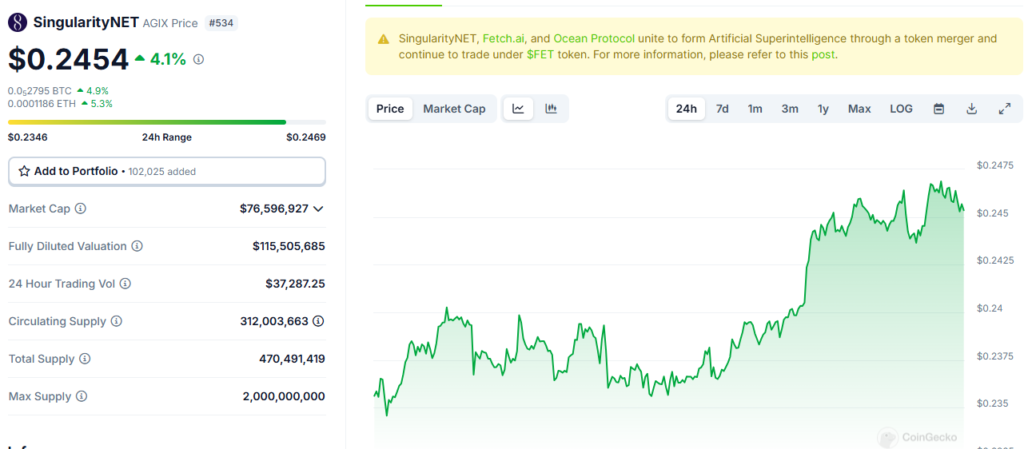
Live graph from coingecko

1. Daemon Gets an Epic Boost 💪

They’ve made some big improvements to the Daemon, like dynamic reconnection to etcd. What does that mean for you? Basically, the platform will run smoother when metadata changes happen. They’ve also added functional tests for IPFS methods to make things even more reliable.

2. Developer Portal 2.0 🔥

Say goodbye to the old and hello to a fresh new interface for developers! The new portal is super sleek, with easier navigation to find all the info you need faster. No more wasting time trying to dig through endless pages.

3. SDK Updates: NodeJS & Python 🖥️

Big updates to the NodeJS SDK, and the Python SDK has a full makeover too! They’ve reviewed the NodeJS SDK and prepped it for the next release. The Python SDK got major fixes and improvements, plus they’ve added new guides to make it easier for you to use. So much more smooth sailing ahead!

4. Cardano Hardfork: All Systems Go 🚀

SingularityNET is fully ready for the Cardano Chang Hardfork! All nodes are updated, the dbsync component is synced, and everything’s good to go. They’ve even modified all bridge scripts to work perfectly with the new standards.

5. About SingularityNET 💡

For those who don’t know, SingularityNET is all about making AI decentralized, open to everyone, and free from corporate control. Founded by Dr. Ben Goertzel, they’ve got a killer team working on everything from robotics to AI in the arts. They’re building the future of Artificial General Intelligence (AGI).

Its making waves, and these upgrades are just the beginning. If you’re a dev or crypto fan, you’ll definitely want to stay tuned to see what’s next!

You might also like: Binance Suspends 1 Staff Amid Explosive Insider Trading Scandal

Oklahoma House Passes Bill to Hold 5% Bitcoin Reserve

State Pushes for Crypto in Financial Reserves

The Oklahoma House of Representatives has approved House Bill 1203, paving the way for Bitcoin to become part of the state’s financial reserves and retirement funds. The bill, passed primarily by Republican lawmakers, now moves to the Senate for further consideration.

Oklahoma House Bitcoin Reserve

Bitcoin Reserve Cap Lowered to 5%

Initially, the bill proposed allowing up to 10% of state funds to be invested in cryptocurrencies. However, an amendment reduced this cap to 5% to mitigate market volatility risks.

State Rep. Cody Maynard (R-Durant) explained:

“This ensures digital asset investments remain controlled while still allowing Oklahoma to benefit from Bitcoin’s long-term potential.”

Who Opposed the Bill?

While the bill saw strong Republican support, House Democrats raised concerns.

  • Rep. Andy Fugate questioned the absence of a rebalancing provision but ultimately supported the measure.
  • Rep. Melissa Provenzano asked if retirees could opt out of crypto-based pension investments. Maynard clarified that pensioners cannot exclude any specific investment under existing policies.

Oklahoma Moves Closer to Bitcoin Adoption

Under the bill, the state can only invest in digital assets with a market cap exceeding $500 million—a condition that, for now, exclusively applies to Bitcoin Reserve.

If the Senate approves the bill, Oklahoma could become one of the first states to integrate Bitcoin into its treasury reserves, setting a potential precedent for others to follow.

Will this trend of Bitcoin Reserve grow or will it stop?

YOU MIGHT ALSO LIKE: Binance Suspends 1 Staff Amid Explosive Insider Trading Scandal

Exit mobile version