A major blow just landed on one of the most feared ransomware groups online. Hackers broke into LockBit’s dark web affiliate panel and leaked nearly 60,000 Bitcoin addresses used by the group in ransom attacks. It’s one of the biggest leaks ever tied to a cybercrime ring and could change how investigators track these operations.
The leaked database contained 20 detailed tables, including one listing custom ransomware tools made by LockBit affiliates and another with over 4,400 messages between the group and their victims. While no private keys were leaked, the exposure of the addresses gives law enforcement a rare chance to trace payments and map LockBit’s financial footprint.
To top it off, the hackers behind the breach left a taunt: “Don’t do crime. CRIME IS BAD xoxo from Prague.” The same message was used in a separate ransomware gang takedown, suggesting a rogue vigilante group is going after these criminal networks.
LockBit has been under fire for a while. In early 2024, a ten-nation task force moved to dismantle its operations. This leak only ramps up the pressure. And with crypto always in the middle of these schemes, the transparency of blockchain might finally give defenders the upper hand.
As gold approaches record highs near the $5,000 mark, finance author and investor Robert Kiyosaki has reaffirmed his belief that Bitcoin is a better investment than traditional precious metals. Taking to X (formerly Twitter), the Rich Dad Poor Dad author pointed to Bitcoin’s capped supply as the defining reason he favors it over gold or silver.
“One reason why I trust Bitcoin is there are only to ever be 21 million,” Kiyosaki wrote. He contrasted Bitcoin’s strict scarcity with the flexible supply of physical resources like gold, silver, and oil. “If the price of gold, silver, or oil goes up, I will simply mine or drill for more… I cannot do that with Bitcoin.”
Unlike commodities, Bitcoin’s supply cannot expand in response to market demand. It is mathematically fixed and enforced by the blockchain, making it immune to inflationary pressures that affect fiat currencies and mined resources.
Robert Kiyosaki, who owns physical mines and oil wells, stressed that supply increases are possible for virtually all other assets—except Bitcoin. For him, that makes BTC uniquely valuable in uncertain financial environments, where inflation and policy instability are growing concerns.
This isn’t the first time Kiyosaki has voiced support for Bitcoin. He has long encouraged diversification away from fiat currencies and previously predicted Bitcoin could hit $250,000 by 2025. With Bitcoin currently trading near $97,000, that target appears increasingly plausible.
His recent statements came as both gold and Bitcoin are trending upward. Historically, when both assets rise in tandem, Bitcoin often leads the charge due to its higher volatility and market-driven appeal.
Robert Kiyosaki’s latest remarks contribute to the growing perception of Bitcoin as a mainstream hedge asset, not just a speculative play. With traditional investors and institutions joining the fold, the argument that Bitcoin is “digital gold” continues to gain traction.
Lee Jae-myung’s Crypto ETF Agenda Targets Youth Wealth Growth
South Korea’s Democratic Party leader and presidential frontrunner, Lee Jae-myung, has committed to approving spot Bitcoin ETFs if elected, signaling a sharp shift toward crypto-friendly regulation in the country. His announcement on May 6 comes as part of a broader plan to boost financial opportunities for younger Koreans.
Speaking at a campaign event, Lee outlined proposals to foster a “safe investment environment” tailored to younger generations. The initiative aims to use digital assets as a tool for wealth-building while also lowering fees and implementing stronger investor protections.
Lee’s support for Bitcoin ETFs aligns with global trends, particularly in the U.S., where BlackRock’s iShares Bitcoin Trust (IBIT) has logged 16 consecutive days of net inflows. As of the latest data, IBIT added 280 BTC in a single day and has attracted nearly $5 billion in new capital since its January launch.
Lee’s platform would include legislative support for compound cryptocurrency ETFs and an improved regulatory framework. His proposals include the expansion of consumer safeguards and reduced transactional friction to help integrate digital assets into South Korea’s broader financial infrastructure.
Polls from the National Barometer Survey show Lee leading the race with 42% support. Notably, there is growing bipartisan agreement in the National Assembly on the need for clearer digital asset regulations, including support from both the People Power Party and the Democratic Party.
Should Lee win the June 3 election, South Korea could quickly become one of the most crypto-progressive nations in Asia. His policies mark a notable departure from previous regulatory hesitation and reflect increasing public and political interest in blockchain finance.
Trading app eToro just dropped some big news — it’s heading to the U.S. stock market and could be worth up to $4 billion once it’s live. Yup, the same platform where you buy both stocks and crypto is planning to list on Nasdaq with the ticker “ETOR.”
The Breakdown:
According to a filing with the SEC on May 5, eToro wants to raise $500 million by selling 10 million shares priced between $46 and $50. Half of those shares are coming straight from the company, while the other half are being sold by OGs like:
Co-founder & CEO Yoni Assia
His brother Ronen Assia
Investors like Spark Capital, BRM Group, and Andalusian Private Capital
So yeah, it’s a mix of new money and early-backer exits.
Big Names Want In
Even the GOATs are circling. BlackRock might scoop up $100 million worth of shares. Plus, 500,000 shares are saved for a “directed share program” — basically, a thank-you for employees and early fans.
Crypto Still Poppin’
Crypto isn’t just a side hustle for eToro. In 2024, it pulled in a wild $12.1 billion in crypto-related revenue — a massive jump from $3.4B in 2023. But heads-up: eToro says crypto’s slice of the commission pie might shrink a bit in early 2025.
Still, compared to rivals like Robinhood, which had a dip in crypto trading earlier this year, eToro’s looking solid.
Speed Bumps Ahead?
Not all vibes are green candles, though. eToro mentioned a few things that could slow them down:
Regulations from U.S. states and the EU’s new MiCA rules might bring added compliance costs
Negative media around crypto coins could hurt user retention
Delays from wild market swings (like Trump’s trade policies in April) already pushed this IPO back once
SEC’s Vibe Shift
The SEC’s new chairman Paul Atkins is kinda crypto-friendly. Since he stepped in, the agency backed off some major lawsuits — like dropping cases against Coinbase and Cumberland DRW, and closing the one on Uniswap Labs with no action. 👀
That might explain why more crypto giants like Circle and Kraken are also flirting with IPOs.
Ethereum Price Holds Steady Under $3,000 Amid Mixed Market Signals
Ethereum (ETH) traded in a narrow range around $2,945 on May 6, 2025, struggling to push past the psychological $3,000 level. After a week of sideways movement, the market remains on edge as traders await decisive signals about the asset’s next move.
ETH is currently down 1.2% over the past 24 hours, continuing a pattern of low volatility that has defined the month so far. Weekly performance stands nearly flat, with Ethereum posting a modest 0.4% gain over the last seven days.
Trading volume has also tapered off, with 24-hour activity dipping below $12 billion—a significant drop from late April, when ETH frequently saw daily volumes surpassing $20 billion. This decline in volume often suggests uncertainty, as traders hesitate to take strong directional positions.
On-chain metrics also reflect the lull. Data from Glassnode shows that active addresses and daily transaction counts are slightly down from last week, while ETH’s exchange balances remain stable. This indicates that while there’s no panic selling, fresh demand is also limited.
Analysts remain divided on Ethereum’s short-term direction. Some expect a breakout toward $3,300 if ETH closes above key resistance around $3,050. Others warn that failure to gain momentum could send the price back to support near $2,800, particularly if Bitcoin shows weakness.
Long-term sentiment remains more optimistic, driven by expectations surrounding Ethereum’s next major upgrade, which could improve transaction efficiency and scalability. However, until a clear catalyst appears, Ethereum seems locked in consolidation mode.
Two long-dormant Bitcoin wallets linked to the infamous Silk Road marketplace reactivated on Monday, transferring a total of 3,421 BTC—worth around $322.5 million—after more than a decade of inactivity. These transfers are among the largest movements from early Bitcoin-era wallets in recent memory and have sparked fresh discussion across the crypto community.
Bitcoin Silk Road Wallet Arises After 11 Years
Dormant Wallets Spring Back to Life
The first wallet, inactive since 2013, initiated a transfer of 2,343.481 BTC at block height 895,421, equivalent to approximately $220.8 million. The funds were moved from an old-style Pay-to-Public-Key-Hash (P2PKH) address to 31 separate outputs. Notably, 30 of these outputs were redirected to a newly created Pay-to-Witness-Public-Key-Hash (P2WPKH) address, a more secure and modern Bitcoin wallet format.
The second transaction occurred at block height 895,433, moving 1,078.99 BTC—worth over $101 million—from another wallet that had also remained untouched since July 11, 2013. Like the first, this transfer also shifted BTC from a P2PKH address to a P2WPKH wallet in 27 outputs. The coins have remained unmoved since the transaction.
Silk Road Connection Raises Eyebrows
Blockchain analytics platforms including btcparser.com and Whale Alert flagged the transactions, citing the unusual age and size of the wallets. Sani from timechainindex.com suggested that the funds may be tied to Silk Road—a darknet marketplace active in Bitcoin’s early years. According to Sani, the coins were likely withdrawn from Silk Road in 2012.
Community Reaction and Ongoing Speculation
The crypto community is now watching closely to see if these freshly moved coins will be sold, further transferred, or simply remain in the new addresses. Due to the Silk Road connection and the historical significance of the funds, their movement has raised questions about long-term holders and the potential market impact if the BTC is sold.
Conclusion
While the BTC remains untouched for now, the awakening of these wallets serves as a stark reminder of Bitcoin’s shadowy origins and the transparency of blockchain technology. As markets react and observers speculate, the transfers have become a focal point for discussions on Bitcoin’s past—and its unpredictable future.
Tether, the stablecoin giant, is diving into the AI world with Tether AI, a decentralized, open-source AI platform that’s powered by crypto. It’s set to bring a new wave of payments in USDT and Bitcoin, which means crypto fans will have direct access to an AI system that doesn’t rely on centralized platforms.
Tether AI: The Future of Decentralized AI
Tether CEO, Paolo Ardoino, teased the launch of Tether AI on May 5 via X, giving us a sneak peek into this revolutionary new platform. It promises a modular, flexible AI runtime that can run on any hardware or device without the need for centralized servers or APIs, which makes it different from the traditional cloud-based AI models.
At the heart of it is something called “Personal Infinite Intelligence,” which hints at customizable AI agents that adapt to user needs and work on different devices. No more centralized control—users will have full privacy, autonomy, and security.
Plus, Tether AI will let users pay directly with USDT or Bitcoin through a peer-to-peer network. It’s also going to include its open-source wallet development kit (WDK), which launched in November 2024, helping developers create mobile, desktop, and web wallets for easy self-custodial asset management.
The whole point is to offer AI tools that are open-source, decentralized, and powered by crypto infrastructure, meaning no reliance on middlemen or traditional cloud platforms.
A Bold Shift to AI and P2P Tech
Though Tether AI isn’t live yet, its integration with its existing decentralized technologies (like Keet for chats and Pear for P2P apps) hints that it’ll be a seamless transition for crypto fans. The platform was introduced in December 2024 with a launch target set for Q1 2025, and the latest update shows it’s well on track.
Tether’s focus on AI is part of a bigger pivot the company made in April 2024 to focus more on peer-to-peer tech and AI tools. The move included creating new business units like its Data, pushing their ambitions in the decentralized AI space.
Ardoino dropped some futuristic vibes, saying AI will soon become part of the universe’s fabric, quoting sci-fi legend Isaac Asimov. He’s already teased that Tether’s AI division is working on tools like a translation app, voice assistant, and a Bitcoin wallet assistant, all powered by in-house models.
Tether’s Massive Quarter, AI Push, and $1B Profit
Tether isn’t just about stablecoins anymore—they’re making serious moves in AI. With a $1 billion operating profit in Q1 2025 (thanks to strong returns on U.S. Treasury holdings), its not slowing down anytime soon. They’ve got $149.3 billion in assets and $5.6 billion in reserves, staying at the top of the stablecoin game while moving into the world of AI.
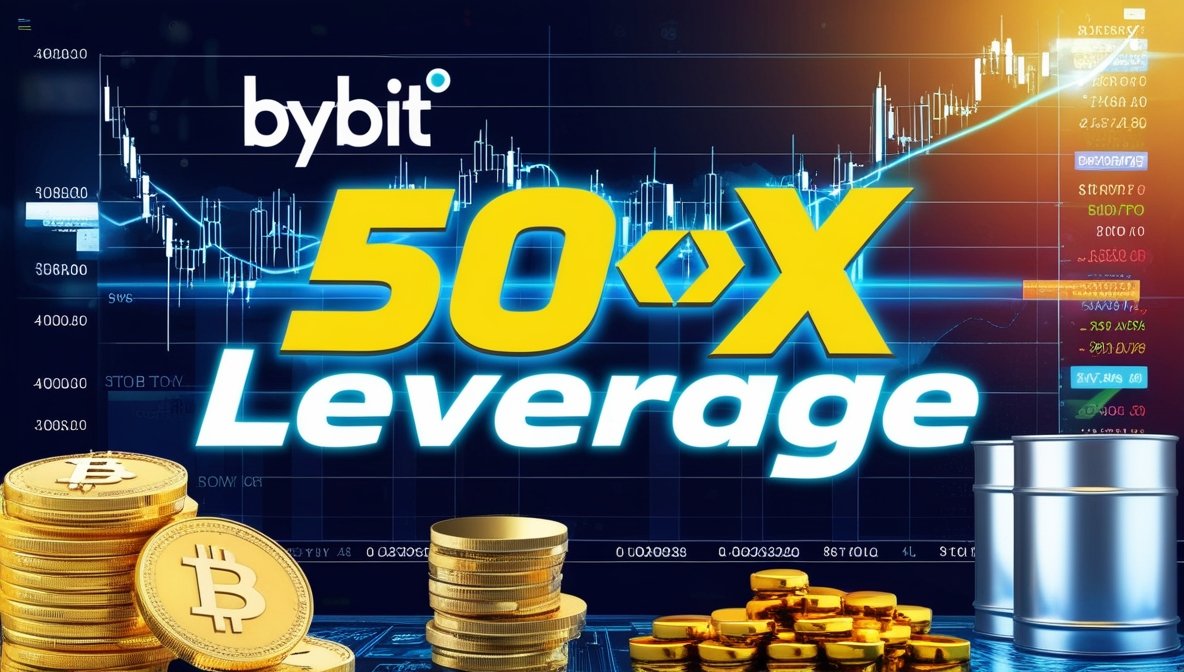
Bybit’s seriously leveling up. The crypto exchange is about to bring Wall Street vibes to Web3 by offering traditional financial products like U.S. stocks (hello, Apple & MicroStrategy) and commodities like gold and crude oil. CEO Ben Zhou dropped the news during a livestream on May 3, with the feature set to go live by the end of Q2 2025.
Can Bybit Beat eToro & Kraken at the Hybrid Game?
Zhou’s vision? Turn it into a powerhouse, mixing crypto with traditional assets. So, along with trading crypto, users will soon be able to buy and sell blue-chip U.S. stocks, as well as major commodities. And they’re not playing it safe—they’re offering up to 500x leverage on some of these trades. That’s huge for the high-risk, high-reward crowd.
“We want to bring Wall Street to Web3,” Zhou said in the livestream. Bold move.
It is now stepping into direct competition with platforms like eToro and Kraken, both of which have already made moves into hybrid trading. For example, eToro saw 96% of its revenue from crypto in 2024, but they’ve also been offering traditional investments since 2013. Kraken is jumping in too, with zero-commission trades on over 11,000 U.S. stocks and ETFs, plus forex futures.
Bybit’s Big Pivot: Ditch NFTs, Double Down on AI
Bybit’s not just betting on traditional finance, though. They’re also doubling down on AI. The exchange is integrating tools like CryptoLens and TradeGPT for real-time analytics and market insights. Plus, their AI is multilingual, helping them keep it global in over 160 countries.
But not everything’s been smooth sailing for Bybit. In February, they were hit with a massive $1.5 billion ETH hack—biggest in crypto history. Since then, they’ve been trying to bounce back. Zhou shared that most of the stolen funds are still traceable, but a chunk of it has gone “dark.” To recover, Bybit’s been doing audits and securing emergency loans.
Following the hack, Bybit pulled the plug on its NFT Inscription and IDO markets, focusing instead on traditional trading. It’s a bit of a vibe shift for the platform, but they’ve made it clear they’re staying strong.
What Does This Mean for Retail Traders?
Bybit’s 500x leverage is crazy high compared to what we’re used to seeing in the traditional market. It could bring some serious risk, so it’ll be interesting to see how regulators react and whether Bybit’s really prepared for all the potential scrutiny.
As for trust? Bybit’s quick to own up to the hack and reassure users their assets are backed and secure. They’ve got their reserves sorted, and withdrawals are still going strong.
Curve Finance’s official X account was compromised earlier today in a security breach that promoted a fake CRV token airdrop. The post, since deleted, falsely announced Curve’s “first CRV airdrop” and included a link appearing to direct users to Curve’s website.
Curve Finance’s X Account Hacked and What it causes and signifies
Fake Airdrop Sparks Panic
The fraudulent tweet invited users to register before a midnight UTC snapshot on Sunday, promising “rewards” and urging action within a week. Though the link resembled Curve’s authentic domain, the Curve team quickly confirmed the message was fake.
Founder Issues Warning
Curve founder Michael Egorov confirmed the hack on his personal account, writing: “Confirmed: Curve X account hacked. No other account appears to be hacked — the control over the X account was just silently taken by someone.” He advised followers to avoid any links from the Curve X account until the team regains access.
Community Confirms Compromise
Crypto analyst CrediBULL crypto also posted a warning, sharing a screenshot of the fake tweet and urging followers not to engage with it. The deceptive post included professionally designed visuals that mimicked typical airdrop promotions, adding to its believability.
Unclear How Hack Occurred
It remains uncertain how the hacker accessed Curve’s X account. There is no confirmation yet whether the breach was due to phishing, leaked credentials, or social engineering. As of now, Curve’s core platforms and services remain unaffected.
Stay Vigilant
Until control is officially restored, users are advised to avoid engaging with the @CurveFinance X account and to rely solely on Curve’s verified website and Telegram for updates. The incident highlights ongoing security risks in the crypto space, especially as scammers use realistic-looking airdrops to lure victims.
Sad and very upsetting to say but Curve Finance is not the first one and is definitely isn’t the last one to get their account hacked. Such lack of proper and bullet proof security has made it difficult to share information in any social media platform even for us Normal humans let alone some organization like Curve Finance
Vitalik Wants to Slim Ethereum Down—Bye Bloat, Hello ZK Power
Ethereum’s co-founder Vitalik Buterin just dropped a 🔥 blog post that basically says: Ethereum’s gotten too complicated, and it’s time to chill. Titled “Simplifying the L1”, the post lays out a bold plan to strip down Ethereum’s base layer for better security, faster scaling, and easier dev life.
What’s the vibe?
Vitalik’s like: “Let’s stop doing the most.” He wants Ethereum to go from being a complex machine to something more like Bitcoin—clean, secure, and minimal. Too many moving parts = more bugs, longer dev timelines, and bad vibes for light clients.
The Big Switches:
3-Slot Finality: Say goodbye to epochs and sync committees. This new model reduces validator chaos and makes the chain easier to understand and way less attack-prone.
RISC-V Virtual Machine: Vitalik wants to swap the old EVM for a ZK-friendly, open-source RISC-V engine. Why? Because it’s lean, mean, and could speed up ZK proof gen by 100x.
No More Fragmentation: One erasure code, one serialization format (SSZ), one tree structure. The whole protocol gets a uniform glow-up.
The Big Idea:
Vitalik wants to put a cap on complexity, much like the way Tinygrad limits code lines in ML models. Legacy and non-critical stuff can still exist—but outside the sacred “core.”
And there’s more:
Former dev Eric Connor thinks Ethereum could be the key to fixing AI’s trust problems. Decentralized AI? Transparent models? Zero-knowledge privacy? Ethereum’s got the tools.
But not everyone’s cheering. VC Nic Carter says Ethereum’s L2s are leeching value from the base layer, and that ETH’s wild token minting culture is “killing itself from the inside.” Harsh, but it shows the tension.
TL;DR:
Vitalik’s trying to give Ethereum a major clean-up. He wants less complexity, more ZK power, and a leaner core—plus Ethereum might just save AI along the way.