Latest News

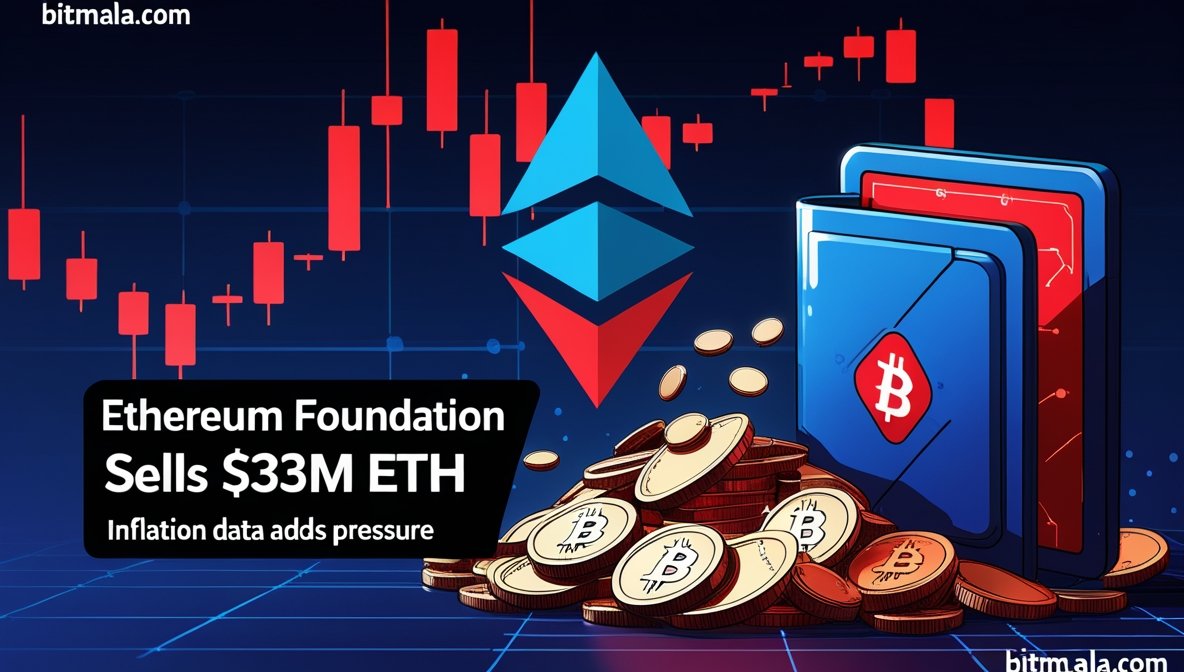
Ethereum Under Pressure as Foundation Wallet Sells $33M ETH Amid Inflation Jitters

Ethereum faced fresh market pressure this week after a wallet linked to the Ethereum Foundation sold thousands of ETH, coinciding with hotter-than-expected U.S. inflation data. The token traded at $4,412, down 0.32% in the past 24 hours.

Blockchain tracker Lookonchain revealed that wallet 0xF39d, tied to the Ethereum Foundation, sold 7,294 ETH worth $33.25 million within three days at an average of $4,558 per coin. On August 15 alone, the wallet offloaded 1,300 ETH ($5.87M), bringing its three-day total sales to 6,194 ETH. Earlier, on August 13, it had sold 2,795 ETH in multiple transactions.

The sell-off coincided with July’s U.S. Producer Price Index showing a 3.3% YoY rise, reducing expectations of near-term Fed rate cuts. Meanwhile, Treasury Secretary comments confirmed no immediate plans to add BTC or ETH to U.S. reserves, compounding the market’s cautious tone.

Despite retail jitters, institutional players stepped in. SharpLink Gaming added 130,000 ETH, boosting its holdings to 728,804 ETH ($3.38B), while Bitmine purchased 28,650 ETH ($130M), raising its stash to 1.17M ETH ($5.1B).

Technically, analysts note ETH is holding above its 50-week SMA, a setup reminiscent of 2017’s rally. Some experts forecast Ethereum could reach $10,000 this cycle despite short-term volatility.

You might also like: 7 Reasons Ethereum: South Korean Investors Are Betting Big on Ethereum Stocks Over Big Tech
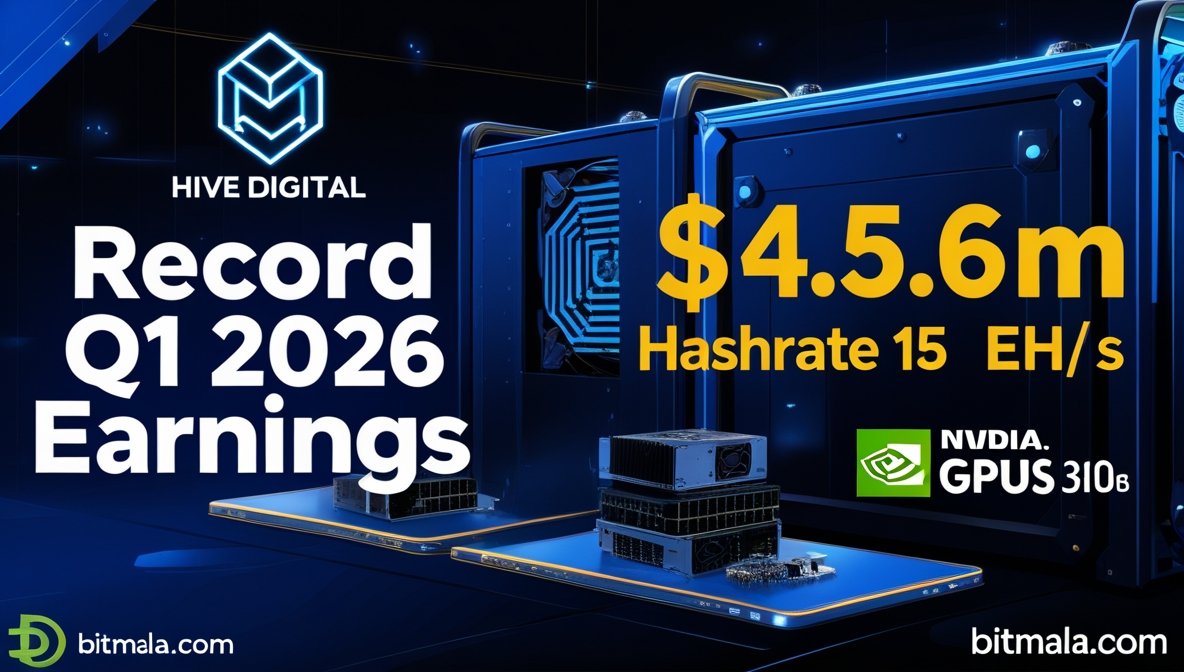
HIVE Digital Posts Record Q1 2026 Results With $45.6M Revenue, Expands AI & Mining

HIVE Digital Technologies has reported record financial results for Q1 2026, covering the period ending June 30, 2025. Revenue reached $45.6 million, while Adjusted EBITDA was $44.6 million, fueled by strong Bitcoin mining output and high-performance computing (HPC) demand.

Bitcoin mining generated $40.8 million in income, up 44.9% quarter-over-quarter. The company’s average hashrate jumped 45% to 8.9 EH/s, driving production of 406 BTC — a 34% increase despite a 10.2% rise in network difficulty. The direct cost of mining stood at $26.8 million, with electricity representing 90% of expenses.

The BUZZ HPC division also posted record results, delivering $4.8 million in revenue, nearly 60% higher than the prior quarter. The segment benefited from increasing AI and compute demand, with direct costs of $2.1 million.

Overall, gross operating margin rose to $15.8 million (34.7%), compared to $8.8 million (28.2%) in Q4 2025. Net income came in at $35.0 million, boosted by $23.2 million in digital currency gains, $8.2 million in equity gains, and a $16.4 million derivative revaluation.

Looking ahead, HIVE expects to scale from 15 EH/s in July to 25 EH/s by Thanksgiving, supported by acquisitions and new NVIDIA GPU deployments. The company ended the quarter with $71.9 million in cash and cryptocurrencies.

You might also like: Chainlink (LINK) Jumps 40% in a Week as Whale Activity and Partnerships Boost Confidence

BlackRock Now Holds 735,000 Bitcoin Worth $86B, Expands Ethereum ETF

BlackRock, the world’s largest asset manager with $11.6 trillion in assets under management, now holds more than 735,000 Bitcoin worth about $86 billion through its iShares Bitcoin ETF (IBIT).

On-chain data from Arkham Intelligence shows consistent inflows, including multiple 300 BTC transfers — each worth $37 million — via Coinbase Prime in recent days. This marks a significant rise from March 2025, when BlackRock’s Bitcoin holdings were 567,000 BTC valued at $47.8 billion.

BlackRock’s Ethereum ETF (ETHA) is also expanding. Wallets tied to the fund have recently received a 5,900 ETH deposit along with multiple 10,000 ETH transfers in just two days, totaling over $121 million. The firm’s Ethereum exposure now exceeds $14 billion.

With these accumulations, BlackRock ranks among the largest global Bitcoin holders, surpassing MicroStrategy’s 628,946 BTC stash worth around $55 billion. Alongside government treasuries and crypto-native whales, BlackRock’s presence further cements institutional dominance in the digital asset market.

The success of Bitcoin ETFs continues to drive liquidity. Since their 2024 approval, U.S.-listed Bitcoin ETFs have generated tens of billions in trading volume, with IBIT leading adoption. Meanwhile, Bitcoin is consolidating between $117k–$118k, trading at $117,789, up a modest 0.34% today after hitting $124k earlier in the week.

You might also like :7 Reasons Ethereum: South Korean Investors Are Betting Big on Ethereum Stocks Over Big Tech
7 Reasons Ethereum: South Korean Investors Are Betting Big on Ethereum Stocks Over Big Tech

South Korean Investors Dump Big Tech for Ethereum Stocks

South Korean retail investors are switching up their portfolios, ditching major U.S. tech names like Tesla, Apple, and Alphabet in favor of Ethereum (ETH)-related stocks — and the numbers show it’s not just a passing trend.

Why BitMine is the Hot Pick

The biggest winner in this shift? BitMine Immersion Technologies (BMNR) — a U.S.-listed firm backed by billionaire Peter Thiel. Once a Bitcoin miner, BitMine now focuses entirely on Ethereum and holds an impressive $5.32B worth of ETH, making it the largest corporate ETH holder in the world. It’s even hinted at issuing up to $20B in stock to buy more ETH.

Since early July, Korean investors have poured roughly $259–269M into BitMine shares, making it Korea’s most popular foreign stock. The buzz is fueled by the recently passed GENIUS Act, which gives stablecoins a clearer legal framework, boosting ETH sentiment. The fact that BitMine’s chairman, Tom Lee, has Korean heritage adds an emotional pull for local buyers.

Other ETH-related stocks are riding the wave too — Robinhood, Coinbase, and SharpLink Gaming (which holds over 728,800 ETH) are all seeing major demand. SharpLink’s stock alone has skyrocketed over 126% since July.

Big Tech on the Chopping Block

Meanwhile, Korean investors are offloading their “Magnificent Seven” holdings — dumping $770M in Tesla shares, $230M in Apple, and $177M in Alphabet last month. High valuations, underwhelming earnings, and uncertainty over U.S. tariffs under President Donald Trump are pushing them away from U.S. tech.

Experts think the Ethereum-stock craze could continue short term, but warn that global economic instability might slow overall foreign stock purchases.

YOU MIGHT ALSO LIKE: 3 Insane Reasons Pump.fun’s $33M Buyback Is Sending PUMP Token Skyrocketing

Chainlink (LINK) Jumps 40% in a Week as Whale Activity and Partnerships Boost Confidence

The native token of Chainlink (LINK), the leading blockchain oracle network, has rallied 40% in the past week, now trading near $24 and showing a strong rebound from previous lows.

According to Santiment, Chainlink is experiencing its highest bullish sentiment since February 1, alongside the largest number of active LINK addresses in eight months. Whale transactions have also reached a seven-month high, signaling increased participation from both large holders and developers building on Chainlink.

Partnerships Strengthen Market Confidence
Beyond on-chain metrics, Chainlink’s market confidence is being fueled by new partnerships. The project recently joined forces with the Intercontinental Exchange (ICE) to bring foreign exchange and precious metals data on-chain, further linking LINK to traditional finance and expanding its real-world utility.

Technical Analysis
Analysts note that if LINK can hold above $24, it could target $30 in the near term. The Relative Strength Index (RSI) sits in the mid-60s, leaving room before overbought conditions kick in.

Despite the rally, LINK is still around 55% below its May 2021 all-time high of $52.88. Similar to Stellar, Hedera, and Litecoin, it hasn’t yet reclaimed its 2021 peaks — meaning some traders may wait for those levels before taking profits.

With rising investor confidence, record whale activity, and bullish technicals, LINK could be poised for more upside — potentially revisiting previous highs if current trends hold.

You might also like: TRON Surpasses 11.1B Transactions as Whale Activity Fuels Bullish Outlook

Ripple CTO Reaffirms XRP as “Strategic Weapon” for Global Payments, Not a Bank Account

David “JoelKatz” Schwartz, Chief Technology Officer at Ripple, has once again made it clear: XRP is not Ripple’s “bank account”, but rather a strategic weapon in the company’s mission to revolutionize global payments.

Speaking through comments resurfaced by the Good Morning Crypto channel, Schwartz revisited the long-standing debate on XRP’s role and the flexibility of the XRP Ledger (XRPL). The discussion reignited on August 14, 2025, after a user pointed out that XRPL’s trustline system allows institutions to transact without holding significant amounts of XRP.

Trustlines – The Backbone of Flexible Payments
Trustlines, a concept dating back to Ryan Fugger’s 2004 work that inspired XRPL and the Interledger Protocol (ILP), are credit arrangements between accounts. They allow token transfers with only minimal XRP to cover transaction fees.

“I really hope institutions do form trust relationships and leverage them,” Schwartz said, calling it a “huge win for everyone” when such arrangements provide a better fit than cryptocurrency-based settlement.

Beyond Cryptocurrency-Only Solutions
Schwartz stressed that digital assets without counterparties or jurisdiction are best reserved for cases where those traits offer real advantages. He believes blockchains will grow more valuable by integrating tools beyond pure crypto transfers.

A Practical Example
He illustrated the point with a scenario: if “Alice” accepts Bitcoin and “Bob” prefers cash, XRPL or ILP can still connect them — handling discovery, quoting, atomic settlement, and accounting while converting between assets.

This perspective reaffirms Ripple’s dual strategy: leveraging XRP where it’s most effective, while enabling flexible, interoperable payment solutions across global markets.

You might also like: 5 Insane Reasons DeepSeek’s R2 Delay Shows Huawei Chips Aren’t Ready Yet

TRON Surpasses 11.1B Transactions as Whale Activity Fuels Bullish Outlook

TRON (TRX) is making waves in the crypto market, surpassing 11.1 billion transactions amid a surge in whale activity and growing institutional interest. The TRX network’s bullish momentum continues, with some analysts setting optimistic long-term price targets.

The global crypto market cap stands at $4.01 trillion, up 0.04% in the last 24 hours, while daily trading volume dropped 25.15% to $215.32 billion. Bitcoin (BTC) leads at $118,094 (+0.05%), while TRX trades at $0.355304, marking a slight 1.22% daily dip, according to CoinMarketCap.

Crypto analyst Davide noted on X that the surge is “fueled by record USDT flows as whales moved $700M off Binance in 48hrs.” He highlighted that TRX has surged over 150% for long-term holders, but current RSI readings suggest a cooldown before the next rally.

Strong Network Utilization
Data from CryptoQuant shows TRON’s transaction counts now range between 6–9 million daily, with historic spikes above 12 million in late 2022 and early 2023. This steady activity points to robust network use despite occasional slowdowns.

Technical Indicators Suggest Short-Term Caution
TradingView data shows TRX has been trending upward since mid-June. Current readings place the Stochastic RSI in the overbought zone (77.14 and 85.74), hinting at a possible short-term pullback. However, the Awesome Oscillator remains in positive territory, reflecting ongoing buying pressure.

While near-term caution is warranted, TRON’s fundamentals, high transaction activity, and whale-driven liquidity suggest that TRX may soon challenge higher resistance levels if bullish momentum persists.

You might also like: Breaking ! Peter Schiff Pushes $1.1B Tokenized Gold Plan, Says It Beats Bitcoin

5 Insane Reasons DeepSeek’s R2 Delay Shows Huawei Chips Aren’t Ready Yet

China’s AI scene just hit a speed bump. DeepSeek, the AI company behind the R1 model that dropped in January, had been hyping its next-gen R2 — but now it’s officially delayed. The reason? Huawei’s chips couldn’t handle the full training process.

Beijing wanted DeepSeek to use Huawei’s Ascend processors instead of Nvidia’s GPUs to cut U.S. tech reliance. Sounds good on paper, but in practice, training R2 on Ascend hit technical walls — instability, slow inter-chip connections, and weaker software compared to Nvidia’s gear.

So, DeepSeek had to pivot: Nvidia chips for training, Huawei chips for inference (the part where AI actually answers questions). This workaround meant pushing the R2 launch from its original May target.

DeepSeek’s Tough Reality Check

Huawei even sent engineers to help make Ascend work, but the model still wouldn’t train properly. On top of that, labeling the massive dataset for R2 took longer than expected. Meanwhile, rivals like Alibaba’s Qwen3 are already shipping powerful new models — and ironically, Qwen3’s training methods borrow ideas from DeepSeek itself.

AI experts say it’s only a matter of time before Chinese chips can compete for training tasks, but for now, U.S. GPUs still rule. Nvidia even struck a deal with the U.S. government to share China profits in exchange for selling its H20 chips there again.

DeepSeek might still drop R2 in the coming weeks, but the delay shows one thing loud and clear — in the AI arms race, hardware bottlenecks can be just as critical as algorithms.

YOU MIGHT ALSO LIKE: U.S. PPI Surges 0.9% in July, Bitcoin Drops Below $119K on Fed Rate Cut Fears

Breaking ! Peter Schiff Pushes $1.1B Tokenized Gold Plan, Says It Beats Bitcoin

Peter Schiff Backs $1.1B Tokenized Gold Plan, Slams Bitcoin

Economist and outspoken gold advocate Peter Schiff is doubling down on his belief that tokenized gold is blockchain’s best application, taking aim at Bitcoin in the process.

$1.1B Gold-Backed Tokenization Initiative

Schiff’s remarks came after Streamex, a Solana-based tokenization platform, shared that only $1.7B worth of gold is currently tokenized just 0.008% of gold’s $22 trillion market cap. Schiff responded on X, calling gold “the best monetary asset to tokenize” and claiming it improves on gold’s qualities while avoiding Bitcoin’s flaws.

The project he’s backing is a $1.1 billion gold-backed treasury plan by BioSig Technologies (NASDAQ: BSGM) in partnership with Streamex. Announced in July, the funding includes a $1B equity line of credit and $100M in senior secured convertible debentures at a 4% interest rate. The capital will be used to expand a real-world asset (RWA) tokenization platform and issue shares over 36 months.

Why Schiff Says Gold Beats Bitcoin

Schiff argued that tokenized gold solves “all the problems Bitcoin can’t” — offering global access, 24/7 liquidity, high security, and lower entry barriers for investors. He also suggested tokenized gold could replace U.S. dollar stablecoins entirely, providing a digital currency backed by a tangible asset.

This strong institutional push into gold tokenization marks another step in the broader digital asset market’s search for stable, asset-backed alternatives to both Bitcoin and fiat-pegged stablecoins.

YOU MIGHT ALSO LIKE: Solana (SOL) Breaks $200 for First Time Since July on Institutional Buying Surge

Solana (SOL) Breaks $200 for First Time Since July on Institutional Buying Surge

Solana’s native token SOL has broken the $200 barrier for the first time since late July, surging 15.67% in the past 24 hours to $201.22. This rally pushes its weekly gain to over 23%, far outpacing the broader crypto market’s 4.2% rise.

The breakout follows bullish corporate news. Nasdaq-listed Upexi Inc. announced the creation of a Solana-focused advisory board headed by BitMEX co-founder Arthur Hayes, along with a $316 million SOL holding. Upexi’s shares jumped 20% in pre-market trading on the news.

Solana’s market cap now stands at $108.59 billion, with 24-hour trading volume soaring 118% to $12.71 billion. Corporate buying has become a significant factor, with public companies reportedly holding around 8% of SOL’s circulating supply. This concentration creates scarcity, potentially driving prices higher.

The $200 level serves as a key psychological threshold and a signal of renewed market strength. SOL briefly hit $205.87 before easing back. Analysts are watching to see if it can maintain this level, with support from institutional interest and a broader altcoin rally.

Solana’s gains come as Ethereum’s market share drops to its lowest since December 2024, reinforcing SOL’s position as a leading altcoin in the current market cycle.

You might also like: 3 Insane Reasons Pump.fun’s $33M Buyback Is Sending PUMP Token Skyrocketing

Exit mobile version