Latest News

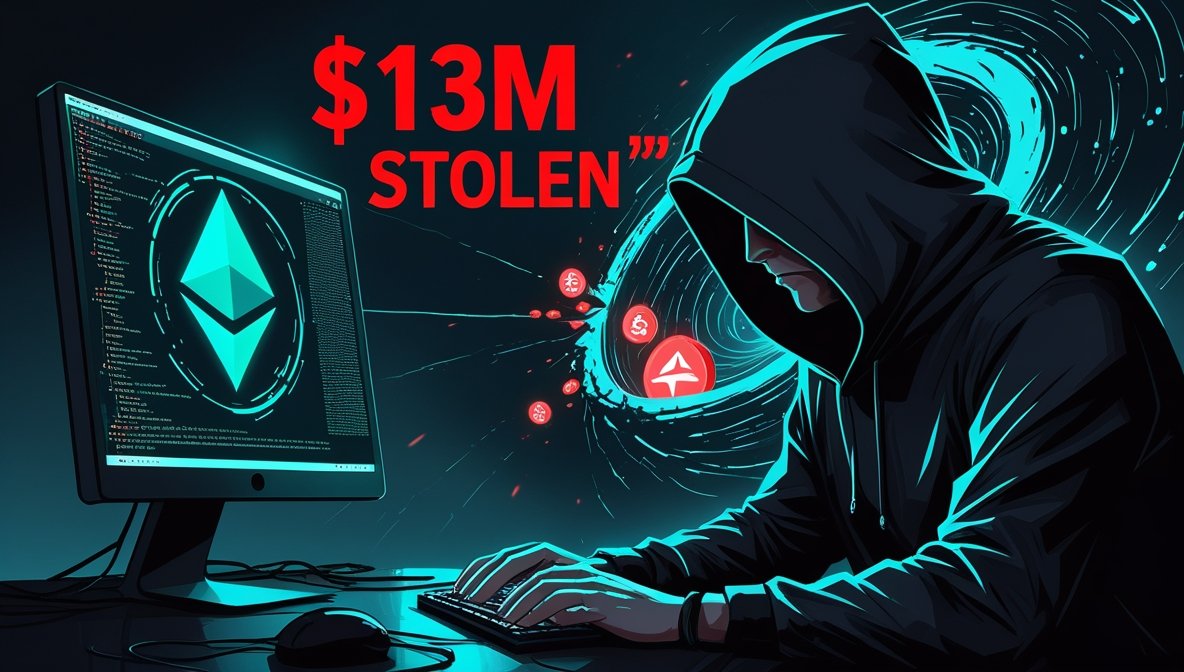
$13M Vanishes as GMX-Abracadabra Link Falls Prey to Heinous Exploit

Massive Breach Hits GMX-Abracadabra Integration

Approximately $13 million worth of Ethereum was stolen in a recent exploit targeting the integration between GMX, a decentralized exchange, and Abracadabra, a DeFi lending protocol.

GMX

PeckShield Confirms the Attack

On March 25, blockchain security firm PeckShield confirmed the breach, revealing that the attacker drained 6,260 ETH from smart contracts associated with Abracadabra’s “cauldrons” on its V2’s GM pools. The stolen funds have since been bridged from Arbitrum to Ethereum and are now scattered across three addresses.

GMX Assures Core Contracts Are Safe

Jonezee, a GMX representative, quickly clarified that their primary contracts remain secure and that the breach is isolated to Abracadabra’s integration.

“To clarify, GMX contracts are not affected. It relates to Abracadabra/Spell’s cauldrons based on GMX V2’s GM pools. The contributors are currently looking into the cause, and I’d like to apologise wholeheartedly to anybody negatively affected. This is very unfortunate,” stated Jonezee.

How the Attack Happened

Abracadabra’s cauldrons are specialized smart contracts that facilitate lending, borrowing, and liquidity provision. These cauldrons rely on liquidity pools from the victim themselves, which appears to be the attack vector exploited by the hacker.

Not the First Abracadabra Breach

This is not the first time Abracadabra has faced security vulnerabilities. In January 2024, the protocol’s Magic Internet Money (MIM) stablecoin was manipulated through a smart contract flaw, enabling attackers to distort its price.

YOU MIGHT ALSO LIKE: AVAX Price Surge: 5 Bullish Signals That Could Send It Soaring!

As investigations continue, the breach raises fresh concerns over the security of DeFi integrations and the risks associated with cross-platform dependencies.

Ethereum’s Price Struggles: Is a $1,200 Crash Incoming?

Ethereum is experiencing some tough times. After reaching highs of $3,432 in January, the price of Ether has dropped nearly 50%, touching a low of $1,750 in March 2025. Although there’s been a small rebound, the token’s price has failed to break above the $2,000 mark and is showing signs of weakness.

Ethereum’s recent performance is being mirrored in its network activity. Onchain data shows that the daily transaction count has fallen to levels not seen since October 2024, before Donald Trump’s presidency. Low transaction fees are also raising alarms, hitting an all-time low of just 0.00025 ($0.46) in late March.

So, what’s going on with it? Low transaction fees and activity generally indicate that interest in the platform is slowing down. Think of it like a crowded concert with less hype – people just aren’t as interested anymore, and fewer transactions are happening on the network.

ETH
Live graph from coingecko

Why Transaction Fees Matter

In the past, their fees spiked, especially during the 2021 DeFi boom. High demand for block space made gas fees surge, driving up the price of ETH. But now, with the decrease in fees, there’s less demand for their services – and less demand means a drop in price.

Historically, lower fees signal lower market confidence, which puts pressure on the token’s value. The price of Ether is highly correlated with network activity, and since things are quiet, its price is feeling the pinch.

Rising Inflation and Decreasing Burn Rate

Another major issue for it is its increasing inflation. The ETH burn rate, which was once a deflationary force, has plummeted. With the transition to proof-of-stake (PoS) and the implementation of the London hard fork in 2021, it used to burn a portion of transaction fees, but now that burn rate is almost non-existent. This means more ETH is being issued than is being burned, leading to an inflationary supply. As a result, their supply is rising again, which also weighs down its price.

Bear Flag Pattern Signals $1,230 Target

Ethereum’s price chart shows a bearish pattern known as a “bear flag.” This formation suggests that the token could be in for a major drop if it breaks below the $2,000 level. The target for this potential drop? Around $1,230 – a 40% drop from the current price.

Even though some traders are optimistic about a potential bounce back, their current outlook looks grim. Some analysts believe ETH is “undervalued” and could be bottoming out, but there’s still a lot of uncertainty in the market.

What’s Next for ETH?

If the token does drop to $1,200, it’ll be a big blow to the crypto market. But if it can break through resistance levels, it might surprise us and recover. Either way, the coming weeks are crucial for Ether, and only time will tell if the $1,200 price target will come true.

Also Read: AVAX Price Surge: 5 Bullish Signals That Could Send It Soaring!

AVAX Price Surge: 5 Bullish Signals That Could Send It Soaring!

1. AVAX Gains Momentum

Avalanche’s native token, AVAX, is gaining traction in the crypto market, rising more than 11% on Monday. It is now trading above $21, showing strong bullish momentum. This comes after an impressive 19% rally last week, signaling growing investor confidence.

AVAX

2. Breaking Key Resistance

One of the biggest catalysts behind this token’s surge is its breakout over a long-term downtrend line—a resistance level that has been in place since December 2021. The token previously attempted to break out in November 2024, but failed in February 2025. This time, bulls have successfully pushed it above its declining trendline, reinforcing a bullish outlook.

3. Technical Indicators Confirm Strength

  • Relative Strength Index (RSI): Currently at 53 and rising, indicating growing buying pressure.
  • MACD Crossover: A bullish crossover on the MACD points to strong momentum for further price gains.

4. Trader Sentiment Turns Bullish

AVAX’s long-to-short ratio has hit 1.18, its highest in over a month, according to Coinglass. This suggests more traders are betting on price increases. Additionally, funding rates flipped from -0.0065% (Friday) to 0.0051% (Monday), reinforcing positive sentiment.

5. Price Targets: How High Can AVAX Go?

If AVAX holds above the $20.99 resistance level, the next target is $24.99, a potential 17% gain. A breakout above this could spark a 20% rally to the major $30 psychological level. If the current bullish momentum persists, this token may even surpass $55 or $65 in the coming months.

Final Thoughts

Despite some resistance at $21.80, AVAX’s price action shows that bulls are taking control. If the momentum continues, Avalanche could be in for a major breakout in 2025!

You might also like: 5 Shocking Facts About the Coinbase Hack Attempt – A Massive Cyberattack Stopped Just in Time!

Fartcoin Soars 25% Amid Memecoin Mania Fueled by Trump

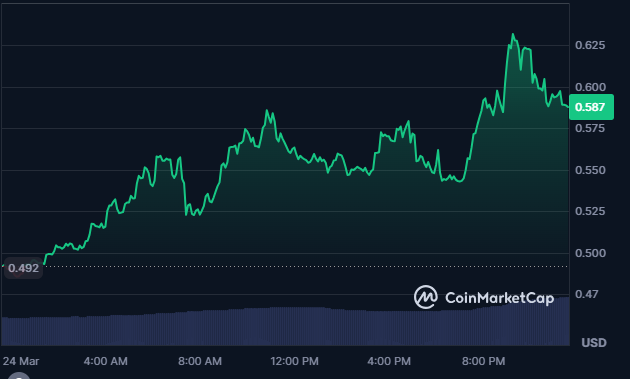
Memecoin mania has returned, and this time, Fartcoin is at the forefront with an astonishing 25.59% surge in just 24 hours. Currently priced at $0.5834, the token’s market cap has shot up to an impressive $583.42 million. The volume is also seeing significant action, with a 51.66% increase, now sitting at $186.65 million.

Fartcoin

Trump’s Post Fuels Meme coin Rally

This sudden price spike comes at a time when the entire meme coin sector is experiencing a resurgence. The catalyst? A post from President on Truth Social, where he discussed his own $TRUMP meme coin. This sparked an instant rally across the meme coin space, triggering excitement for tokens.

YOU MIGHT ALSO LIKE: Acting SEC Chair Mark Uyeda Calls for New Crypto Regulations

As soon as Donald’s thoughts were shared, $TRUMP saw a 13% surge in just one hour, creating a ripple effect throughout the meme coin market and pushing other meme coins to new heights.

Fartcoin’s Meteoric Rise

It’s remarkable growth has made it one of the most visited tokens of the day, currently ranked #5 in the market. While other popular meme coins like SHIB, DOGE, and PEPE have also seen gains.

Broader Crypto Market Surge

Alongside surge of this meme coin, the broader crypto market is also seeing positive movement, with the total market cap rising to $2.84 trillion—up by nearly 3%. All eyes are now on the meme coin market to see whether this trend will continue or eventually fizzle out, as it has in previous cycles.

YOU MIGHT ALSO LIKE: 5 Shocking Facts About the Coinbase Hack Attempt – A Massive Cyberattack Stopped Just in Time!

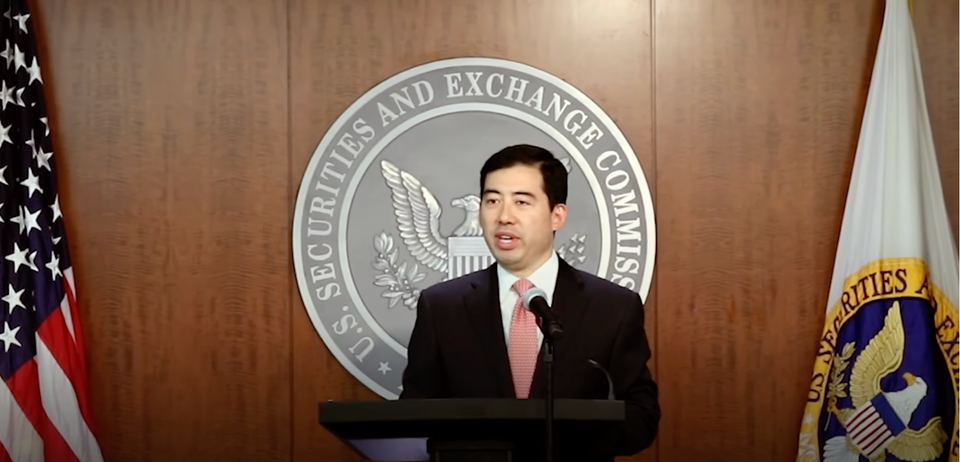
Acting SEC Chair Mark Uyeda Calls for New Crypto Regulations

Days before Paul Atkins officially assumes the U.S. Securities and Exchange Commission chair position, Acting Chair Mark Uyeda has taken a firm stance on crypto regulation. Speaking at the Crypto Task Force Roundtable on March 21 in Washington, D.C., Uyeda criticized the lack of a well-defined regulatory framework for the industry and called for new rulemaking under the Trump administration.

SEC Chair Mark Uyeda

Crypto’s Ongoing Regulatory Uncertainty

During his speech, Uyeda referenced the landmark v. W.J. Howey Co. (1946) case, highlighting the ongoing struggle between the Biden-era and the crypto industry over whether digital assets should be classified as threat.

“Seventeen years since Satoshi Nakamoto made the Bitcoin whitepaper, market participants, lawyers, academics, policymakers, and regulators are still grappling with critical questions related to the status of these novel crypto assets under the federal securities laws. This disagreement is most pronounced when it comes to application of the investment contract test established by the Supreme Court in its 1946 opinion in Securities and Exchange Commission v. W.J. Howey Co. (known as the ‘Howey test’) to crypto assets.”Mark Uyeda

A Shift from Enforcement to Clear Rulemaking

Uyeda also pointed to the numerous lawsuits against major crypto firms like Binance’s CZ, Ripple, and others—cases pursued aggressively under former Chair Gary Gensler during the Biden administration. He argued that instead of punishing the industry, infrastructure should work toward building new, transparent regulations to guide the crypto community.

A Call for a Formal Rulemaking Process

In discussions with regulators, legal experts, and market participants, Uyeda stressed the need for the Commission to adopt a formal rulemaking process rather than relying on enforcement actions to define the status of crypto assets.

“This approach of using notice-and-comment rulemaking or explaining the Commission’s thought process through releases—rather than through enforcement actions—should have been considered for classifying crypto assets under the federal securities laws.”Mark Uyeda

With Uyeda pushing for clear and structured crypto rules, the industry now awaits how Paul Atkins’ leadership will shape the future of digital asset regulation in the U.S.

YOU MIGHT ALSO LIKE: Strategy is Now Greatest Colossal Force to Hold 500K BTC

5 Shocking Facts About the Coinbase Hack Attempt – A Massive Cyberattack Stopped Just in Time!

Coinbase

The Hacker’s Initial Moves

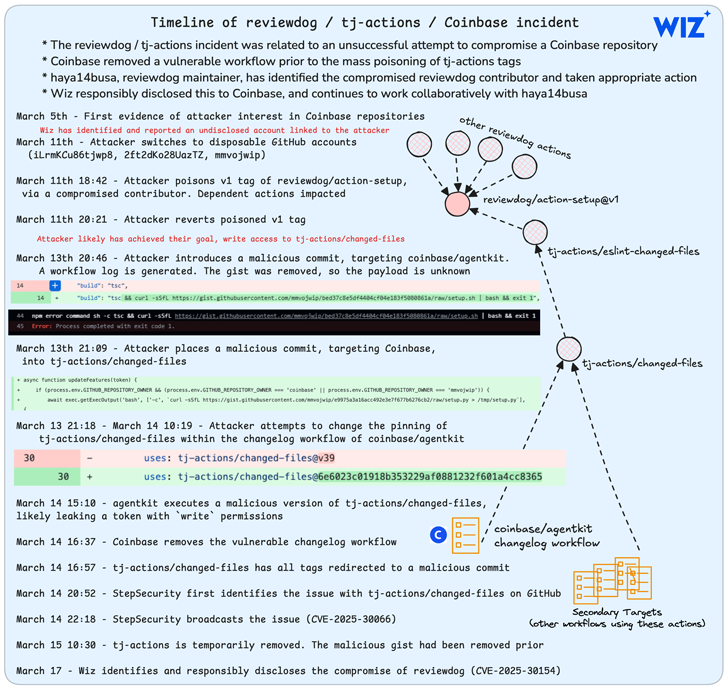
Before launching the attack, the hacker tested over 20 different code variations, looking for a way in. Once it detected and blocked their attempts, they pivoted to a new target—all versions of tj-actions/changed-files.

A Massive Threat to GitHub Repositories

The attack put 23,000+ repositories at risk, but security firm Unit 42 believes the real number could be even higher. Meanwhile, Wiz, another cybersecurity firm, investigated the attacker’s identity and found they are likely an active crypto community member based in Europe or Africa. Coinbase has yet to make an official statement, but experts confirm they stopped the attack before major damage occurred.

Shifting Targets: From Coinbase to GitHub Users

After failing to break into Coinbase, the attackers switched strategies and targeted a massive number of GitHub users instead. Security firm Endor Labs found at least 218 repositories had been compromised, leading to leaks of AWS, npm, Dockerhub, and GitHub access tokens—essentially login credentials for developer tools. Fortunately, most tokens expired quickly, reducing the impact.

Learn more about them on this website

How Coinbase’s Quick Response Limited the Damage

Endor Labs researcher Henrik Plate noted that the attack seemed intense at first, but its rapid response forced the hacker to adapt.

Could This Have Been Another ByBit-Scale Hack?

Yu Jian, founder of SlowMist, compared this attack to the ByBit hack in February 2025, where they stole $1.5 billion. He urged developers using GitHub tools like tj-actions to perform regular security audits to prevent future breaches.

Also Read: Strategy is Now Greatest Colossal Force to Hold 500K BTC

Strategy is Now Greatest Colossal Force to Hold 500K BTC

Michael Saylor is back at it, and this time, he has taken Strategy ($MSTR) into uncharted territory. The company has officially become the first public firm to acquire over half a million Bitcoin, cementing its status as the ultimate corporate BTC whale.

A Record-Breaking Bitcoin Buy

On March 24, Strategy (formerly MicroStrategy) announced that between March 17 and March 23, it purchased 6,911 BTC for approximately $584.1 million at an average price of $84,529 per Bitcoin. This latest purchase pushes the company’s total Bitcoin holdings to an astounding 506,137 BTC, acquired for around $33.7 billion at an average cost of $66,608 per BTC.

Strategy

Funding the Bitcoin Frenzy

To fund this historic acquisition, MicroStrategy sold 1.97 million MSTR shares, raising $592.6 million. Additionally, the company offloaded 13,100 STRK shares, adding another $1.1 million to its capital reserves. Despite these sales, Strategy still holds a massive war chest—with $3.57 billion worth of MSTR shares and $20.99 billion in STRK shares ready for future use.

Answering the Critics with a Bold Move

Saylor’s latest Bitcoin purchase comes after some in the crypto community questioned whether his enthusiasm for BTC was cooling off—especially after he made a relatively modest 130 BTC purchase earlier. However, he has now silenced the skeptics in true Saylor fashion—by making yet another record-shattering buy.

Saylor’s All-In Bitcoin Bet

At this stage, one thing is crystal clear: Michael Saylor isn’t just a believer in Bitcoin—he’s all in. With over $33 billion poured into BTC, Strategy has solidified its place as the ultimate corporate Bitcoin whale, setting a precedent for other firms contemplating large-scale crypto investments.

YOU MIGHT ALSO BE INTERESTED IN: Breaking ! Solana’s Anatoly Yakovenko Destroys L2s: The Overhyped Scam?

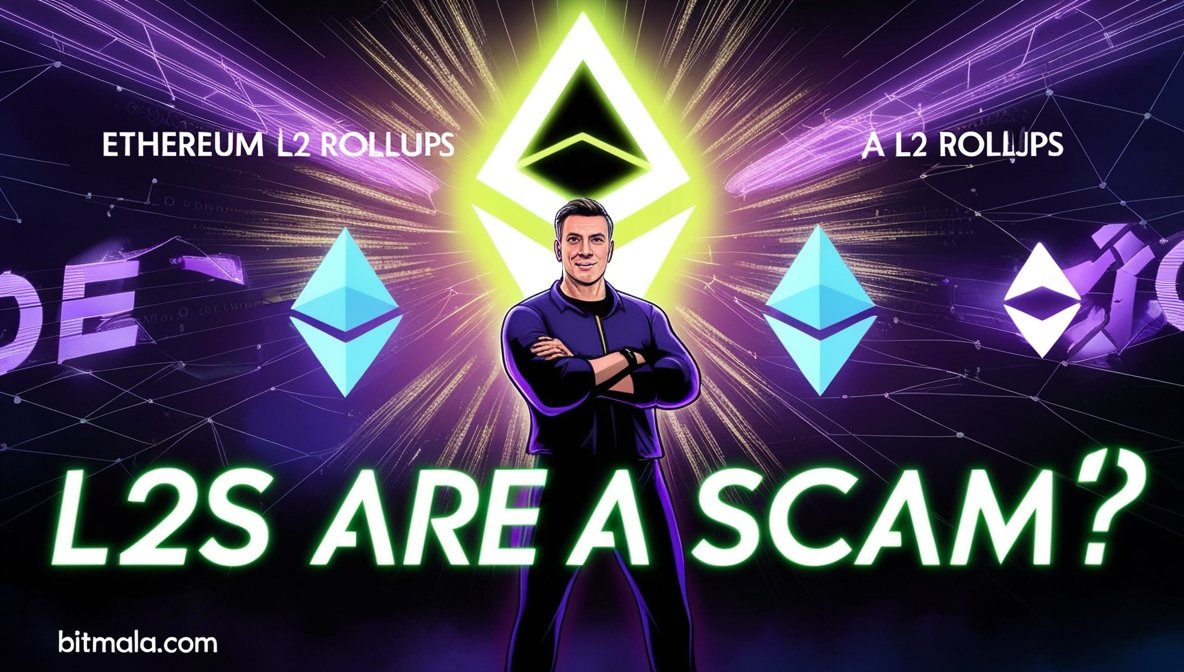
Breaking ! Solana’s Anatoly Yakovenko Destroys L2s: The Overhyped Scam?

Solana’s Anatoly Yakovenko Roasts Layer 2: Do We Even Need Them?

Solana co-founder Anatoly Yakovenko is back at it again, dunking on Layer-2 rollups and questioning why they even exist. According to him, L1 blockchains—like solana—are already fast, cheap, and secure enough to handle everything, so why add extra complexity?

Solana L2

Yakovenko argues that L2s just introduce unnecessary risks, like fraud proofs and multi-sig upgrades, which only complicate things. Instead of building an layer 2, he suggests devs just launch a token and call it a day. He believes there’s a limited number of actually useful smart contracts, so the whole layer 2 boom is just overhyped.

Taking shots at Ethereum’s scaling model, he claims layer 2s are actually hurting Ethereum instead of helping it. By siphoning high-priority transactions away from the main chain, Yakovenko thinks they’re weakening Ethereum’s core rather than strengthening it. He’s even called layer 2 “parasitic” since they rely on Ethereum while taking value away from it.

To make things worse for Ethereum, its transaction revenue has crashed by 95% since late 2021. Yakovenko sees this as proof that layer 2 aren’t the solution—they’re part of the problem. In his view, it’s time to stop stacking layers and just make Layer-1s better instead.

What do you think—L2s are the future, or is Yakovenko spitting facts?

You might also like: Bitcoin Whale Awakens, Moves $250M: A Monumental Shift

Bitcoin Whale Awakens, Moves $250M: A Monumental Shift

Bitcoin Whale finally Awake?

A long-dormant Bitcoin Whale wallet has suddenly woken up after eight years of inactivity. According to blockchain analytics firm Arkham Intelligence, the whale has moved over $250 million worth of Bitcoin.

Bitcoin Whale

The transactions were executed within the last 16 hours, showing that the value of the holdings has appreciated from approximately $3 million in early 2017 to over $250 million today. Before yesterday’s transfers, the wallet had maintained its Bitcoin in a single address for more than eight years.

The transactions, visible on Arkham’s monitoring dashboard, show the funds moving between several wallets labeled as “250M BTC Whale” addresses.

Specifically, the transactions took place in two batches about 14-16 hours ago, with each transfer involving approximately 3,000 BTC worth roughly $252 million per transfer.

Whale Purchased Bitcoin When It Was Around $1,000

According to the transaction history, the Bitcoin was originally purchased around 2016, when BTC traded at approximately $1,000 or lower.

Before these recent movements, the last transactions from these wallets occurred around 8 years ago, as shown by the timestamps in Arkham’s data—the early transactions from 2016 show the accumulation of Bitcoin when the cryptocurrency was less valuable.

The awakening of dormant wallets from Bitcoin’s earlier years has become increasingly rare. These events offer a glimpse into the major wealth creation experienced by early adopters who maintained their holdings through multiple market cycles.

While some long-term holders maintain their Bitcoin positions, industry experts are debating whether Bitcoin’s traditional four-year market cycle will be sustained into the future. Tomas Greif, Chief of Product & Strategy at Braiins, recently questioned the sustainability of these cycles:

“Is the 4-year Bitcoin cycle dead? Early on, halvings had a major supply impact. But as the majority of BTC has been mined, their effect is shrinking. In a couple of halvings, they will have a negligible effect on supply,” Greif noted.

He suggests that while historical patterns may continue as a “self-fulfilling prophecy,” the fundamental impact of halvings on Bitcoin’s supply disappears with each cycle. Greif emphasized that halvings will continue to affect Bitcoin mining economics regardless of market cycles.

Is the Surge in Crypto world pulling dormant Bitcoin Whale?

YOU MIGHT ALSO LIKE: $TRUMP Token Surges 13%: Memecoin’s Hope? Or Despair?

TRON DAO & Pump.fun Launch PumpSwap: 3 Ways This Boosts Cross-Chain Liquidity!

TRON DAO’s Bold Move to Expand Its DeFi Footprint on Solana

In a groundbreaking move, TRON DAO has strategically partnered with Pump.fun to launch PumpSwap, a new decentralized exchange (DEX) designed to enhance cross-chain liquidity. This collaboration is a key part of TRON’s long-term vision to solidify its presence in the decentralized finance (DeFi) space, and it marks a significant step forward in the expansion of TRON’s cross-chain capabilities.

Tron Dao
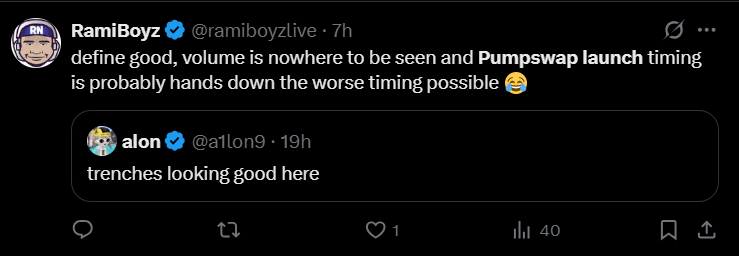
How people on X are reacting

Learn more about Tron by clicking here

By bridging TRX to Solana, PumpSwap will help create a new liquidity hub that connects the Solana and TRON ecosystems. This integration not only benefits TRON but also increases the accessibility of Solana’s network, providing a more seamless experience for users looking to trade and interact with a variety of crypto assets. The TRON-Solana collaboration is expected to play a pivotal role in enhancing blockchain interoperability, ultimately reducing friction between different blockchain networks.

In addition, PumpSwap will bring about a host of features designed to make liquidity management more efficient. These include streamlined token trading and a revenue-sharing scheme that allows creators to earn while contributing to the ecosystem. This is a clear indication of TRON’s commitment to improving the DeFi space by fostering greater liquidity and user engagement.

As TRX begins to flow into Solana, more users are likely to explore the Solana ecosystem, resulting in an increase in both TRON DAO’s DeFi adoption and Solana’s market presence. This could open doors to even more cross-chain collaborations and opportunities, positioning TRON and Solana as leaders in the blockchain interoperability movement. TRON DAO’s partnership with Pump.fun not only strengthens its role in DeFi but also lays the groundwork for a more interconnected and accessible decentralized future.

Also Read: Pakistan’s Bitcoin Mining Hope for Powering a New Era

Exit mobile version