Latest News

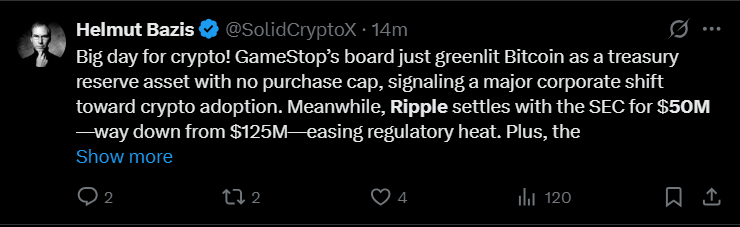
Breaking !Ripple’s $50M SEC Victory: 5 Game-Changing Moves for Its U.S. Comeback!

SEC Lawsuit Finally Over

Ripple CEO Brad Garlinghouse has announced a major shift back toward the U.S. market after winning the company’s legal battle against the Securities and Exchange Commission (SEC).

Previously, 95% of Ripple’s customers were outside the U.S., but now, the company believes it can strengthen its position at home.
Ripple

A Long Legal Battle Ends

The SEC sued Ripple in December 2020, claiming XRP was an unregistered security. After years of legal fights, Ripple has officially settled the case. The SEC dropped its lawsuit, agreed to a $50 million fine, and withdrew its appeal.

With this victory, it can now sell XRP to institutional investors without any restrictions, which Garlinghouse called a huge win for the entire crypto industry.

Ripple’s Renewed U.S. Focus

Even during legal troubles, it continued expanding internationally. But now, with the lawsuit behind it, the company is refocusing on the U.S., where many businesses had hesitated due to regulatory uncertainty.

The crypto regulatory environment in the U.S. is changing, with Donald Trump’s administration pushing pro-digital asset policies. Trump recently launched a Crypto Advisory Council, and rumors suggest that Garlinghouse may play a role.

Challenges Still Remain

Despite its legal win, it faces tough competition. The crypto payments market is dominated by stablecoins like USDT and USDC, so Ripple must prove its tech is valuable to U.S. businesses.

Additionally, crypto regulations in the U.S. remain unclear. It must navigate these complexities while competing with other blockchain-based payment solutions.

Looking Ahead

With the SEC battle behind it and regulatory shifts in its favor, Ripple sees massive potential in the U.S. market. The company plans to use its technology, partnerships, and reputation to make XRP a key player in American finance.

Garlinghouse emphasized that Ripple never wanted this legal fight, but had to stand its ground. Now, with victory secured, the company is ready to move forward and establish itself as a major force in the U.S. crypto space.

You might also like: Google Play Blocks 17 Crypto Exchanges in South Korea Causing Havoc

Google Play Blocks 17 Crypto Exchanges in South Korea Causing Havoc

Google Play Blocks 17 Crypto Exchanges in South Korea

South Korea’s Financial Services Commission (FSC) has successfully pushed Google Play to restrict 17 unregistered overseas crypto exchanges operating in the country. This move aims to prevent money laundering and protect local users from potential financial risks.

List of 17 Google Play Blocks

Regulators Tighten Crypto Oversight

On March 21, the Financial Intelligence Unit (FIU) of the FSC signaled possible sanctions against exchanges that failed to register under the Specified Financial Information Act. By March 26, Google Play had blocked 17 platforms, including KuCoin, MEXC, and Phemex, restricting new downloads and updates.

More Restrictions on the Way?

The FSC is now coordinating with Apple Korea and internet regulators to extend access restrictions to the App Store and web platforms. Meanwhile, South Korea’s broader crypto crackdown continues, with authorities recently raiding Bithumb over financial misconduct allegations.

As regulatory scrutiny intensifies, the future of unregistered crypto exchanges in South Korea remains uncertain.

YOU MIGHT ALSO LIKE: Lightchain AI Nears $20M Presale as Mainnet Launch Approaches!

North Carolina Now Pushes 2 Crypto Bills to Tap 5% of Pension Funds

North Carolina Lawmakers Push Bills for Crypto Pension Investments

Crypto Bills considered by North Carolina as investments for public pension funds. Lawmakers recently introduced two bills that would allow up to 5% of certain funds to be allocated to digital assets, including cryptocurrencies, stablecoins, and NFTs.

Crypto Bill

Two Bills to Boost Crypto Exposure

House Bill 506, filed by Representative Brenden Jones, and Senate Bill 709 aim to create an independent “Investment Authority” to manage pension fund allocations. This authority would operate separately from the State Treasurer and ensure secure custody of digital assets.

Growing Trend Across U.S. and Beyond

North Carolina follows Indiana, Kansas, and Florida in exploring crypto-based pension fund investments. Globally, pension funds in Australia and Norway have also increased their crypto exposure, reflecting a shift toward digital asset adoption.

If passed, these bills could position the state at the forefront of crypto adoption in public finance.

YOU MIGHT ALSO LIKE: ENA’s $3.29M Token Unlock: Will It Ignite a Rally or Not?

ENA’s $3.29M Token Unlock: Will It Ignite a Rally or Not?

ENA Price Heats Up Ahead of Unlock

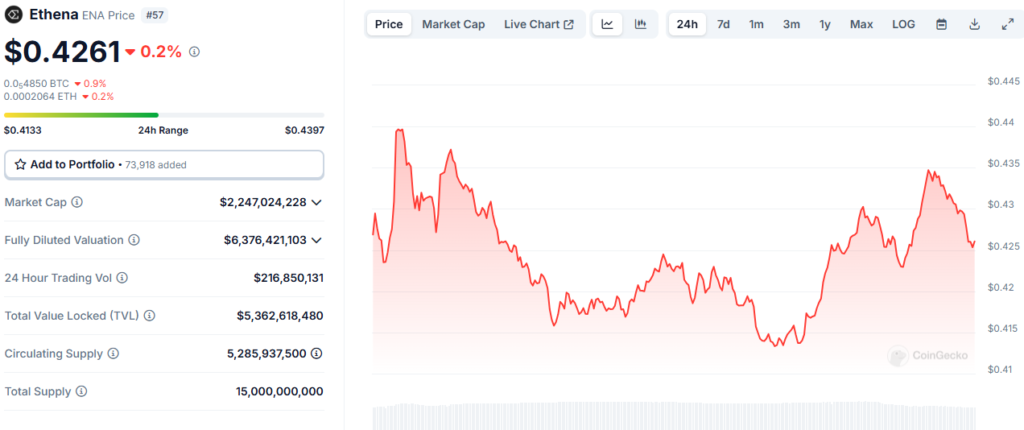
Ethena’s ENA token is on fire as it nears a major unlock in just an hour. The price has climbed 4.66% in the last 24 hours, currently sitting at $0.4170, with its market cap hitting $2.2 billion. Trading volume has also surged 17.35% to $231.46 million, as traders brace for impact.

ENA
Live graph from Coingecko

What’s Being Unlocked?

This event will introduce 7.93 million ENA tokens into circulation, valued at around $3.29 million. While this amount alone might not be a game-changer, the real concern lies ahead—a massive cliff unlock is coming soon.

A total of 7.93 million of the token, worth $3.29 billion, is about to flood the market. That’s huge, and traders are watching closely to see if the token will hold its ground or face a wave of sell-offs.

How Much ENA Is Still Locked?

  • 51.32% (7.70B ) is still locked.
  • 35.19% (5.28B ) is already in circulation.
  • 13.49% (2.02B ) is “TBD locked” with an uncertain release date.

Who Holds the Supply?

  • 25% – Private investors
  • 30% – Team, advisors, and contractors
  • 17.5% – Ecosystem incentives
  • 15% – Foundation
  • 12.5% – Airdrops and bounties

The Bigger Picture: Ethena’s Synthetic Dollar Vision

It isn’t just about the token—it’s building a synthetic dollar protocol on Ethereum. Their key product, the Internet Bond, aims to be a crypto alternative to traditional savings.

But for now, all eyes are on this massive token unlock. With billions of tokens about to hit the market, the big question remains—will the price keep rising, or is a major dump coming?

Also Read: Lightchain AI Nears $20M Presale as Mainnet Launch Approaches!

Lightchain AI Nears $20M Presale as Mainnet Launch Approaches!

Last Chance to Get In Before Mainnet

Lightchain AI is making waves as its presale enters its final stage, raking in an impressive $18.25 million so far. With only $2 million left to raise and just a few days remaining, the hype is real. Right now, each token is priced at $0.007, marking the last opportunity to invest before the mainnet launch.

Lightchain

What Makes Lightchain AI Different?

This project is shaking things up by combining artificial intelligence with blockchain in a groundbreaking way. The Proof of Intelligence (PoI) model rewards users for performing AI-driven tasks—whether it’s training systems, solving problems, or enhancing AI security.

The Power of AIVM

A major highlight of Lightchain AI is its Artificial Intelligence Virtual Machine (AIVM), which serves as the backbone for AI operations on the blockchain. What sets it apart? It’s designed to continuously evolve, as developers worldwide contribute to its growth. Plus, with ready-to-use APIs and SDKs, it eliminates barriers for developers, making it easy to integrate AI into blockchain applications.

Security, Privacy, and Growing Investor Interest

Lightchain AI is built with robust security and privacy protections, ensuring user trust and data safety. With the testnet already live and the mainnet launch approaching, big-name investors are taking notice.

What’s Next for Lightchain AI?

Beyond the mainnet launch, exciting developments like Lightdex Swap and validator support guides are in the pipeline. As it nears the finish line, Lightchain AI is positioning itself as a key player in the AI-blockchain space, drawing comparisons to projects like XRP and Cardano.

With the presale nearly sold out, this moment could be a game-changer for Lightchain AI.

You might also like: Crypto Influencer BitBoy Arrested Amid Controversial Legal Battle Involving 2 Warrant Claims

Crypto Influencer BitBoy Arrested Amid Controversial Legal Battle Involving 2 Warrant Claims

BitBoy’s Arrested: The Warrant Reveal

BitBoy Arrested: On March 25, crypto influencer Ben Armstrong, also known as “BitBoy,” was arrested in Florida after disclosing on X (formerly Twitter) that a warrant had been issued for his arrest. He claimed the warrants stemmed from emails he sent to Judge Kimberly Childs of Cobb County, Georgia, while handling his legal matters.

BitBoy Arrested

Legal Troubles and Past Arrests

BitBoy arrested case isn’t his first encounter with the law. In September 2023, he was arrested while livestreaming outside the home of a former associate, accusing them of holding his Lamborghini.

Current Situation

Armstrong was taken into custody by the Volusia County Division of Corrections at 7:18 pm local time. It’s unclear if Armstrong has legal representation at this time, and he has not commented on the situation.

YOU MIGHT ALSO LIKE: 5 Powerful Upgrades: SingularityNET’s Key AI Platform Enhancements

As his legal battles continue, the crypto community watches closely to see how this will unfold for the controversial figure.

5 Powerful Upgrades: SingularityNET’s Key AI Platform Enhancements

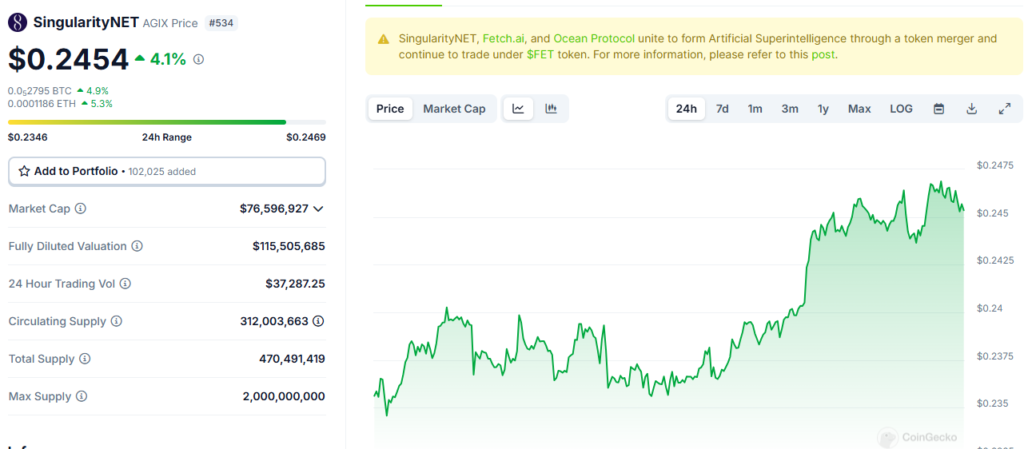
Yo, the latest biweekly update from SingularityNET is out, and they’re making some serious moves! Here’s the lowdown on the 5 major upgrades they’re bringing to the Decentralized AI Platform:

SingularityNET
Live graph from coingecko

1. Daemon Gets an Epic Boost 💪

They’ve made some big improvements to the Daemon, like dynamic reconnection to etcd. What does that mean for you? Basically, the platform will run smoother when metadata changes happen. They’ve also added functional tests for IPFS methods to make things even more reliable.

2. Developer Portal 2.0 🔥

Say goodbye to the old and hello to a fresh new interface for developers! The new portal is super sleek, with easier navigation to find all the info you need faster. No more wasting time trying to dig through endless pages.

3. SDK Updates: NodeJS & Python 🖥️

Big updates to the NodeJS SDK, and the Python SDK has a full makeover too! They’ve reviewed the NodeJS SDK and prepped it for the next release. The Python SDK got major fixes and improvements, plus they’ve added new guides to make it easier for you to use. So much more smooth sailing ahead!

4. Cardano Hardfork: All Systems Go 🚀

SingularityNET is fully ready for the Cardano Chang Hardfork! All nodes are updated, the dbsync component is synced, and everything’s good to go. They’ve even modified all bridge scripts to work perfectly with the new standards.

5. About SingularityNET 💡

For those who don’t know, SingularityNET is all about making AI decentralized, open to everyone, and free from corporate control. Founded by Dr. Ben Goertzel, they’ve got a killer team working on everything from robotics to AI in the arts. They’re building the future of Artificial General Intelligence (AGI).

Its making waves, and these upgrades are just the beginning. If you’re a dev or crypto fan, you’ll definitely want to stay tuned to see what’s next!

You might also like: Binance Suspends 1 Staff Amid Explosive Insider Trading Scandal

Oklahoma House Passes Bill to Hold 5% Bitcoin Reserve

State Pushes for Crypto in Financial Reserves

The Oklahoma House of Representatives has approved House Bill 1203, paving the way for Bitcoin to become part of the state’s financial reserves and retirement funds. The bill, passed primarily by Republican lawmakers, now moves to the Senate for further consideration.

Oklahoma House Bitcoin Reserve

Bitcoin Reserve Cap Lowered to 5%

Initially, the bill proposed allowing up to 10% of state funds to be invested in cryptocurrencies. However, an amendment reduced this cap to 5% to mitigate market volatility risks.

State Rep. Cody Maynard (R-Durant) explained:

“This ensures digital asset investments remain controlled while still allowing Oklahoma to benefit from Bitcoin’s long-term potential.”

Who Opposed the Bill?

While the bill saw strong Republican support, House Democrats raised concerns.

  • Rep. Andy Fugate questioned the absence of a rebalancing provision but ultimately supported the measure.
  • Rep. Melissa Provenzano asked if retirees could opt out of crypto-based pension investments. Maynard clarified that pensioners cannot exclude any specific investment under existing policies.

Oklahoma Moves Closer to Bitcoin Adoption

Under the bill, the state can only invest in digital assets with a market cap exceeding $500 million—a condition that, for now, exclusively applies to Bitcoin Reserve.

If the Senate approves the bill, Oklahoma could become one of the first states to integrate Bitcoin into its treasury reserves, setting a potential precedent for others to follow.

Will this trend of Bitcoin Reserve grow or will it stop?

YOU MIGHT ALSO LIKE: Binance Suspends 1 Staff Amid Explosive Insider Trading Scandal

Binance Suspends 1 Staff Amid Explosive Insider Trading Scandal

Binance Employee Under Investigation

Binance has suspended a staff member following an internal investigation into insider trading allegations. The employee allegedly leveraged privileged information from a previous role to front-run trades before a token launch.

Binance

Suspicious Trading Activity Triggers Probe

On March 23, Binance received a complaint about unusual trading activity linked to a newly launched token. By March 25, the exchange confirmed that an employee from its Wallet team had used insider knowledge gained from their prior position at BNB Chain.

Front-Running a Token Generation Event

Reports indicate the staffer purchased a large amount of the project’s tokens via multiple connected wallets before the public launch. Once the announcement went live, they partially liquidated their holdings, securing a significant profit.

“The employee has been suspended immediately, and further disciplinary action is underway,” Binance stated, adding that it will cooperate with authorities and handle assets per regulatory guidelines.

Allegations Point to a Former BNB Chain Manager

Although Binance did not name the individual, speculation quickly spread on social media. Users on X linked the suspicious activity to Freddie Ng, a former BNB Chain operations manager who recently joined Binance’s Wallet business development team.

Blockchain journalist Colin Wu reported that a wallet allegedly tied to Ng spent $6,200 to acquire 24.1 million UUU tokens (2.4% of the total supply) before the public launch. Around 6 million tokens were later sold, generating $113,000 in profits.

Crypto’s Persistent Insider Trading Problem

Insider trading has long plagued the crypto industry, disadvantaging retail investors and eroding trust in digital assets.

Notable Insider Trading Cases in Crypto

  • Coinbase Scandal (2022) – Ex-manager Ishan Wahi leaked token listing details to his brother and friend, leading to insider profits.
  • Binance’s BOME Investigation (2023) – The exchange investigated internal trading tied to the launch of Solana-based meme coin Book of Meme (BOME).
  • Aerodrome Finance (2024) – Suspended contributors following suspicious trades before the launch of Venice’s VVV token.
  • Mystiko Network Airdrop Scandal (2023) – On-chain data exposed insider transactions funneling tokens into newly created wallets.
  • LIBRA Meme Coin Controversy (2024) – Allegedly gave insiders early access, allowing them to profit $110 million post-launch.

Despite strict regulations and potential legal consequences, insider trading remains rampant in crypto markets. Binance’s latest case reinforces the urgent need for greater transparency and regulatory oversight in the industry.

YOU MIGHT ALSO LIKE:$13M Vanishes as GMX-Abracadabra Link Falls Prey to Heinous Exploit

Tether’s Unstoppable Dominance: How USDT is Shaping the Crypto Market in 2025

Tether (USDT) Dominance: Key Insights for Traders in 2025

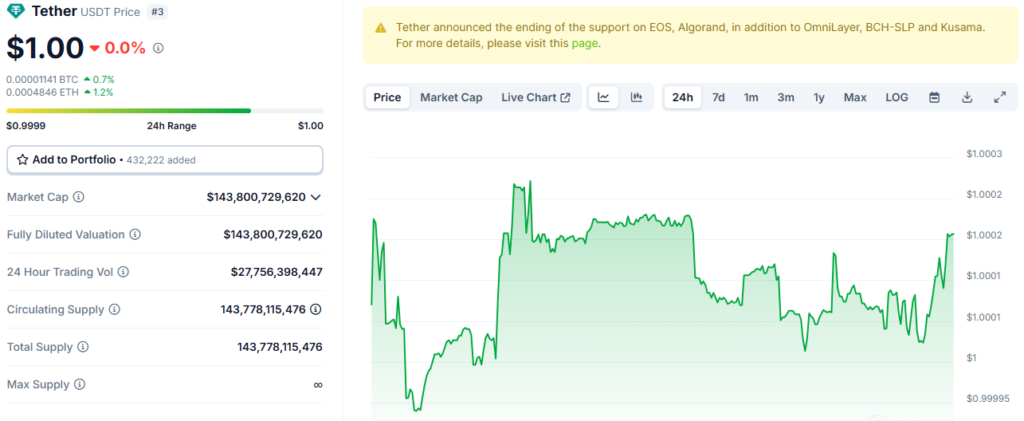
Tether (USDT) is maintaining its stronghold in the cryptocurrency market, solidifying its place as the leading stablecoin. On March 25, 2025, Paolo Ardoino, CEO of Tether, tweeted about the company’s continuing dominance, which was featured in an analysis by ABC Money. The article emphasized Tether’s central role in the crypto ecosystem, noting that USDT’s market cap reached $112 billion by March 25, 2025, representing nearly 70% of the entire stablecoin market.

Tether
Live graph from coingecko

Tether’s Market Impact: Liquidity & Trading Volume

USDT’s dominance is evident in its staggering 24-hour trading volume of $56.3 billion, according to CoinGecko. This liquidity makes USDT an essential asset for crypto traders. As of 11:00 AM UTC, USDT was involved in 52% of all trades on major exchanges like Binance and Coinbase (source: CryptoCompare). Its significant presence in the market ensures that large trades can be executed without heavily impacting prices, creating a more stable and efficient trading environment.

Moreover, on-chain data indicates that the number of USDT transactions on the Ethereum network surged by 15% in the last week, hitting 1.2 million transactions as of March 25, 2025 (source: Etherscan). This uptick in transactions highlights the growing reliance on Tether for executing transactions and storing value within the crypto ecosystem.

Market Sentiment & Volatility

The dominance of USDT also influences broader market sentiment. For example, on March 25, 2025, the USDT/USDC trading pair saw a slight increase in value, suggesting that traders are preferring USDT over USDC at this moment (source: CoinDesk). As USDT remains the go-to stablecoin for trading pairs, its dominance can increase volatility in other cryptocurrencies, with traders using USDT to shift between volatile assets.

The ETH/USDT pair on Kraken saw a 3% increase in trading volume, totaling $3.2 billion in the last 24 hours as of 3:00 PM UTC (source: Kraken). This suggests that traders continue to use USDT as a safe base for trading more volatile cryptocurrencies.

Technical Indicators for USDT in March 2025

From a technical perspective, Tether’s dominance is supported by several key indicators. The Moving Average Convergence Divergence (MACD) for the USDT/BTC pair showed a bullish crossover on March 25, 2025, indicating potential upward momentum (source: TradingView). Additionally, the Relative Strength Index (RSI) for the pair stood at 62, reflecting a balanced market without signs of being overbought or oversold (source: TradingView).

High trading volumes for USDT across major exchanges like Huobi, which reported a 24-hour volume of $45 billion (source: Huobi), further indicate that Tether remains a primary asset for traders. Furthermore, the average transaction size for USDT on the Tron network increased by 10%, reaching $15,000 over the last week (source: TronScan), showing that larger investors are increasingly turning to Tether for their transactions.

Key Takeaways for Traders

Tether’s dominance in the crypto market as of March 25, 2025, has significant implications for traders. The stability and liquidity offered by USDT are crucial for executing large trades and ensuring efficient market movement. Its influence on market sentiment, trading volume, and on-chain activity is undeniable. Traders should closely monitor USDT’s market share, transaction volumes, and technical indicators to capitalize on the opportunities it presents.

Also Read: Ethereum’s Price Struggles: Is a $1,200 Crash Incoming?

Exit mobile version