
Latest News

Europol Cracks Down on Underground Bankers Linked to Crypto Crime Network

Europol busted underground crypto bankers across six countries, seizing €25M+ in assets and weakening major crime networks.

Europol has just scored one of the biggest victories with the dismantling of an underground network of bankers running crypto dirty operations. These bankers weren’t your everyday fraudsters but professionals who had been involved in money laundering to feed drug trafficking, arms smuggling, and even contract killers.

It was a huge takedown: six countries, including Spain, Belgium, Bulgaria, the Netherlands, and the United States. The operation focused on a Europol-coordinated strike in Malaga, Spain, managing to arrest nine suspects with more than €25 million in cryptocurrency, €35,000 in cash, and a haul of gold and luxury goods. These arrests reached deep into the financial networks that keep international crime groups running.

Of course, it is not Europol’s first rodeo; after all, there were other similar busts like Operations GORGON and WHITEWALL, in which they targeted the financial backbones of the criminal networks. Plus with their expertise in organized crime and financial investigations, law enforcers are turning the screw on underground banking.

What is unique about this bust, however, is the international collaboration wherein agencies across Europe, even extending to the U.S., shared information and coordinated efforts. The results? The crime networks are left scrambling, and Europol has sent a very clear message: there’s nowhere to hide from them.

This operation does not just undermine criminal organizations; it shows that the key to really knocking out these criminal organizations is through international cooperation.

You might like: Crypto Crime Boss Caught in India After Running Epic Scams
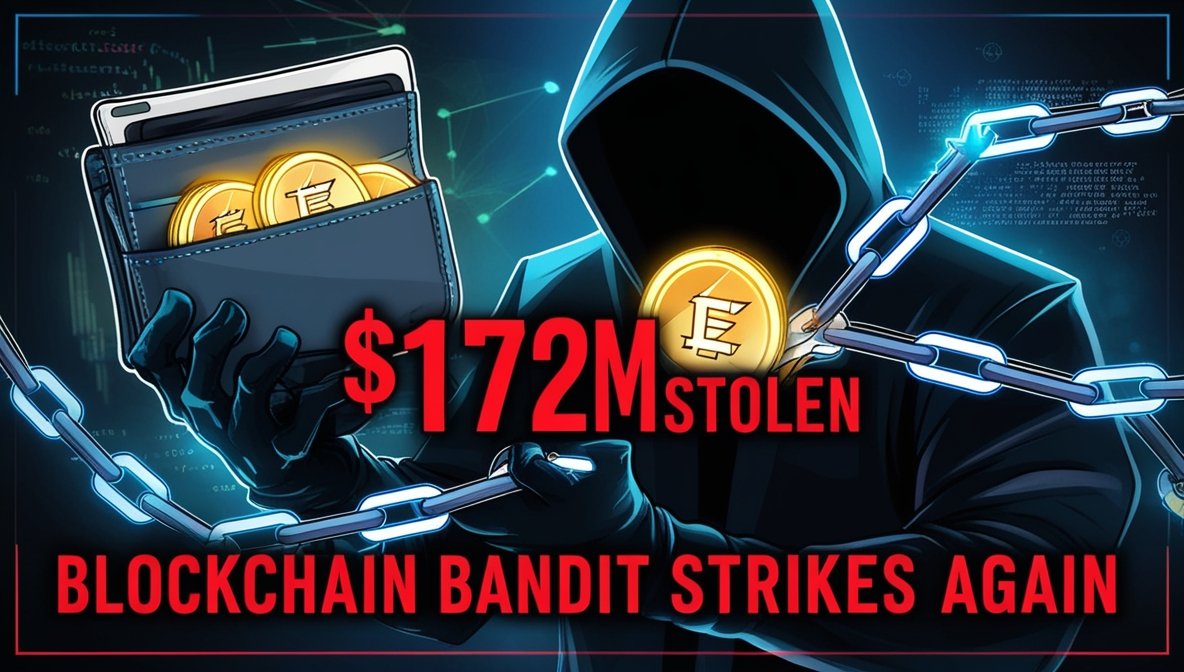
Blockchain Bandit Resurfaces, Moves $172M in Stolen Ether After Two Years

The “Blockchain Bandit” moved $172M ETH after two years, exposing weak private keys and sparking crypto security concerns.

The infamous “Blockchain Bandit” is back in action, moving a massive $172 million in Ether (ETH) after a two-year break. On December 30, the hacker transferred 51,000 ETH from 10 different wallets to a single multi-signature address, consolidating the stolen funds. The transfers happened in batches of 5,000 ETH between 8:54 pm and 9:18 pm UTC.

The funds had been untouched since January 2023, when the Bandit also moved 470 Bitcoin (BTC). This hacker first made waves by using a method called “Ethercombing,” where they exploited weak private keys by guessing them with faulty code and random number generators. In total, the Bandit managed to crack 732 private keys, linked to over 49,000 transactions, according to blockchain investigator ZachXBT.

Experts in crypto security are very vocal on their concerns about the risks associated with vulnerable private key creation. Weaker random number generators can make it easy for hackers to copy keys and access wallets. The rise in bitcoin thefts coincides with the Blockchain Bandit’s comeback, with billions stolen in the last year alone.

To stop these assaults that target centralized exchanges and custodial platforms, experts are encouraging cryptocurrency users and platforms to bolster security with better key management, cold wallets, and regular system audits.

You might like: Crypto Crime Boss Caught in India After Running Epic Scams

Crypto Crime Boss Caught in India After Running Epic Scams

Summary: A major scammer from Uttar Pradesh has been nabbed in Cambodia for running a massive crypto hustle. His crew tricked thousands of people across South Asia, mixing fraud, human trafficking, and cyber slavery.

Crypto Kingpin’s Global Scam

Devendra Pratap Mourya, a UP native, was the mastermind behind a gang of 40+ cyber crooks in Cambodia. The mastermind behind this scummy act used fake apps and scams to steal from people worldwide, turning the stolen money into crypto. From scamming folks to using mule accounts and pre-paid SIMs, this crew was all about the digital grind, pretending to offer dream tech jobs that were actually a trap.

YOU MIGHT ALSO LIKE: Crypto Scam Exposes Three Victims from Ottawa

From Dream Jobs to a Nightmare

Victims thought they were landing legit IT gigs, only to end up stuck in Cambodia with their passports taken away. Trapped in a cycle of forced cybercrime, many were pushed into scams they never signed up for. One fake app, Indira Securities, made Rs 67.7 lakh pretending to be a legit trading platform.

Scam Empire Exposed

Thanks to the investigation by Odisha police, this international crime ring got exposed. With Mourya behind bars, authorities are aiming to take down the whole crypto-fueled scam operation, shedding light on how digital currencies are powering these shady online hustles.

YOU MIGHT ALSO LIKE: Trader Scores $634K Jackpot on Kekius Maximus After Musk’s Wild Move

Sonic Foundation Unveils $SONIC Token to Power Scalable Blockchain Ecosystem

Sonic drops $SONIC token. This time its blending Solana tech and HyperGrid scaling for next-gen blockchain gaming, staking, and Web3 growth.


Sonic Foundation just unveiled $SONIC, a utility token designed to supercharge its blockchain ecosystem. The Sonic HyperGrid architecture fuses Solana’s high-speed blockchain with horizontal scaling to solve major issues like scalability, costs, and customizability—making it a game-changer for Web3 apps and on-chain gaming. Its just faster transactions, cheaper fees, and seamless integration.

Sonic SVM, the first Solana Virtual Machine chain, takes scalability to the next level by syncing states almost instantly. $SONIC fuels this ecosystem, acting as a payment method, staking reward, and governance tool for validators and users.

Here’s the deal: 2.4 billion $SONIC tokens will power Sonic’s growth. At launch (January 7, 2025), 15% of the supply hits the market. Distribution? Community and dApps get 30%, HyperGrid rewards 20%, early backers 23%, and the rest goes to the foundation and advisors. Plus, an upcoming 7% airdrop rewards early contributors, with last-minute entries open via SonicX.

Roadmap vibes? Q4 this year kicks off the Sonic SVM launch and $SONIC token drop. Q1 next year sees mainnet bridges and NFT integrations, while Q2 expands staking and gaming tools.

Sonic’s goal? Bridge Web2 to Web3, redefine blockchain gaming, and scale blockchain tech for the masses.

You might like: Trader Scores $634K Jackpot on Kekius Maximus After Musk’s Wild Move

Crypto Scam Exposes Three Victims from Ottawa

Three Ottawa locals got scammed in a global crypto fraud. OPP froze $24M, traced wallets, but arrests are tricky abroad.

Three Ottawa folks just got hit by a massive global crypto scam, according to the Ottawa Police Service (OPS). The Ontario Provincial Police (OPP) stepped up with Project Atlas to fight crypto fraud, freezing $24M in fake losses and stopping scammers from stealing over $70M. But here’s the catch—no arrests yet because the culprits are abroad, outside Canadian jurisdiction.

Detective Constable John Armit explained how the OPP used blockchain tech to trace stolen crypto to shady wallets. But tracking down these scammers is tough since crypto is mostly anonymous. The cops followed the victims’ transactions on the public blockchain and flagged dodgy wallets to exchanges worldwide, saving future victims from falling for the same trap.

Turns out, scammers tricked people with fake platforms showing fake profits, luring them to invest more. When they tried withdrawing funds, they were slapped with a bogus “crypto tax.” One victim lost six figures, another $10K, but thankfully, one person got an early heads-up and dodged a huge loss.

Mike Bickerton from the OPP Cyber-Enabled Fraud Team warned that scammers are using crypto for global money laundering. His advice? Learn the red flags before diving into crypto investments. Stay sharp, folks—don’t get played!

You might like: Hong Kong Wants to Flex BTC Reserves: Crypto Glow-Up Incoming?

Trader Scores $634K Jackpot on Kekius Maximus After Musk’s Wild Move

Summary:
One lucky trader turned a $4.3K bet on memecoin Kekius Maximus ($KM) into a jaw-dropping $634K after Elon Musk’s Twitter update sent the coin skyrocketing by 17,000%.

Musk’s Meme Magic Sparks $KM Frenzy

It all kicked off when Elon Musk changed his Twitter name to “Kekius Maximus” and swapped his profile pic to a mash-up of Pepe the Frog and Gladiator’s Maximus. Within hours, Kekius Maximus ($KM) shot up over 500%, making it the new darling of the memecoin scene. The frenzy didn’t stop there spinoff Kekius-themed tokens popped up, some gaining over 200% within mere hours.

YOU MIGHT ALSO LIKE: Hong Kong Wants to Flex BTC Reserves: Crypto Glow-Up Incoming?

From $4K to $634K in Nine Hours

In a crazy turn of events, a trader who bought 18.15 million $KM for just $4,360 woke up to a portfolio worth $634K. Was it pure luck or insider intel? That’s the big question. Musk’s influence in the crypto world is undeniable, but this wild ride is a reminder of just how unpredictable—and chaotic—the memecoin market can be.

The Bigger Picture

While $KM memes are hilarious, they also spotlight crypto’s rollercoaster risks. Some cheer the hype, others whisper insider trading. Either way, Kekius Maximus proves the meme economy is as unstoppable as Musk’s Twitter antics.

YOU MIGHT ALSO LIKE: Solana Co-Founder Faces Lawsuit Over Alleged Misuse of Ex-Wife’s SOL

Hong Kong Wants to Flex BTC Reserves: Crypto Glow-Up Incoming?

Summary:
Hong Kong lawmaker Wu Jiexhuang says adding Bitcoin to the region’s reserves could be an absolute power move , boosting its crypto cred and pulling in investors. Is Hong Kong gearing up for a crypto takeover?

Hong Kong Wants That Crypto Clout
Wu Jiexhuang, a Legislative Council member, is pitching a bold idea: stash some Bitcoin in Hong Kong’s fiscal reserves. Inspired by countries like El Salvador and Bhutan already vibing with BTC, Jiexhuang thinks this could give Hong Kong major main character energy in the crypto world. He’s also keeping an eye on the U.S., where President-elect Donald Trump is hyping Bitcoin as a strategic reserve asset. Wu sees a chance for Hong Kong to flex its “one country, two systems” edge and snag that first-mover advantage.

YOU MIGHT ALSO LIKE: Solana Co-Founder Faces Lawsuit Over Alleged Misuse of Ex-Wife’s SOL

BTC Reserves Could Be a Power Play
Jiexhuang says stacking Bitcoin isn’t just about looking cool it’s a strategic move to pull in top talent, secure huge investments, and stabilize finances. He very strongly believes this could reduce market chaos, making Bitcoin less wild and more mainstream. If Hong Kong takes the leap, it could spark a global trend of governments YOLO-ing into Bitcoin, shaking up the traditional financial vibe.

Hong Kong’s Crypto Era Is Loading
Meanwhile, Hong Kong’s regulators are prepping crypto rules to treat digital assets like the OG financial products. With Bitcoin trending worldwide, this could be Hong Kong’s ticket to becoming a digital finance MVP.

YOU MIGHT ALSO LIKE: Smart $PEPE Trader Bags $11.7M During Market Crash

Solana Co-Founder Faces Lawsuit Over Alleged Misuse of Ex-Wife’s SOL

Short Summary:
Solana co-founder Stephen Akridge is caught in a messy legal battle with his ex-wife Elisa Rossi, who claims he swiped millions in staking rewards from her crypto wallet.

A Crypto Drama Unfolds
Stephen Akridge, co-founder of Solana, is under fire as his ex-wife Elisa Rossi sues him for allegedly stealing “millions of dollars” in SOL staking rewards. According to court filings in San Francisco, Rossi accuses Akridge of exploiting her lack of crypto knowledge to siphon off rewards she earned through staking—a process that generates passive income for crypto holders. She claims Akridge’s insider knowledge of blockchain tech gave him an unfair advantage in this high-stakes dispute.

YOU MIGHT ALSO LIKE: Smart $PEPE Trader Bags $11.7M During Market Crash

High-Stakes Tokens, Low Trust
While the lawsuit keeps the exact value of the disputed SOL tokens under wraps, Rossi describes the sums as “significant.” She’s also requested parts of the complaint remain confidential. This legal clash puts a spotlight on the risks of shared digital asset management, especially when one party holds all the expertise cards.

SOL: Bouncing Back, Despite the Drama
Meanwhile, Solana itself is thriving, reclaiming its status as a top crypto contender despite past turbulence linked to FTX’s meltdown. The lawsuit might be a headline-grabber, but SOL’s recent surge proves the coin is still a fan favorite in the crypto-verse.

YOU MIGHT ALSO LIKE: SEC Approval for Spot XRP ETF: When’s the Big Green Light?

Smart $PEPE Trader Bags $11.7M During Market Crash

Summary: While many traders as well as crypto enthusiasts where skeptical about $PEPE market dip, one messiah of crypto managed to make an absolutely huge amount of $11.7M by timing their moves like a pro.

The Big Brain Play

Imagine selling all your $PEPE at the perfect moment. That’s exactly what this trader did on December 19, during the market crash. According to Lookonchain, $PEPE had peaked at an all-time high of $0.000028 on December 9, with a market cap of $11.8 billion. But when the hype train hit the brakes, prices tanked 50% in just two weeks.

YOU MIGHT ALSO LIKE: SEC Approval for Spot XRP ETF: When’s the Big Green Light?

Stacking Bags Like a Pro

After making all that money and especially cashing out at the right time, this trader didn’t stop there. They’ve been quietly stacking up $PEPE tokens again, amassing a jaw-dropping 1.42 trillion coins. At current market prices, that stash is worth a solid $24.5M. It’s like they’re playing 4D chess while everyone else is stuck on checkers.

YOU MIGHT ALSO LIKE: Scam Token Linked to Squid Game Tanks 99% on Base

Lessons From the $PEPE King

Timing is everything, especially in the meme coin jungle. While others panic-sold or HODLed through the dip, this trader read the room and turned chaos into straight cash.

SEC Approval for Spot XRP ETF: When’s the Big Green Light?

Quick Recap:The crypto fans and enthsiasts are hyped for Spot XRP ETFs, with big big names like Bitwise, 21Shares and WisdomTree racing for SEC approval.


The ETF Race Is On

XRP’s getting serious love as heavy hitters like Bitwise Asset Management and WisdomTree file for Spot XRP ETFs. First out the gate was Bitwise, dropping their S-1 application on October 2. WisdomTree joined the party in December, pitching their “WisdomTree XRP Fund” to be listed on the Cboe BZX Exchange.

YOU MIGHT ALSO LIKE: Pig Butchering Scams Swipe $3.6B in 2024: Major L for Crypto

Regulatory Roadblocks (Or Not?)

The SEC’s been a total buzzkill for crypto ETFs in the past, citing market manipulation fears. But here’s the twist BlackRock’s Spot Bitcoin ETF got the nod this year, signaling a vibe shift. Plus, SEC Chair Gary Gensler (aka crypto’s biggest villain) is set to leave soon, which could totally change the game.

YOU MIGHT ALSO LIKE: Scam Token Linked to Squid Game Tanks 99% on Base

Ripple Wins & What’s Next

Ripple’s epic legal W against the SEC over XRP’s status as a security adds fuel to the ETF hype train. Analysts say a Spot XRP ETF could bring more big-money players into the game, boosting liquidity and market value. While SEC filings usually take months, keep your eyes peeled 2025 might just deliver the goods in Q1 or Q2.

Exit mobile version