Latest News

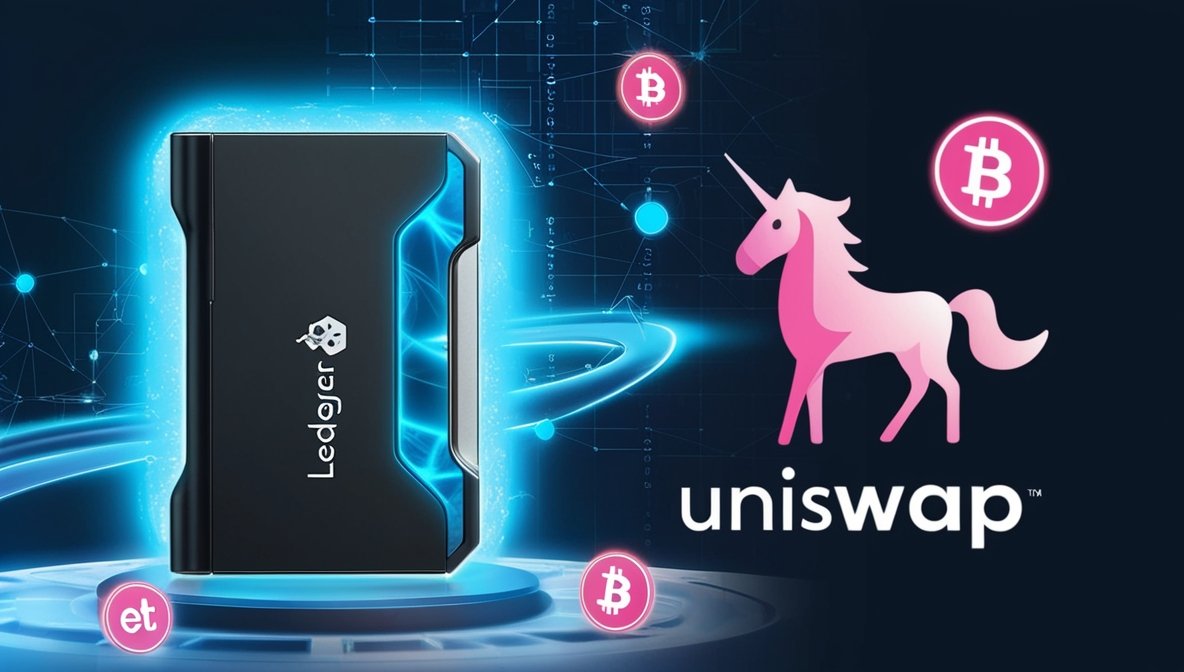
Uniswap and Ledger Partner for Seamless DeFi Swaps in Ledger Live

Uniswap Labs and Ledger have joined forces to make token swaps simpler and safer. With their latest integration, users can now trade directly on Uniswap without leaving the Ledger Live app, ensuring their assets remain protected by Ledger’s hardware wallets.

The integration is powered through the Uniswap Trading API, which grants access to the functionality of the Uniswap decentralized exchange from within Ledger Live. “Our mission is to unlock value through universal exchange,” said Mary-Catherine Lader, COO of Uniswap Labs. “Partnering with Ledger allows us to create a smoother, safer experience for self-custody users.

YOU MIGHT ALSO LIKE: North Korean Hackers Stole $659 Million in Crypto Last Year

The key aspect of this integration is the “clear signing.” It simply means that users will see and understand the details of their transactions in plain language before they actually sign, adding in an extra layer of security. In the words of Ian Rogers, Chief Experience Officer at Ledger: “Clear signing is the only secure way users should be authorizing transactions.”

For one, the integration allows Ethereum-based token swaps, such as exchanging ETH for stablecoins directly within Ledger Live.

Ledger, which has sold over 7 million devices worldwide and secures more than 20% of global crypto assets, sees this as a big step forward. Ian Rogers summed it up: “Ledger Live lets you earn yield, buy, send, and now swap your digital assets with Uniswap – all while staying secure.”

YOU MIGHT ALSO LIKE: JP Morgan predicts XRP ETF could draw $8 billion in investments

This partnership highlights a growing focus on combining simplicity with security for DeFi users.
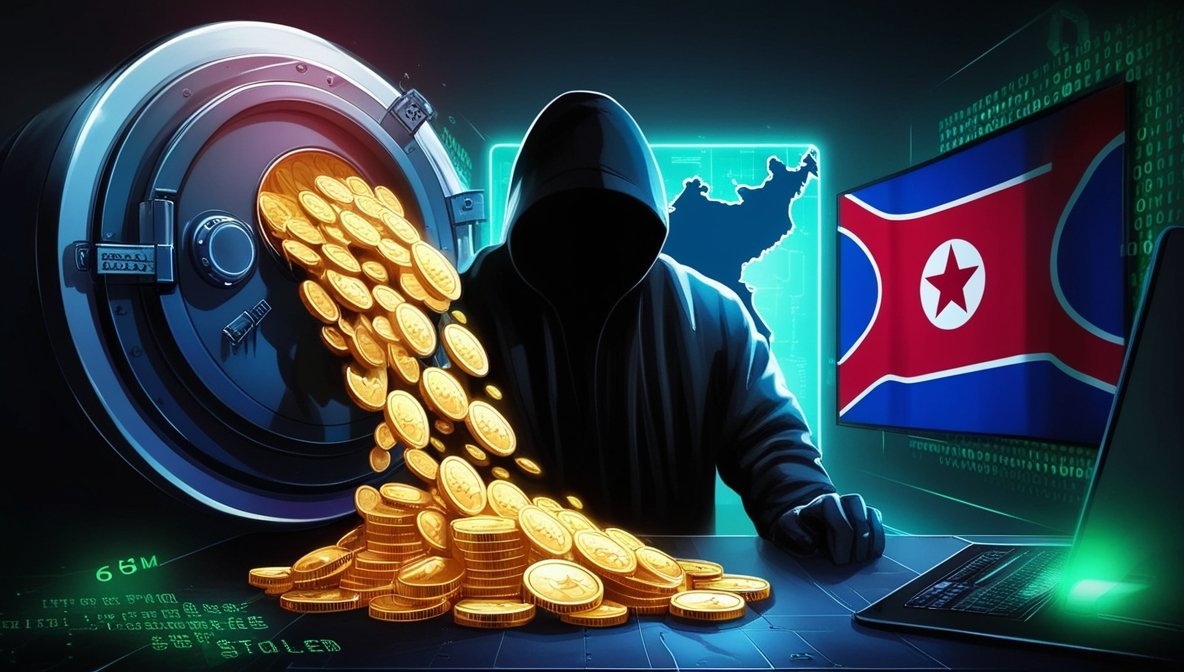
North Korean Hackers Stole $659 Million in Crypto Last Year

In a rare joint statement, South Korea, the U.S., and Japan blamed North Korean hackers for stealing a record $659 million in cryptocurrency previous year. The stolen funds are believed to be going toward North Korea’s illegal weapons programs.

This marks the first time any three nations have blamed North Korea and that also directly for such insane large scale crypto robbery. Among the major targets were India’s WazirX exchange, losing $235 million, and Radiant Capital, which suffered a $50 million hack. An additional $374 million was stolen from platforms like DMM Bitcoin, Upbit, and Rain Management, according to industry reports.

YOU MIGHT ALSO LIKE: JP Morgan predicts XRP ETF could draw $8 billion in investments

Hacking groups like Lazarus, linked to North Korea, are behind these thefts. They executed sophisticated cyberattacks, often employing malware to breach systems. “The DPRK’s cyber program poses a serious threat to global financial stability,” the statement warned.

The statement urged blockchain firms and crypto exchanges to bolster their defenses and avoid unknowingly hiring North Korean IT workers. “Our governments are committed to preventing thefts by the DPRK and recovering stolen funds,” it added.

YOU MIGHT ALSO LIKE: Ethereum Dips Under $3000: What’s Driving the Slide?

North Korea has a long history of using cybercrime to fund its missile and weapons programs. As these attacks grow in frequency and scale, the three nations pledged to work together to counter these rising cyber threats.

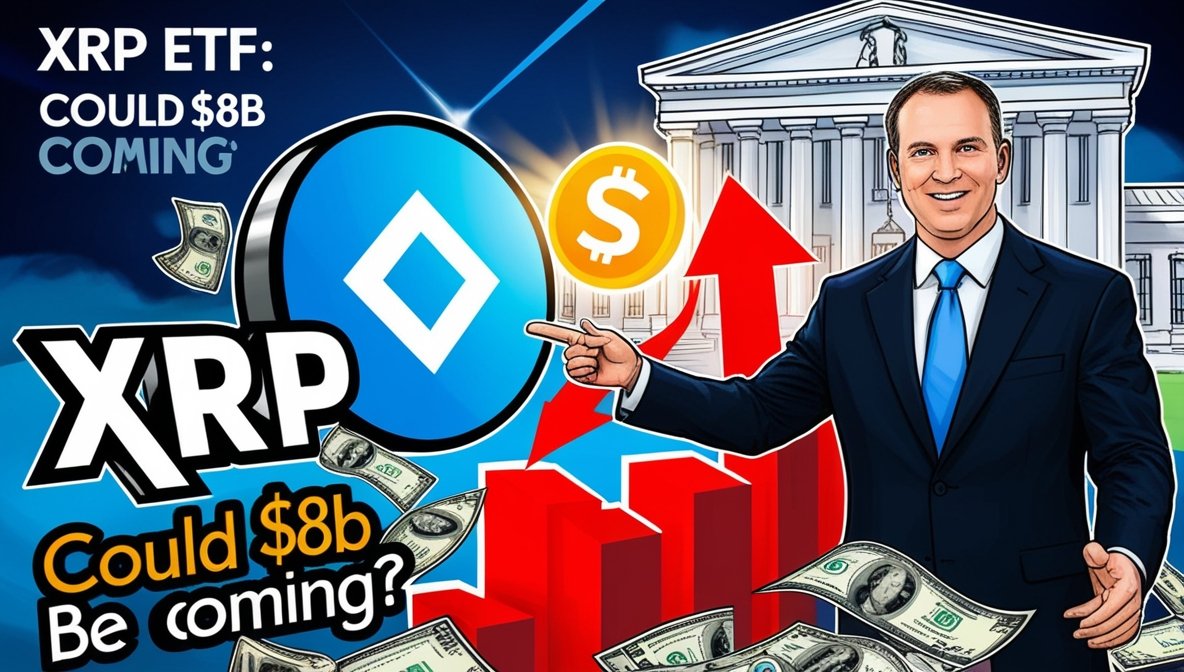
JP Morgan predicts XRP ETF could draw $8 billion in investments

JPMorgan predicts XRP ETFs could pull $3-8B. Ripple’s CEO sees approval soon, especially with SEC shakeups and crypto buzz.

JPMorgan’s dropping some serious predictions—XRP could bring in anywhere between $3 billion and $8 billion if it gets its own spot ETF. This is based on how well Bitcoin and Ethereum ETFs did last year, with Bitcoin’s ETFs already owning around 8% of its market value and Ethereum ETFs taking a smaller chunk at 3%. The big question? Could XRP join that lineup soon?

Monica Long from Ripple is betting on it. She thinks once Bitcoin and Ethereum ETFs are fully approved, XRP will be next. And it’s not just Ripple that’s pushing for this—big players like Bitwise and WisdomTree are already trying to get their own XRP ETFs out there.

Top ETF analyst Nate Geraci is also calling it—XRP’s spot ETF might get approved this year. In fact, users on Polymarket give it a 59% chance of happening by 2025. And the buzz is real, with some saying there’s even a 50% chance it gets approved by July 31.

Ripple CEO Brad Garlinghouse is all in on XRP ETFs, though he thinks the SEC might approve Litecoin ETFs first. But with a new pro-crypto administration on the horizon and SEC chair Gary Gensler stepping down, it’s looking promising for XRP.

Ethereum Dips Under $3000: What’s Driving the Slide?

ETH tanked to $2991 amid rising U.S. bond yields, inflation fears, and whale dominance, leaving traders worried about recovery vibes.


Ethereum (ETH) just got absolutely wrecked. It somehow managed to drop by 8% to $2991 before clawing back to $3017. Traders are trolling, “Is recovery even a thing now?”

The chaos started last Friday when unexpected U.S. interest rate data hit, sparking inflation fears. The Fed might not cut rates anytime soon, so crypto investors are feeling the squeeze. Plus, the U.S. job market added 256K jobs instead of the expected 160K, signaling a strong economy. While that’s great for traditional markets, it sent U.S. bond yields soaring, making risky investments like crypto way less attractive.

Ethereum’s been in a slump, falling from $3332 to $3196, and hasn’t stopped sliding. Analysts like Ali Martinez say resistance is heavy between $3360-$3450, with support hanging at $3066-$3160. Fun fact: three whale wallets control 43% of ETH’s supply, so they’re probably low-key steering the ship.

Meanwhile, whales are still stacking ETH. One just pulled 10K ETH (around $30.7M) from Binance, while large transactions spiked 70%. But with ETH supply creeping back to pre-merge levels and tight liquidity everywhere, ETH’s struggles are real.

TL;DR: Bond yields and whale games got ETH on thin ice. Will it bounce back, or is this the start of another dip?

Also Read: TON Blockchain Eyes US Growth Amid Trump Administration Policies

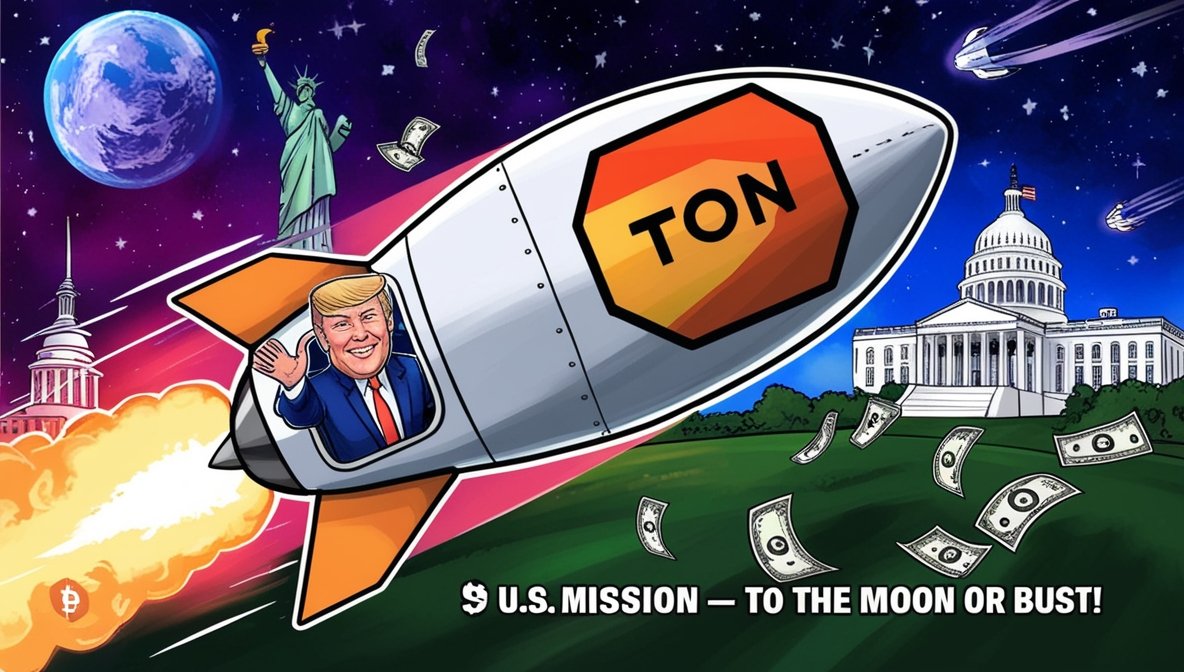
TON Blockchain Eyes US Growth Amid Trump Administration Policies

TON Blockchain plans a U.S. expansion under Trump, with investor Manuel Stotz as president, aiming to thrive amid crypto-friendly regulatory hopes.

The TON Blockchain is making big moves, setting its sights on the U.S. market. With Manuel Stotz stepping in as president, this isn’t just a low-key plan—it’s a full-on power play. TON is riding the wave of potential crypto-friendly vibes that came with policies from the Trump era, and they’re not holding back.

The blockchain scene in the U.S. has been heating up, with the demand for decentralized systems going off. TON, with its Telegram-powered roots, thinks it’s the perfect time to slide in and show what it’s got. The focus? Building trust and creating a space where crypto can flourish without feeling like it’s breaking all the rules.

Manuel Stotz, a well-known name in the crypto investor circle, is hyped about steering TON into this next phase. The plan is all about making TON the go-to blockchain for people looking for security, speed, and simplicity.

So, why does this matter? With the U.S. being a major player in the crypto world, TON’s entry could shake things up big time. Keep an eye on this—it’s giving major main-character energy in the blockchain game.

Also Read: Singapore Blocks Polymarket: A Tough Stand on Crypto Betting

Singapore Blocks Polymarket: A Tough Stand on Crypto Betting

Singapore has banned Polymarket, a decentralized crypto prediction platform, due to strict gambling laws. Allowing users to create and bet on real-world events using cryptocurrency, it failed to obtain a license from the government to legally operate in the city-state.

Singapore’s Remote Gambling Act, since 2014, has only permitted certain state-approved betting activities: things like lotteries and sports gambling. Sites like Polymarket, operating outside the ambit of such regulation, are banned without hesitation. The government has now officially blocked access to the site, effective January 11.

YOU MIGHT ALSO LIKE: Bitcoin Crash Wipes $138B, $520M Liquidated in 24 Hours

This is not the first time such regulatory hurdles have had to be faced by Polymarket. Recently, it settled with the Commodity Futures Trading Commission in the United States that had been clamping down on several unregulated DeFi platforms. CFTC Chair Rostin Behnam said that they were very much focused on digital asset platforms falling within the legal ambit.

Its struggles are not singular, however. China, along with several European and Asian countries, has come down hard on online gambling or crypto gaming platforms. Without centralized regulation, such sites sometimes find it tough to call the legal line in jurisdictions where strict controls are in place.

YOU MIGHT ALSO LIKE: Solana’s Gas Fees Overtake Ethereum’s in the Past Week

As governments around the world continue to turn the screws on DeFi, sites like Polymarket are increasingly finding it tough to expand.

Bitcoin Crash Wipes $138B, $520M Liquidated in 24 Hours

It came with huge selling, along with liquidations, when Bitcoin-the king of cryptocurrencies-plunged about 3% within four hours on the second day in a row. The result is being witnessed in the falling price of Bitcoin to $91,644.04, washing away about $138 billion of valuation from the market within a few hours.

Combined liquidations over the last 24 hours have reached an eye-watering $520 million, with long positions taking the brunt of this at $450 million and shorts at $66.06 million. In the last 12 hours alone, total liquidation amounts to $420 million. The single biggest loss occurred on Binance, where a BTC/USDT position worth $8.21 million was liquidated.

YOU MIGHT ALSO LIKE: Indian Railways to Launch NFT Tickets for MahaKumbh Pilgrimage

This drop follows Bitcoin’s recent gains and reflects a sharp market correction, catching many traders off guard. With nearly 197,007 traders across exchanges liquidated, the turbulence serves as a stark reminder of the crypto market’s notorious volatility, where fortunes can evaporate in the blink of an eye.

YOU MIGHT ALSO LIKE: Twin Protocol Debuts $TWIN Token on BitMart Exchange

While the market struggles to stabilize, most investors are now stepping back, trying to figure out whether this is just a temporary correction or the start of a greater decline. All eyes, for the time being, rest on the next move of Bitcoin, as the entire market holds its breath.

Solana’s Gas Fees Overtake Ethereum’s in the Past Week

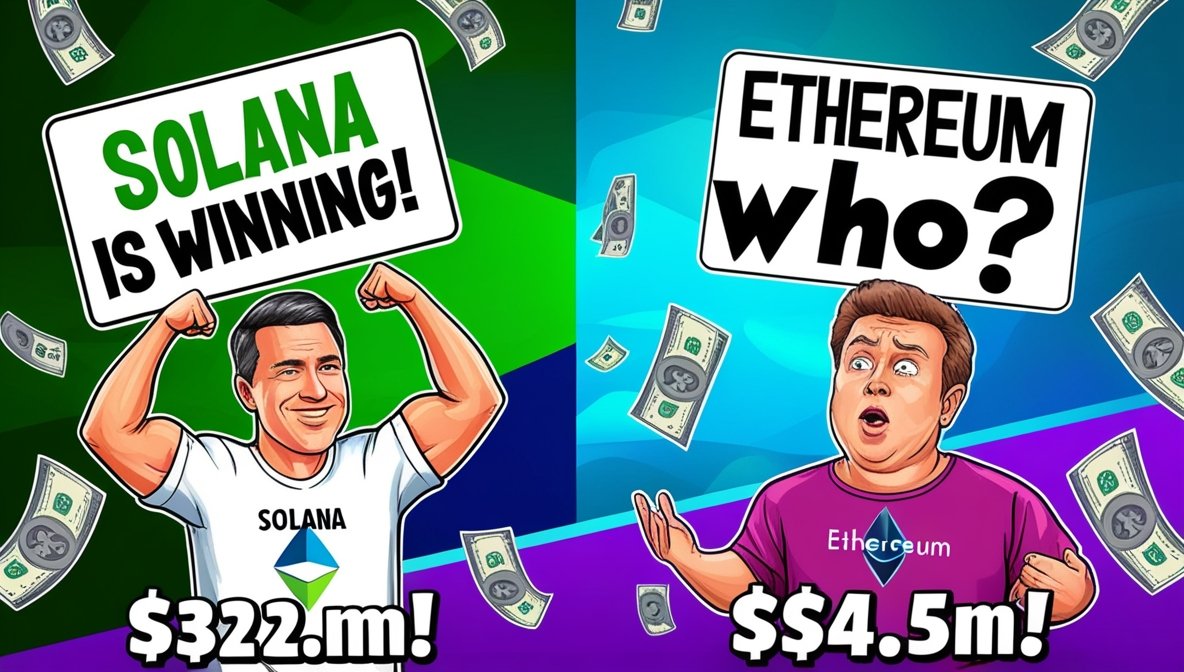
Solana’s gas fees hit $32.2M, surpassing Ethereum, driven by rising transactions, memecoin trading, and DEX usage.

Solana has been making big moves lately. Just recently it surpassed Ethereum in gas fees. Nansen CEO Alex Svanevik recently shared that Solana brought in around $32.2 million in fees, while Ethereum made $25.5 million. This shows Solana’s growing popularity and potential to compete with Ethereum.

So, what’s behind this spike? Well, Solana’s been processing more transactions than ever before. It’s becoming pretty much the go-to platform for smart contracts, and more people are using it daily. Memecoins have also created a lot of buzz on platforms like Pump.fun, driving up transaction volume.

Additionally, decentralized exchanges (DEXs) like Raydium are seeing more activity, contributing to the rise in fees. With Solana handling about 718.65 million transactions in just seven days—around 87 times more than Ethereum—it’s clear that Solana is becoming a major player in the blockchain space.

These higher transaction counts are causing more network congestion, leading to occasional transaction failures and higher gas fees. If this trend continues, Solana could challenge Ethereum’s dominance in the blockchain world.

You might want to read: Ripple and MoonPay Donate $50K RLUSD to Support LA Firefighters

Indian Railways to Launch NFT Tickets for MahaKumbh Pilgrimage

The Indian Railways will implement blockchain for NFT tickets in collaboration with Chaincode Consulting, on the upcoming MahaKumbh Mela to be held in Prayagraj, Uttar Pradesh. This is one of the sacred Hindu events which happens every 12 years, and in the year 2025, it will attract over 450 million devotees.

Announced on January 13 via X, the collaboration with IRCTC will utilize the Polygon blockchain in developing NFTs-an affordable and ecologically viable blockchain for scaling. These NFTs would be available on the NFTtrace platform, which improves traceability in tickets and thus ensures safety in travel.

YOU MIGHT ALSO LIKE: MicroStrategy Adds 2,530 BTC, Reaches 450,000 Bitcoin Milestone

It stitches real-world assets with blockchain technology, taking the experience for over 1.2 million daily passengers using IRCTC to a whole new level. The NFT tickets would be not just special souvenirs for the passengers but can also be publicly verified on blockchain by authorities or the general public.

YOU MIGHT ALSO LIKE: Ripple and MoonPay Donate $50K RLUSD to Support LA Firefighters

The 2025 MahaKumbh promises to be an international spectacle, with celebrity appearances by Richard Gere, David Lynch, and the Dalai Lama. Indeed, a very progressive initiative that will raise the stakes for India in mingling its rich tradition with cutting-edge technology-a promising future for NFT and crypto adoption.

Twin Protocol Debuts $TWIN Token on BitMart Exchange

Twin Protocol drops $TWIN on BitMart! Trade globally, create AI Twins, monetize skills, and keep data secure with blockchain.

Twin Protocol is taking its mission to the next level by launching its native token, $TWIN, on the global crypto exchange BitMart. Starting January 13, 2025, users worldwide will be able to trade $TWIN, gaining access to the platform’s unique AI tools designed to create digital replicas of users, known as AI Twins.

In other words, AI Twins are a whole new, innovative way of knowledge sharing, customer service improvement, and monetizing expertise. Special digital versions of users can even model their very own personality traits, skills, and knowledge. It is a very powerful tool for mentoring, customer support, and beyond. One can train an AI Twin as easily as just uploading documents, recordings, or other data. When trained, the AI Twins can be shared publicly or via the soon-to-launch Twin Marketplace, where users can monetize their expertise in the form of $TWIN tokens.

Twin Protocol’s partnership with SingularityNET, a leading decentralized AI platform, ensures that data security and personalization are at the forefront. By leveraging blockchain technology, Twin Protocol gives users full control over their AI identities, making the platform secure and empowering.

This BitMart listing follows $TWIN’s launch on Uniswap in 2024 and marks another step toward making Twin Protocol’s tools widely accessible. With AI expected to drive massive economic changes in the coming years, Twin Protocol is giving individuals and businesses the tools to stay ahead while keeping their data safe.

Also Read: Pro-XRP Advocate John Deaton Pushes SEC to Publish Hinman Documents

Exit mobile version