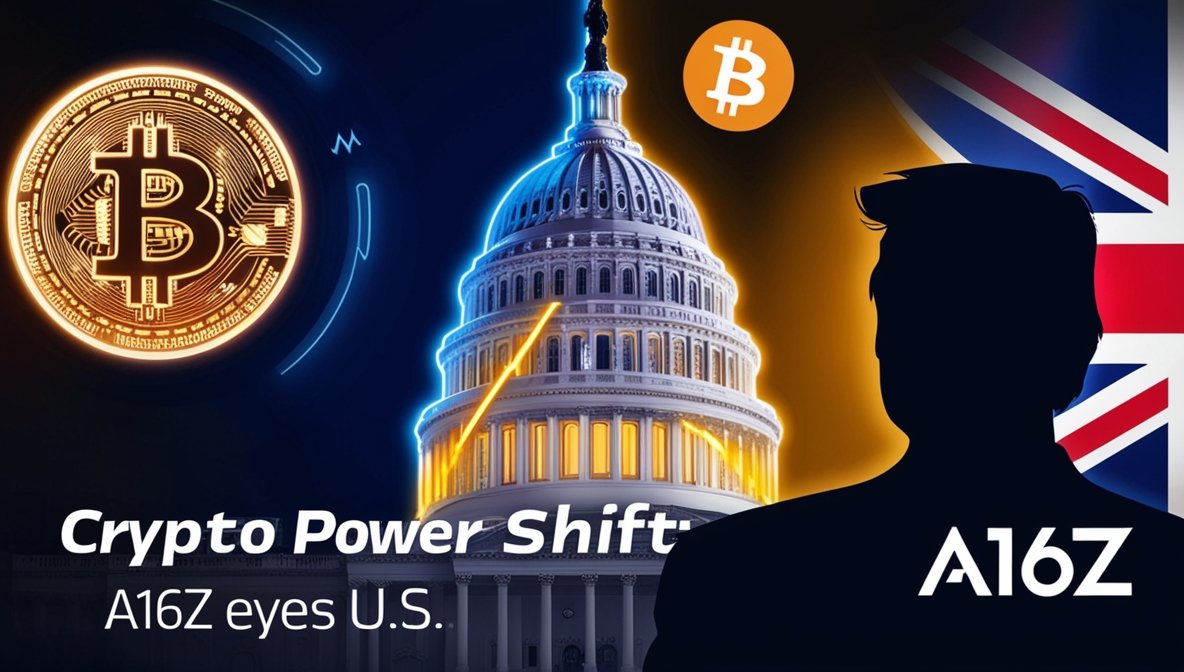
a16z Shifts Focus to U.S., Halts UK Crypto Plans Post-Trump Victory

a16z ditches UK crypto plans, backs Trump’s pro-crypto vibes, shifting focus to U.S. as Bitcoin hits $109K.

Silicon Valley’s Andreessen Horowitz (a16z) is switching things up, pulling back on UK crypto moves and turning its focus to the U.S. Why? Trump’s back in the White House, and his pro-crypto stance has the industry buzzing. His administration’s new executive order pushes digital assets and hints at creating a national crypto reserve.

a16z, which opened its first international office in London back in 2023, is now scaling down operations there. The firm’s founders, Marc Andreessen and Ben Horowitz, are riding the Trump train, even advising on policies. Meanwhile, Sriram Krishnan, who used to lead a16z’s London game, joined Trump’s squad last year.

Trump’s return as the 47th president has brought big crypto energy, with promises of lighter regulations and a focus on innovation. Binance’s CZ even tweeted that the U.S. is back in the game, forcing other countries to step up. Bitcoin felt the hype, skyrocketing to $109K on inauguration day—its highest ever.

Though a16z might still back UK projects from across the pond, their local presence was never major. With $43B in assets, they’ve supported names like Arweave and Aztec, but now it’s all about chasing U.S. crypto dreams.

Also Read: Ripple Pushes for April 16, 2025 Deadline in Ongoing SEC Battle

Virtuals Embraces Solana, Driving Crosschain AI Advancements

Virtuals hops on Solana for speed, scalability, and cross-chain vibes. Plus its backing creators with grants, partnerships, and multichain dreams.


Virtuals, the booming AI agent platform, just leveled up by joining the Solana blockchain. Already crushing it on Ethereum’s Layer-2 Base, this move shows they’re serious about becoming a true cross-chain powerhouse. Why Solana? It’s fast, super scalable, and has a squad of devs ready to innovate.


Launched in October 2024, Virtuals has trained over 16,000 AI agents, proving they’re not here to play. By tapping into Solana, they aim for smoother scalability, less network chaos, and a multichain future that vibes with everyone.

They’re not just showing up—they’re going all in. Virtuals plans to launch a Strategic Solana Reserve (SSR), converting 1% of trading fees into SOL to support long-term growth. Plus, they’ve partnered with Solana DeFi legends like Meteora, Jupiter Exchange, and LayerZero to keep transactions seamless.

The cherry on top? A grants program pledging 42,000 VIRTUAL tokens to back fresh creators on Solana and Base. Critics worry about their Base presence, but Virtuals isn’t stopping here. They’re eyeing even more blockchain bridges to dominate the cross-chain scene.

This year’s looking like the year of cross-chain vibes, and Virtuals is ready to make it theirs.

Also Read: Xaman Wallet Moves $6B in XRP for Just $510 in Fees

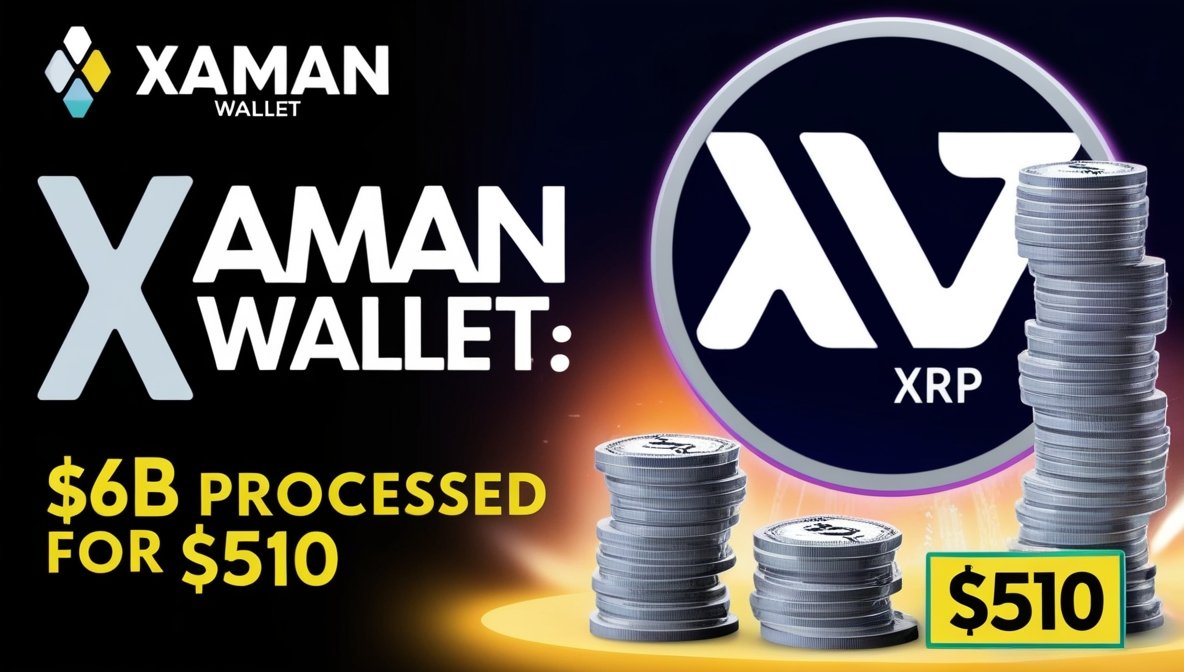
Xaman Wallet Moves $6B in XRP for Just $510 in Fees

Xaman Wallet processed $6B in 2024 for just $510 fees, proving XRP Ledger’s speed, low costs, and growing popularity.

Xaman Wallet, formerly Xumn, just flexed the power of the XRP Ledger (XRPL) by processing over $6 billion in transactions in 2024, including cross-border payments, all while charging a tiny $510 in fees. That’s less than 10 cents per million dollars! Compare that to bank transfers that cost $20–$50 for just $2,000 and take days to process.

Xaman’s wallet success comes down to its slick features, especially its xApps—embedded web apps that let users tap into on/off-ramp services, decentralized exchanges, and more, all without leaving the app. In 2024, users interacted with xApps almost 8 million times, showing how much value people see in these tools.

On top of that, Xaman’s transaction volume on XRPL was 7 times higher than any other decentralized exchange (DEX) on XRPL in 2024. With regulatory clarity finally starting to build, Xaman and other XRP-based apps are in prime position to grow even more.

Xaman’s breakthrough shows XRP Ledger is a serious contender for fast, cheap, and scalable payments. The crypto space is taking notice, and more cool features are on the way.

Also Read: Ripple Pushes for April 16, 2025 Deadline in Ongoing SEC Battle
Ripple Pushes for April 16, 2025 Deadline in Ongoing SEC Battle

Ripple wants until April 16, 2025, to respond to the SEC’s appeal, calling it weak and predicting a major win ahead.

Ripple just asked for an April 16, 2025 deadline to hit back in its legal face-off with the SEC. This comes after the SEC filed an appeal to keep pushing its claim that XRP sales on exchanges are securities, even after losing part of the case earlier this year.

ICYMI, the court had previously ruled some XRP sales weren’t securities, giving Ripple and crypto fans hope. But the SEC isn’t backing down, even after Gary Gensler left. They’re doubling down, saying the court made serious mistakes. Ripple’s top lawyer, Stuart Alderoty, isn’t fazed. He called the SEC’s appeal “just noise” and is betting on Ripple coming out on top.

Attorney Jeremy Hogan, closely following the drama, slammed the SEC’s appeal, calling it weak. He pointed out the SEC still can’t prove XRP buyers expected gains solely from Ripple’s work, especially since many buyers don’t even know what Ripple is.

Ripple’s team is confident this case could set a new tone for crypto regulations. They believe the next administration might even drop the SEC’s fight altogether. Until then, Ripple’s hodling strong, ready for a legal win and a crypto-powered future.

Also Read: Vitalik Buterin Wants Layer 2s to Boost Ethereum’s Game with

MicroStrategy Faces Potential Billion-Dollar Bitcoin Tax Dilemma

MicroStrategy might owe billions in taxes on unrealized Bitcoin gains due to new CAMT rules, risking its long-term hodl strategy.


MicroStrategy’s Bitcoin obsession might backfire big time, thanks to new tax rules under the 2022 Inflation Reduction Act. The Corporate Alternative Minimum Tax (CAMT) slaps a 15% tax on financial income, even if no Bitcoin is sold. Since the company’s Bitcoin stash is worth over $18 billion, their tax bill could hit $4 billion if the IRS doesn’t cut them some slack.

Here’s the deal: unlike regular Bitcoin hodlers who only pay taxes when they sell, MicroStrategy could be taxed on paper profits. While the IRS excludes unrealized stock gains from CAMT, they haven’t done the same for Bitcoin yet. MicroStrategy’s pushing for Bitcoin to be treated like stocks, but it’s a toss-up whether the IRS will budge.

Making it worse, new accounting rules mean MicroStrategy has to report Bitcoin’s market value, which pumps up earnings—and taxes. If they can’t get an exemption, they might have to sell Bitcoin, which totally kills their hodl-and-chill vibe.

Still, with IRS rules up in the air, MicroStrategy is stuck waiting. The Bitcoin tax saga shows just how dicey it can be to pay taxes on super-volatile assets. One wrong move, and the company’s future could be shaky.

You might also like: Ross Ulbricht Walks Free After Trump’s Pardon

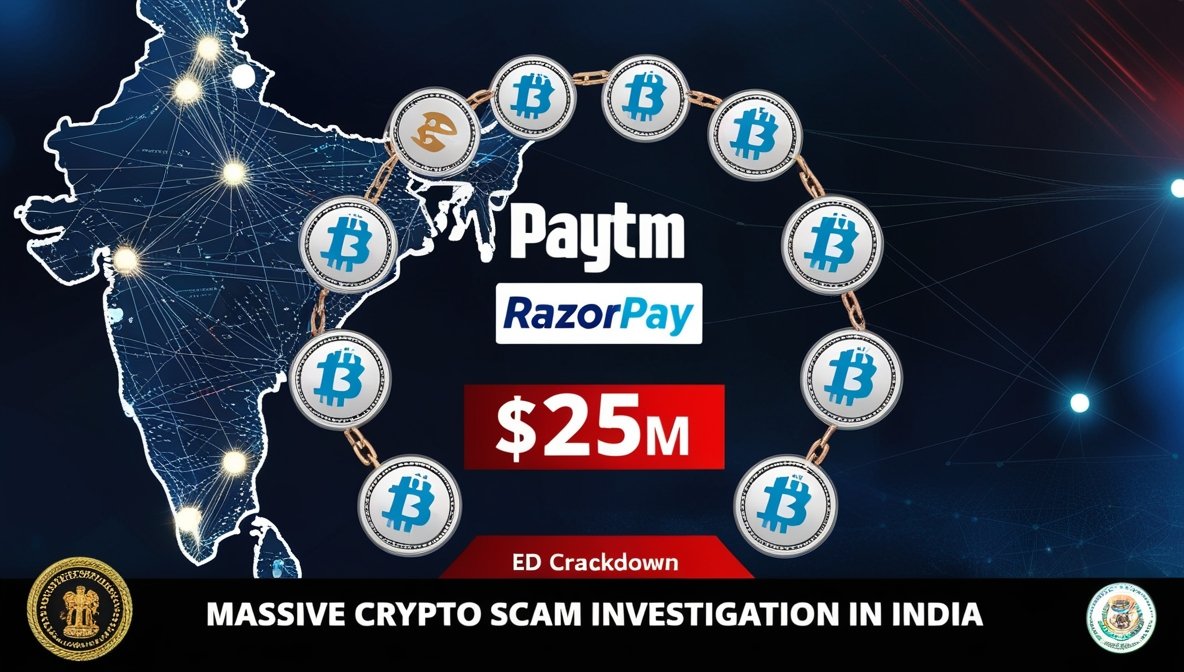
India’s ED Investigates Paytm, RazorPay, and PayU in $25M Crypto Scam

Overview: A probe into the $25.5 million crypto scam by the Indian Enforcement Directorate puts big payment players like Paytm, RazorPay, and PayU in the limelight. The investigation, having frozen upwards of more than $5.81M thus far, has reportedly exposed large loopholes in how suspicious transactions were treated.

The HPZ Token scam has India’s financial regulators on red alert. This crypto mining scheme duped people in 20 states, raking in millions before transferring the loot overseas. Now, the ED is investigating eight payment gateways, including big names like Paytm, RazorPay, and PayU, for their part in processing such fraudulent transactions.

YOU MIGHT ALSO LIKE: Hyderabad Woman Scammed Out of ₹77 Lakhs in Crypto Hustle

The crackdown unveiled frozen funds across the platforms: PayU leads the chart at $1.51M, Easebuzz follows with $387K, and RazorPay stands at $208K. The reports quote these companies to have helped in facilitating the bulk transactions without flagging suspicion. The ED is grilling the companies as to whether or not they filed the Suspicious Transaction Reports with the RBI or the Financial Intelligence Unit.

This scam operated through more than 50 companies in Delhi and Karnataka, with operations spilling over into Maharashtra and Gujarat. ED is now tracing the cash trail, closing in on crypto fraud.

YOU MIGHT ALSO LIKE: Solana Stablecoin Supply Skyrockets 57% Following $TRUMP Token Debut

This bust is a wake-up call to everybody riding the crypto wave in India. Always DYOR, folks.

Vitalik Buterin Wants Layer 2s to Boost Ethereum’s Game with ETH

Summary: Vitalik Buterin, OG co-founder of Ethereum, called Layer 2 networks to go all in with ETH big time. Here are hot takes on how Ethereum scaling goes from meh to massive, and ETH becomes the MVP.

Scaling on Ethereum has been slow, but the CEO V Vitalik Buterin had a plan how to get things pop. He encourages Layer 2 solutions to make ETH their go-to asset-be it for staking, burning, or collateral. Goal: Make ETH skyrocket in value and Ethereum the backbone of a thriving blockchain economy.

YOU MIGHT ALSO LIKE: AI Tech Helps Indian Police Reunite Lost Families at MahaKumbh

Vitalik’s spicy take: L2 networks should burn or stake some of their gas fees permanently to keep ETH at the center. And he’s hyped about blob transactions too—yes, blobs. If blob fees stay steady and the blob count jumps to 128, Ethereum could burn 713,000 ETH annually. Translation: Big bucks for the network.

The blog also drops hints about leadership changes at the Ethereum Foundation, showing Vitalik’s ready to shake things up. “Ethereum’s tech and community are leveling up, but there’s still tons to do. Now’s the time to double down,” he says.

YOU MIGHT ALSO LIKE: Vine Founder’s VINE Coin Smashes $200M Market Cap in Hours

Vitalik’s vibe is clear: L2s and ETH are the power couple that can take Ethereum from good to god-tier. Time to lock it in, blockchain fam.

Vine Founder’s VINE Coin Smashes $200M Market Cap in Hours

Summary: The co-founder of Vine, Rus Yusupov, sent shockwaves throughout the crypto space when he released the Vine Coin. A nod back to the original platform, VINE has soared past a $200M market cap in hours, delivering insane profits for early investors.

Rus Yusupov is back, but this time, it isn’t about six-second videos; he is deep-diving into the crypto game. The Vine founder dropped his new cryptocurrency, Vine Coin, with a cheeky post on X, saying, “Let’s relive the magic and DO IT FOR THE VINECOIN.”

YOU MIGHT ALSO LIKE: BNB Chain Unveils AI Agent Toolkit to Empower Developers

And it’s not just vibes—it’s numbers. Within hours, VINE went ballistic, skyrocketing 402,000% since launch and hitting a $342M market cap. Right now, it’s trading at $0.3453, per DEXScreen, doubling its price in just the last hour. Talk about a glow-up.

The hype’s real, with one lucky trader turning 3 SOL (~$735) into a cool $1.3M. Memecoins like this are giving lottery vibes, and Vine Coin might just be the next big flex for the crypto crowd.

Launching personal coins is trending hard lately—Trump dropped TRUMP coin last week, but VINE’s clearly stealing the spotlight. Rus, though, is keeping it casual, telling everyone he’s “just having fun.” Classic.

YOU MIGHT ALSO LIKE: Dubai’s AI Seal: Boosting Trust and Innovation in Tech

Crypto fam, what’s next? 👀

Coinbase CEO Addresses Delays in Solana Transactions with Apology

Coinbase CEO apologized for Solana delays, blamed memecoin hype, promised better support, and pledged upgrades to handle demand.


Major delays to Solana transactions last weekend left Coinbase chief Brian Armstrong eating his hat following a fusillade of protests from inconvenienced consumers. Indeed, some did either get canned, or would ultimately finish the 10 hours required in transit for processing; therefore, that backlash unfolded very quickly online. Following word that transactions could be smoothed through, following some congestion backlog-clearing from their side, the CEO later on took to X and said those canceled could still have a second chance.


Delays were caused by the unexpected spike in activity on Solana, well over what Coinbase’s system could support. The increase in demand-10 times higher than usual-was mostly due to the hype surrounding new memecoins associated with Donald Trump. Armstrong has now come forward and accepted that Coinbase dropped the ball with its support for Solana, saying it would work harder to scale infrastructure in order to keep up with such spikes-particularly for strong use cases such as DEX and memecoin trading.

Some users accused Coinbase of focusing too much on Ethereum projects over Solana, but Armstrong responded by committing to give Solana the same level of support as Bitcoin and Ethereum in the future. Coinbase is working with the Solana Foundation to improve its system, and though delays have decreased by 30%, users are still advised to expect transaction times of up to 24 hours during peak periods.

Also Read: Hacker takes over Nasdaq’s X account to push fake memecoin scam

Hacker takes over Nasdaq’s X account to push fake memecoin scam

Nasdaq’s X account got hacked to hype a fake memecoin, STONKS, hitting $80M market cap briefly before crashing hard.


The official X account of Nasdaq got hacked, and what unfolded looked completely like a plot from a cybercrime movie. Using the account, the hackers began shilling a memecoin called STONKS by linking it to a fake affiliate account, hyping the token as the next big thing in the market.

Turns out, STONKS was a ripoff of an already existing Solana-based memecoin with the same name, and the original meme’s IP wasn’t even theirs. Still, the fake token went from zero to an $80 million market cap within minutes of launching—talk about wild. But the hype didn’t last long. Just a few days later, its value plummeted, leaving FOMO traders with nothing but regret, according to DEXscreener stats.

This isn’t the first time hackers have pulled this stunt. Hijacking high-profile accounts on X has become a thing lately. Big names, businesses, and even institutions are getting hit, losing money and reputation in the process.

Hitherto, Nasdaq has had absolutely nothing to say about the breach, but this mess is another reminder: secure your accounts! If big dogs like Nasdaq can get hacked, anyone can. Slap those passwords with a raise and add two-factor authentication. Stay safe, fam!

Also Read: Solana Stablecoin Supply Skyrockets 57% Following $TRUMP Token Debut

Exit mobile version