Binance Claps Back at Reserve FUD: No Assets Sold

Binance just shut down the latest rumors about it secretly dumping assets after reports surfaced of a major drop in its reserves. The exchange made it clear—no assets were sold, and user funds are still locked up safe and sound.

According to data, Binance’s reserves at the end of January 2025 included 2,746 BTC, 275 million USDT, 174 ETH, and 4,179 SOL. But compared to December 2024—when it reportedly held 46,896 BTC, 2.99 billion USDT, 216,312 ETH, and 442,234 SOL—it looks like there’s been an $8 billion drop, setting off alarm bells.

YOU MIGHT ALSO LIKE: Poland’s Central Bank Says ‘Hard Pass’ to Bitcoin: Stability Over Crypto Volatility 

Binance isn’t having it. The team says these fluctuations aren’t because of asset sales but internal treasury management. In other words, they’re just moving money around behind the scenes, not cashing out. They also reminded everyone that user assets are fully backed and protected by the Secure Asset Fund for Users (SAFU)—a fund created just for emergencies.

YOU MIGHT ALSO LIKE: XRP Takes a Dip: ETF Hype Can’t Stop the FUD as Investors Stay Wary 

Plus, Binance’s Proof of Reserves system supposedly ensures everything is backed 1:1, meaning users can withdraw their money whenever they want. Even though Binance insists there’s nothing shady going on, crypto traders and analysts are keeping an eye out for any more unexpected moves.

Poland’s Central Bank Says ‘Hard Pass’ to Bitcoin: Stability Over Crypto Volatility 

Summary: The central bank of Poland has doubled down on its rejection of Bitcoin for reserve assets, citing volatility, security risks, and lack of stability. According to NBP President Adam Glapiński, reserves must be “absolutely secure,” and he favors gold, USD, and euros. Despite crypto’s global rise, Poland remains cautious, sticking to traditional assets.

In fact, Glapiński recently told a press conference that Bitcoin is out of the question for Poland’s reserves. “We will not consider Bitcoin under any circumstances, as reserves must be absolutely secure,” he said, according to the Warsaw Business Journal. He cited Bitcoin’s unpredictable price swings and lack of central backing as deal-breakers for the country’s financial strategy.

YOU MIGHT ALSO LIKE: Global Crackdown: Countries Ban Chinese AI DeepSeek

Poland’s gold reserves, currently at EUR 217.1 billion (USD 225.4 billion) as of January 2025, are in the form of gold, U.S. dollars, and euros. Glapiński lauded the timing of Poland’s gold purchases as the value is going up in economic uncertainty.

The skepticism of the NBP is not new-it warned about crypto risks, such as theft and volatility, back in 2017. The bank repeated that cryptocurrencies are not supported by any central authority and do not constitute legal tender. While some in the crypto community criticize the move, Poland insists it’s all about risk management and long-term stability.

YOU MIGHT ALSO LIKE: Law Firms Take Legal Action Against Pump.fun for Misusing Memecoins and Logos

TL;DR: Poland’s Central Bank is not investing in Bitcoin, instead continuing to rely on gold and more traditional currencies as a hedge.

XRP Takes a Dip: ETF Hype Can’t Stop the FUD as Investors Stay Wary 

XRP’s price tumbled 2% to $2.43; trading volume jumped 40% to $5.49B. ETF chatter aside, investors remain skeptical, and XRP remains at square one. Experts are divided on whether XRP will sink to $1.37 or stage a recovery anytime soon.

XRP’s been moving like a snail lately, even with all the ETF hype. Market guru EGRAG CRYPTO dropped some truth bombs on X, saying XRP could tank 54-59% (hello, $1.37!) before bouncing back. But not everyone’s doomposting—Dark Defender spotted a key Fibonacci level at $2.4467 and an oversold RSI, hinting at a potential comeback.

YOU MIGHT ALSO LIKE: MicroStrategy Acquires 7,633 More BTC, Boosting Total Holdings to 478,740

Also, the XRP is overextended as the RSI stands at 39-odd, near oversold. Further, XRP has retreated by 29% from January high of $3.39. On futures, Open Interest nosedived from $7.86B to $3.5B – very bearish. Whatever said and done, big-brain analysts would keep believing – XRP ETF discussions are very on and rumored to reach the US Strategic Reserve at $5.

YOU MIGHT ALSO LIKE: Crypto Hesitation: Only 30% of Institutional Traders Eye Investments

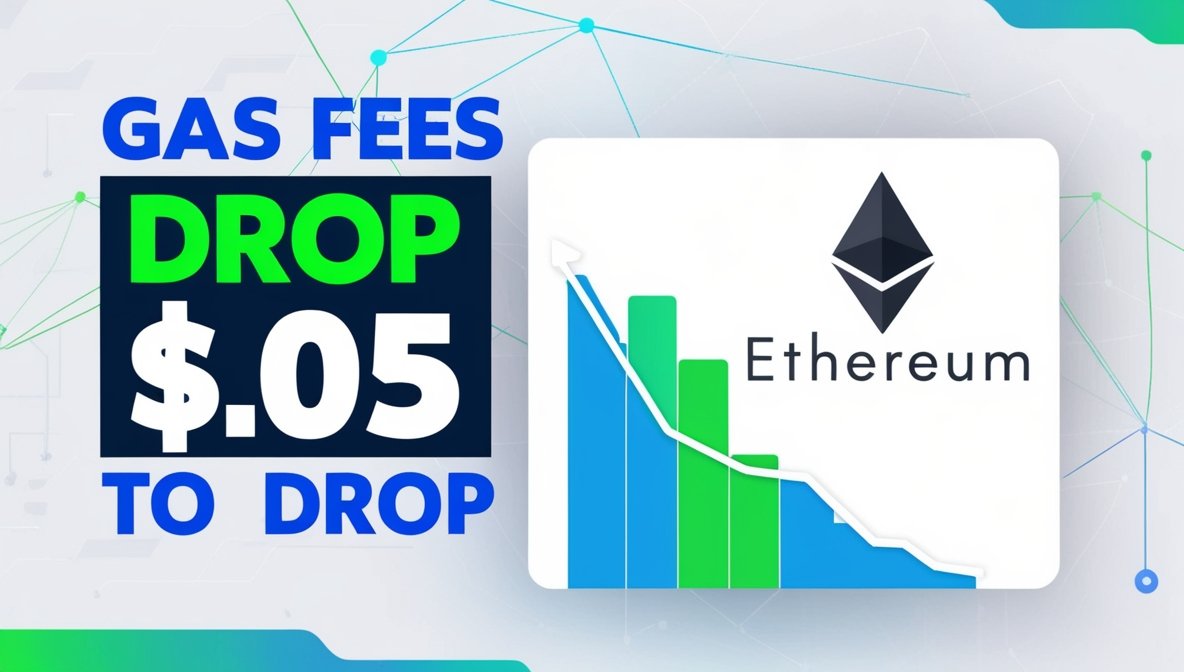
Ethereum Gas Fees Plunge to $0.05, Lowest in 5 Years

Ethereum gas fees have reached a 5-year low of $0.05 due to the higher gas limit that increases efficiency and affordability for users.


Ethereum just scored big, with gas fees dropping to the lowest in 5 years and standing at only $0.05 per transaction! That’s a big difference from those crazy highs above $100 sometime in the past. Currently, the low-priority transactions are going for $0.05, while the average and high-priority ones go for slightly higher at $0.06.

This is a big deal for Ethereum, which has seen gas fees skyrocket in the past due to heavy network activity, DeFi mania, and the NFT boom. Back in the pandemic era, the gas fee hit a crazy $196 per transaction at 709.7 gwei.

So, what’s behind this sweet drop? Ethereum recently raised its gas limit to 36 million units, allowing more transactions per block and cutting down on network congestion. This change makes Ethereum more affordable and scalable, which is a win for both users and developers.

In particular, with a drop in fees, Ethereum will automatically become much more appealing for regular users. This means wider usage for Ethereum will be about dApps, DeFi, and NFTs. This is just what Ethereum needed amid the growing competition. The drop is all about making Ethereum more efficient, more approachable, and-most importantly-cheaper.

Also Read: Crypto Hesitation: Only 30% of Institutional Traders Eye Investments

Investor Loses $1.5M in CAR Tokens After FOMO-Driven Bet

Trader aped $1.9M into $CAR, held 99.94% supply, but price tanked 77% after deepfake rumors. Now stuck with huge losses.


A trader decided to go all-in on $CAR, buying 3.6M tokens for $1.9M at roughly $457K per million, hoping to hit the jackpot. Just 10 hours later, though, the dream turned into a nightmare when the price of $CAR bottomed out, shredding the value of their investment by 77%. Their stocks are now worth just $441K, and there’s no way out.

$CAR launched on Feb 9, hyped as the official memecoin of the Central African Republic (CAR). It blew up fast, even hitting a $527M market cap. But things took a wild turn when a promo video featuring CAR’s president, Faustin-Archange Touadéra, got flagged as a potential deepfake by AI detection tools. That raised major red flags, and panic spread like wildfire.

The $CAR was an “experiment” for national development, Touadéra’s official X account said, but investors weren’t buying it. When doubts about the authenticity of the video blew out, the token’s price went into free fall.

On-chain data shows the trader never sold a single token, leaving his $1.9M investment locked in a brutal loss. That’s a tough lesson on the wild risks of memecoins-hype fades fast, and when it does, the crash hits even harder.

Also Read: MicroStrategy Acquires 7,633 More BTC, Boosting Total Holdings to 478,740

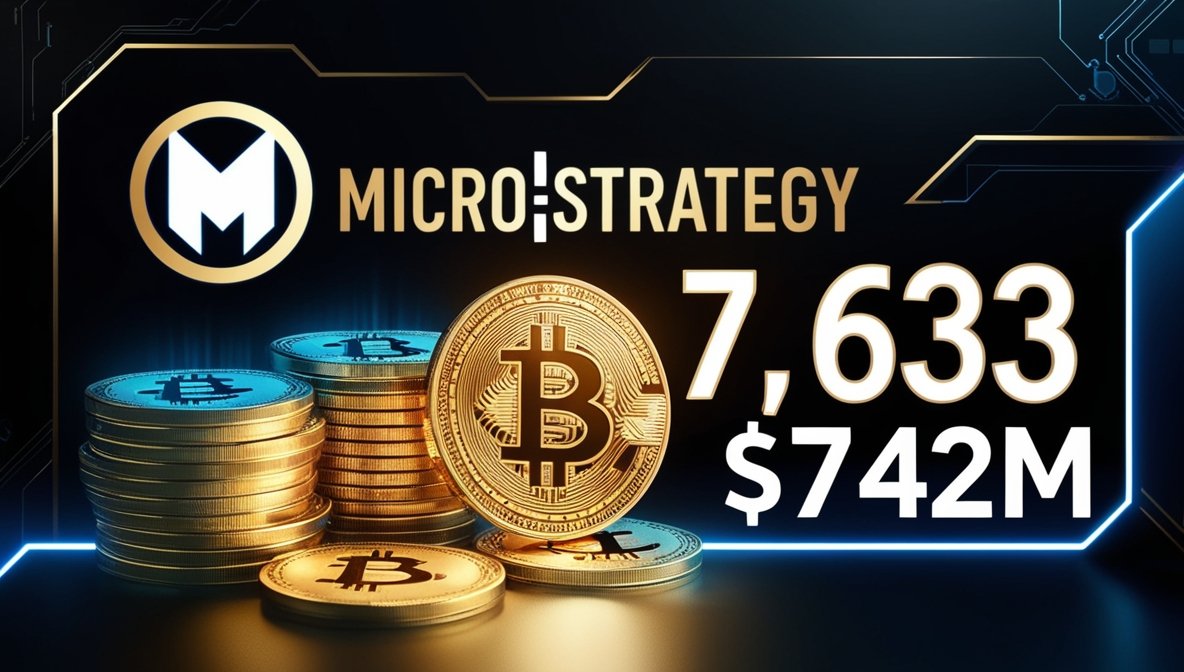
MicroStrategy Acquires 7,633 More BTC, Boosting Total Holdings to 478,740

MicroStrategy snagged 7,633 more BTC for $742.4M, now holding 478,740 BTC. Saylor paused buys but keeps stacking hard.


MicroStrategy, the ultimate Bitcoin whale, just scooped up another 7,633 BTC between Feb 3-9, 2025. The company spent a cool $742.4 million, dropping an average of $97,255 per coin. With this latest haul, their total stash now sits at a jaw-dropping 478,740 BTC, acquired for $31.1 billion at an average of $65,033 per BTC.

This move follows their late January buy of 10,107 BTC for $1.1 billion. In just over a month, their Bitcoin holdings have already pulled in a 4.1% yield—proof that they’re playing the long game with BTC as their treasury asset.

Interestingly, despite this fresh purchase, MicroStrategy Chairman Michael Saylor announced on Feb 4 that they were hitting pause on BTC buys for now. He clarified that the company hasn’t sold any shares or tapped its equity offering program to fund Bitcoin purchases of late.

With laser-eyed conviction, the flex of MicroStrategy as the biggest corporate Bitcoin holder shows absolutely no signs of shifting from the BTC-first strategy. The market is watching to see if MicroStrategy will turn the tap full again soon-or is this just a quick breather?

Also Read:Crypto Hesitation: Only 30% of Institutional Traders Eye Investments

Crypto Hesitation: Only 30% of Institutional Traders Eye Investments

As the survey from JP Morgan shows, 71% of institutional traders refrain from crypto in 2025, though 30% are open but very skeptical.


A new survey from JP Morgan shows that institutional traders remain conservative when it comes to crypto. Though digital assets are attracting attention, 71% of traders said they would not be looking to trade crypto this year, this year, up only a notch from 78% last year-it is a telling indication that there is strong skepticism about crypto among institutions.

On the other hand, 30% of traders show some interest in engaging with crypto, a small but consistent uptick in interest. Very clearly, however, traditional finance is not yet embracing crypto in any big way.

A survey by JP Morgan among traders showed that the greater portion is still not on board. High volatility in the crypto market, along with a constantly changing environment of regulation, stands out as the major reason for such caution. Some firms experiment with Bitcoin ETFs and investments in blockchain, but now, big players are kept away from the game by concerns over regulation, security, and overall market stability.

Crypto remains a high-risk bet for institutional traders, and it takes more than hype to get them into the pool.

Also Read: Global Crackdown: Countries Ban Chinese AI DeepSeek

Global Crackdown: Countries Ban Chinese AI DeepSeek

It is banned in countries like the US, UK, Australia, and Taiwan, due to their security concerns as it may result in data leakage and threaten the privacy of the people.


DeepSeek AI faces huge bans globally as governments freak out over data security risks. The United States, United Kingdom, Australia, South Korea, Taiwan, and several European nations have completely blocked the service for allegedly being capable of leaking sensitive information.

The Korea Hydro & Nuclear Power of South Korea has already cut off access, while other ministries ban the AI tool on government networks. Australia went harder to ban DeepSeek across all government systems; their Home Affairs Minister, Tony Burke, said it’s a threat to national security.

Taiwan, also, joined in by banning the use of DeepSeek for its government agencies and critical infrastructures, citing colossal security risks. France, Italy, and some other European nations have cracked down due to several concerns about collecting data and related privacy policies. Even the US has blocked DeepSeek in the government and private sectors.

This makes the UK and Ireland raise the red flag for security leaks from this Chinese AI model. Though DeepSeek gives cheap services to AI, its security problems make it a controversial one worldwide. Unless DeepSeek improves this situation with such concerns, more countries might blackenlist it, making it turn into a challenge for the Chinese AI firm.

Also Read: Law Firms Take Legal Action Against Pump.fun for Misusing Memecoins and Logos

Law Firms Take Legal Action Against Pump.fun for Misusing Memecoins and Logos

Two major U.S. law firms are suing Pump.fun for allowing shady memecoins that misuse their names, logos, and employees’ images.


Two of the most prominent law firms in the United States, Burwick Law and Wolf Popper LLP, are taking action against Pump.fun, a wild memecoin platform on Solana. They fired off a cease-and-desist letter demanding the removal of more than 200 tokens allegedly ripping off their names, logos-even employees’ faces.

One token, humorously named “Dog Shit Going NoWhere” (DOGSHIT2), is receiving serious heat over allegedly copying the firms’ names and creating legal and financial chaos. The lawyers say these aren’t just joke coins; they are part of a bigger scam to confuse investors, tamper with litigation, and threaten people.

This drama dates back to Jan 30, this year, when the firms sued Pump.fun for pushing risky, unregistered securities and running pump-and-dump schemes. They claim the platform, run by UK-based Baton Corporation, made nearly $500M from sketchy tactics.

Pump.fun, which just hit $3.3B in trading volume thanks to Trump-themed memecoins, hasn’t responded yet. But if they don’t clean up, legal trouble could wreck them. The lawyers warn that any more IP violations will bring more lawsuits, hinting this could turn into a long, ugly legal battle.

Also Read: Ohio Wants a Bitcoin Stash—New Bill Pushes for Crypto Reserve

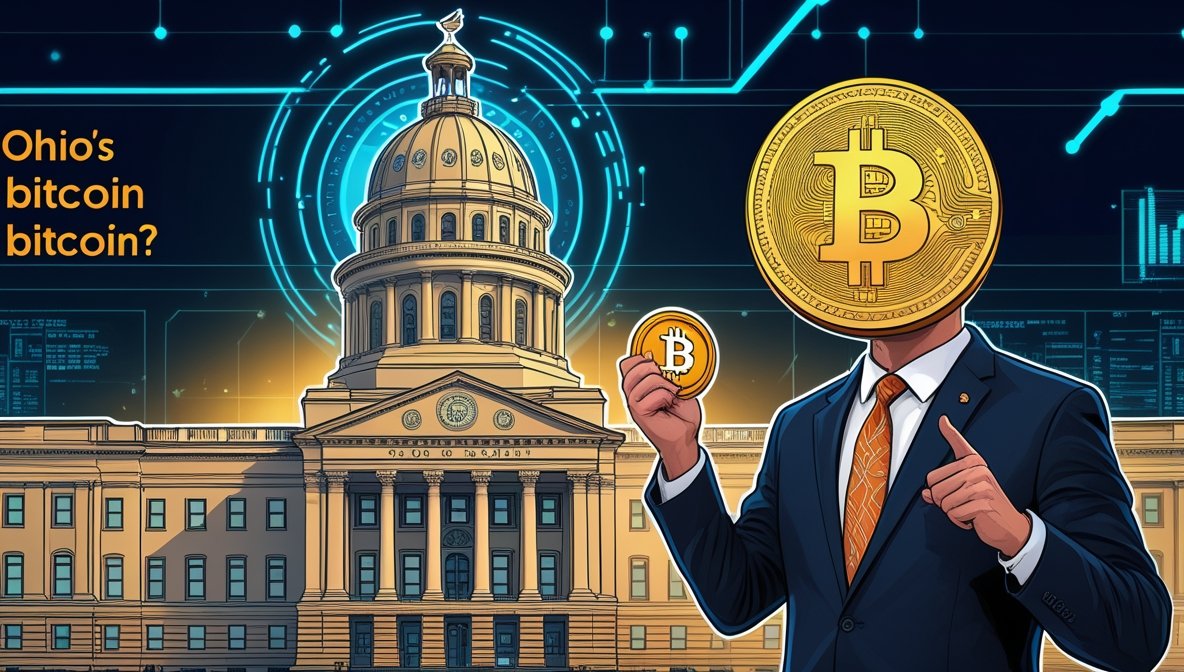
Ohio Wants a Bitcoin Stash—New Bill Pushes for Crypto Reserve

Ohio might be stacking sats soon! State Senator Sandra O’Brien just dropped a bill that could make Ohio the first U.S. state with its own Bitcoin reserve fund. If passed, Senate Bill 57 will let the state treasurer invest public funds exclusively in Bitcoin and hold onto them for at least five years.

O’Brien is all in on crypto, saying Ohio needs to be ahead of the curve—especially with Trump’s crypto team exploring a “national digital asset stockpile.” If Bitcoin is the future, Ohio wants a front-row seat.

YOU MIGHT ALSO LIKE: Has the Hawk Tuah Girl Been Arrested for Her Memecoin? Here’s the Truth

The bill also forces state agencies to accept crypto for taxes, fines, and fees, instantly converting payments into Bitcoin for the reserve. And it’s not just government funds—residents and universities can also donate BTC to the stash, earning some recognition for their contributions.

Ohio isn’t alone in the crypto game. In December, Rep. Derek Merrin introduced another bill (HB 703) pushing for even more Bitcoin investment flexibility. Meanwhile, Utah and Arizona are also working on crypto-friendly legislation.

YOU MIGHT ALSO LIKE: Banks Should Be Allowed to Offer Crypto, Says Coinbase

Bottom line? Ohio is making some big moves toward becoming a Bitcoin powerhouse, and if this bill passes, it could set the stage for other states to follow suit.

Exit mobile version