Fartcoin Soars 25% Amid Memecoin Mania Fueled by Trump

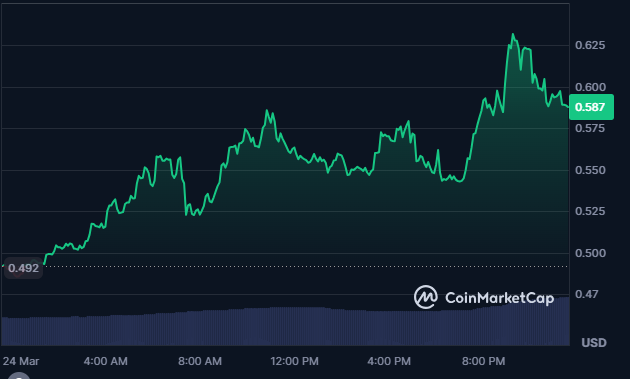
Memecoin mania has returned, and this time, Fartcoin is at the forefront with an astonishing 25.59% surge in just 24 hours. Currently priced at $0.5834, the token’s market cap has shot up to an impressive $583.42 million. The volume is also seeing significant action, with a 51.66% increase, now sitting at $186.65 million.

Fartcoin

Trump’s Post Fuels Meme coin Rally

This sudden price spike comes at a time when the entire meme coin sector is experiencing a resurgence. The catalyst? A post from President on Truth Social, where he discussed his own $TRUMP meme coin. This sparked an instant rally across the meme coin space, triggering excitement for tokens.

YOU MIGHT ALSO LIKE: Acting SEC Chair Mark Uyeda Calls for New Crypto Regulations

As soon as Donald’s thoughts were shared, $TRUMP saw a 13% surge in just one hour, creating a ripple effect throughout the meme coin market and pushing other meme coins to new heights.

Fartcoin’s Meteoric Rise

It’s remarkable growth has made it one of the most visited tokens of the day, currently ranked #5 in the market. While other popular meme coins like SHIB, DOGE, and PEPE have also seen gains.

Broader Crypto Market Surge

Alongside surge of this meme coin, the broader crypto market is also seeing positive movement, with the total market cap rising to $2.84 trillion—up by nearly 3%. All eyes are now on the meme coin market to see whether this trend will continue or eventually fizzle out, as it has in previous cycles.

YOU MIGHT ALSO LIKE: 5 Shocking Facts About the Coinbase Hack Attempt – A Massive Cyberattack Stopped Just in Time!

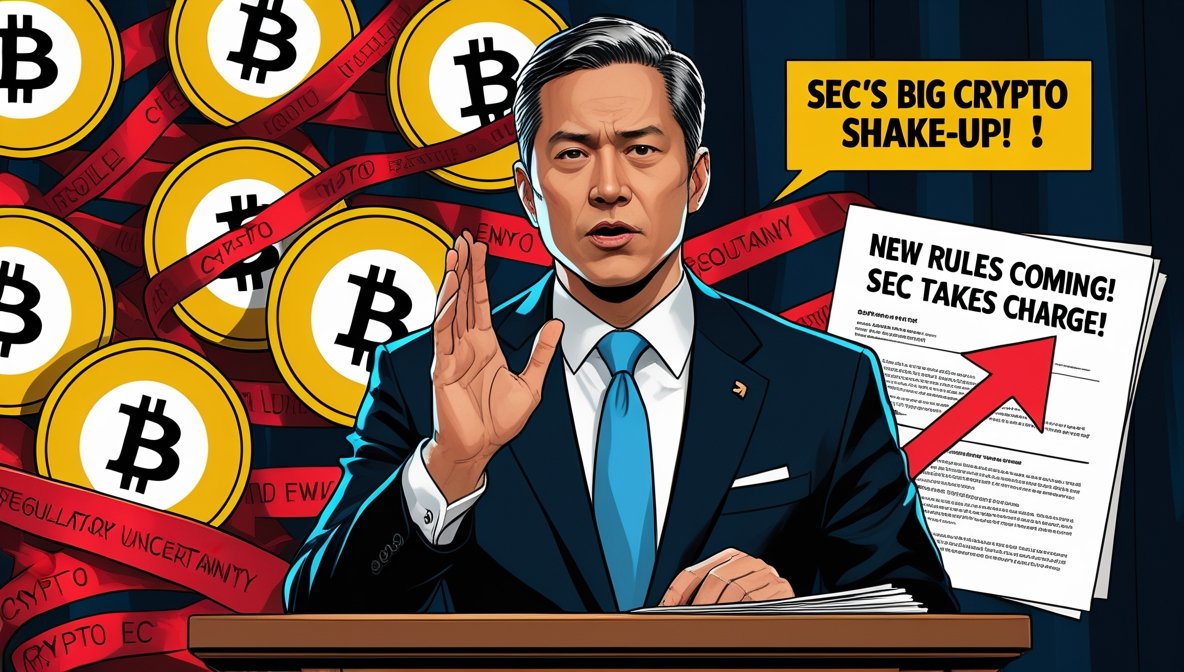
Acting SEC Chair Mark Uyeda Calls for New Crypto Regulations

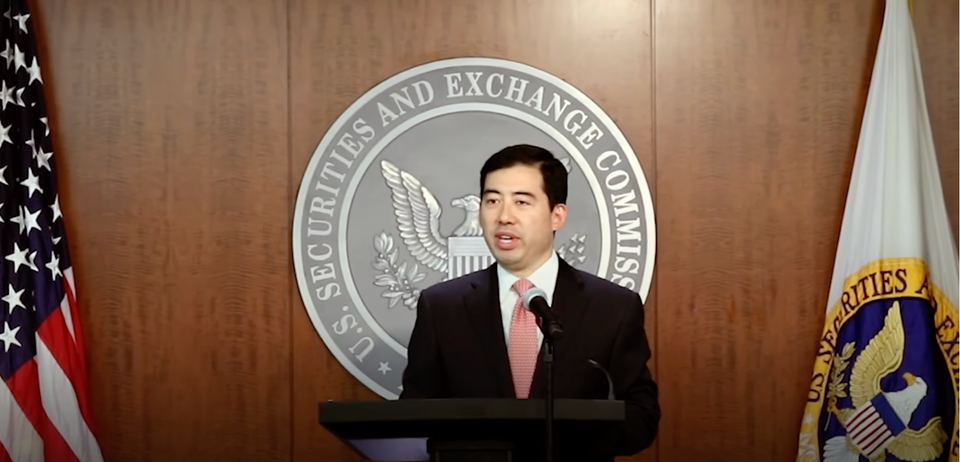
Days before Paul Atkins officially assumes the U.S. Securities and Exchange Commission chair position, Acting Chair Mark Uyeda has taken a firm stance on crypto regulation. Speaking at the Crypto Task Force Roundtable on March 21 in Washington, D.C., Uyeda criticized the lack of a well-defined regulatory framework for the industry and called for new rulemaking under the Trump administration.

SEC Chair Mark Uyeda

Crypto’s Ongoing Regulatory Uncertainty

During his speech, Uyeda referenced the landmark v. W.J. Howey Co. (1946) case, highlighting the ongoing struggle between the Biden-era and the crypto industry over whether digital assets should be classified as threat.

“Seventeen years since Satoshi Nakamoto made the Bitcoin whitepaper, market participants, lawyers, academics, policymakers, and regulators are still grappling with critical questions related to the status of these novel crypto assets under the federal securities laws. This disagreement is most pronounced when it comes to application of the investment contract test established by the Supreme Court in its 1946 opinion in Securities and Exchange Commission v. W.J. Howey Co. (known as the ‘Howey test’) to crypto assets.”Mark Uyeda

A Shift from Enforcement to Clear Rulemaking

Uyeda also pointed to the numerous lawsuits against major crypto firms like Binance’s CZ, Ripple, and others—cases pursued aggressively under former Chair Gary Gensler during the Biden administration. He argued that instead of punishing the industry, infrastructure should work toward building new, transparent regulations to guide the crypto community.

A Call for a Formal Rulemaking Process

In discussions with regulators, legal experts, and market participants, Uyeda stressed the need for the Commission to adopt a formal rulemaking process rather than relying on enforcement actions to define the status of crypto assets.

“This approach of using notice-and-comment rulemaking or explaining the Commission’s thought process through releases—rather than through enforcement actions—should have been considered for classifying crypto assets under the federal securities laws.”Mark Uyeda

With Uyeda pushing for clear and structured crypto rules, the industry now awaits how Paul Atkins’ leadership will shape the future of digital asset regulation in the U.S.

YOU MIGHT ALSO LIKE: Strategy is Now Greatest Colossal Force to Hold 500K BTC

Strategy is Now Greatest Colossal Force to Hold 500K BTC

Michael Saylor is back at it, and this time, he has taken Strategy ($MSTR) into uncharted territory. The company has officially become the first public firm to acquire over half a million Bitcoin, cementing its status as the ultimate corporate BTC whale.

A Record-Breaking Bitcoin Buy

On March 24, Strategy (formerly MicroStrategy) announced that between March 17 and March 23, it purchased 6,911 BTC for approximately $584.1 million at an average price of $84,529 per Bitcoin. This latest purchase pushes the company’s total Bitcoin holdings to an astounding 506,137 BTC, acquired for around $33.7 billion at an average cost of $66,608 per BTC.

Strategy

Funding the Bitcoin Frenzy

To fund this historic acquisition, MicroStrategy sold 1.97 million MSTR shares, raising $592.6 million. Additionally, the company offloaded 13,100 STRK shares, adding another $1.1 million to its capital reserves. Despite these sales, Strategy still holds a massive war chest—with $3.57 billion worth of MSTR shares and $20.99 billion in STRK shares ready for future use.

Answering the Critics with a Bold Move

Saylor’s latest Bitcoin purchase comes after some in the crypto community questioned whether his enthusiasm for BTC was cooling off—especially after he made a relatively modest 130 BTC purchase earlier. However, he has now silenced the skeptics in true Saylor fashion—by making yet another record-shattering buy.

Saylor’s All-In Bitcoin Bet

At this stage, one thing is crystal clear: Michael Saylor isn’t just a believer in Bitcoin—he’s all in. With over $33 billion poured into BTC, Strategy has solidified its place as the ultimate corporate Bitcoin whale, setting a precedent for other firms contemplating large-scale crypto investments.

YOU MIGHT ALSO BE INTERESTED IN: Breaking ! Solana’s Anatoly Yakovenko Destroys L2s: The Overhyped Scam?

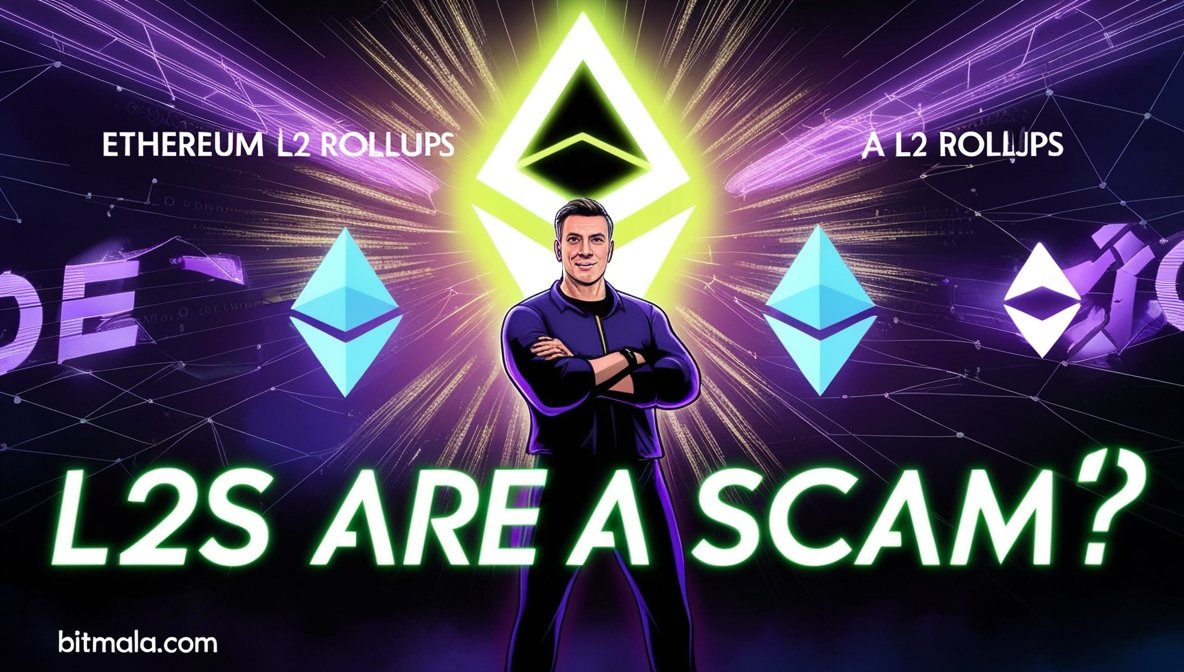
Breaking ! Solana’s Anatoly Yakovenko Destroys L2s: The Overhyped Scam?

Solana’s Anatoly Yakovenko Roasts Layer 2: Do We Even Need Them?

Solana co-founder Anatoly Yakovenko is back at it again, dunking on Layer-2 rollups and questioning why they even exist. According to him, L1 blockchains—like solana—are already fast, cheap, and secure enough to handle everything, so why add extra complexity?

Solana L2

Yakovenko argues that L2s just introduce unnecessary risks, like fraud proofs and multi-sig upgrades, which only complicate things. Instead of building an layer 2, he suggests devs just launch a token and call it a day. He believes there’s a limited number of actually useful smart contracts, so the whole layer 2 boom is just overhyped.

Taking shots at Ethereum’s scaling model, he claims layer 2s are actually hurting Ethereum instead of helping it. By siphoning high-priority transactions away from the main chain, Yakovenko thinks they’re weakening Ethereum’s core rather than strengthening it. He’s even called layer 2 “parasitic” since they rely on Ethereum while taking value away from it.

To make things worse for Ethereum, its transaction revenue has crashed by 95% since late 2021. Yakovenko sees this as proof that layer 2 aren’t the solution—they’re part of the problem. In his view, it’s time to stop stacking layers and just make Layer-1s better instead.

What do you think—L2s are the future, or is Yakovenko spitting facts?

You might also like: Bitcoin Whale Awakens, Moves $250M: A Monumental Shift

Bitcoin Whale Awakens, Moves $250M: A Monumental Shift

Bitcoin Whale finally Awake?

A long-dormant Bitcoin Whale wallet has suddenly woken up after eight years of inactivity. According to blockchain analytics firm Arkham Intelligence, the whale has moved over $250 million worth of Bitcoin.

Bitcoin Whale

The transactions were executed within the last 16 hours, showing that the value of the holdings has appreciated from approximately $3 million in early 2017 to over $250 million today. Before yesterday’s transfers, the wallet had maintained its Bitcoin in a single address for more than eight years.

The transactions, visible on Arkham’s monitoring dashboard, show the funds moving between several wallets labeled as “250M BTC Whale” addresses.

Specifically, the transactions took place in two batches about 14-16 hours ago, with each transfer involving approximately 3,000 BTC worth roughly $252 million per transfer.

Whale Purchased Bitcoin When It Was Around $1,000

According to the transaction history, the Bitcoin was originally purchased around 2016, when BTC traded at approximately $1,000 or lower.

Before these recent movements, the last transactions from these wallets occurred around 8 years ago, as shown by the timestamps in Arkham’s data—the early transactions from 2016 show the accumulation of Bitcoin when the cryptocurrency was less valuable.

The awakening of dormant wallets from Bitcoin’s earlier years has become increasingly rare. These events offer a glimpse into the major wealth creation experienced by early adopters who maintained their holdings through multiple market cycles.

While some long-term holders maintain their Bitcoin positions, industry experts are debating whether Bitcoin’s traditional four-year market cycle will be sustained into the future. Tomas Greif, Chief of Product & Strategy at Braiins, recently questioned the sustainability of these cycles:

“Is the 4-year Bitcoin cycle dead? Early on, halvings had a major supply impact. But as the majority of BTC has been mined, their effect is shrinking. In a couple of halvings, they will have a negligible effect on supply,” Greif noted.

He suggests that while historical patterns may continue as a “self-fulfilling prophecy,” the fundamental impact of halvings on Bitcoin’s supply disappears with each cycle. Greif emphasized that halvings will continue to affect Bitcoin mining economics regardless of market cycles.

Is the Surge in Crypto world pulling dormant Bitcoin Whale?

YOU MIGHT ALSO LIKE: $TRUMP Token Surges 13%: Memecoin’s Hope? Or Despair?

TRON DAO & Pump.fun Launch PumpSwap: 3 Ways This Boosts Cross-Chain Liquidity!

TRON DAO’s Bold Move to Expand Its DeFi Footprint on Solana

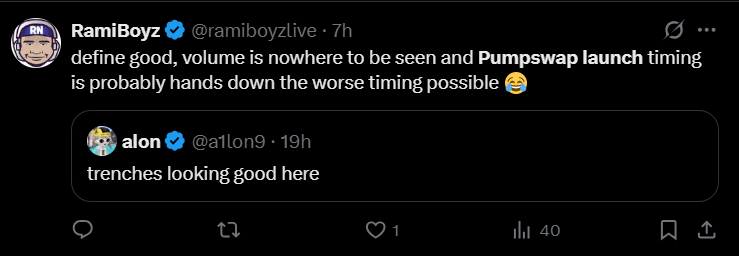
In a groundbreaking move, TRON DAO has strategically partnered with Pump.fun to launch PumpSwap, a new decentralized exchange (DEX) designed to enhance cross-chain liquidity. This collaboration is a key part of TRON’s long-term vision to solidify its presence in the decentralized finance (DeFi) space, and it marks a significant step forward in the expansion of TRON’s cross-chain capabilities.

Tron Dao
How people on X are reacting

Learn more about Tron by clicking here

By bridging TRX to Solana, PumpSwap will help create a new liquidity hub that connects the Solana and TRON ecosystems. This integration not only benefits TRON but also increases the accessibility of Solana’s network, providing a more seamless experience for users looking to trade and interact with a variety of crypto assets. The TRON-Solana collaboration is expected to play a pivotal role in enhancing blockchain interoperability, ultimately reducing friction between different blockchain networks.

In addition, PumpSwap will bring about a host of features designed to make liquidity management more efficient. These include streamlined token trading and a revenue-sharing scheme that allows creators to earn while contributing to the ecosystem. This is a clear indication of TRON’s commitment to improving the DeFi space by fostering greater liquidity and user engagement.

As TRX begins to flow into Solana, more users are likely to explore the Solana ecosystem, resulting in an increase in both TRON DAO’s DeFi adoption and Solana’s market presence. This could open doors to even more cross-chain collaborations and opportunities, positioning TRON and Solana as leaders in the blockchain interoperability movement. TRON DAO’s partnership with Pump.fun not only strengthens its role in DeFi but also lays the groundwork for a more interconnected and accessible decentralized future.

Also Read: Pakistan’s Bitcoin Mining Hope for Powering a New Era

Fake News Exposed: 2 Shocking Truths Behind Trump’s Bitcoin Whitepaper in the Oval Office

Viral Video of Trump Unveiling Bitcoin Whitepaper at White House Turns Out to Be Fake

Yo, President Donald Trump’s recent viral video unveiling a Bitcoin Whitepaper in the Oval Office got everyone talking. 😱 The video, circulating all over X (formerly Twitter), had people in a frenzy as it seemingly showed Trump proudly displaying a Bitcoin whitepaper portrait, with FOX News correspondent Sarah by his side. Crypto Twitter went wild with excitement, with some calling it a huge step for crypto in the U.S. under Trump’s leadership.

But hold up, fam—turns out it’s all fake news. 😤


The Truth Behind the Viral Video

The video that set the crypto world on fire was actually a doctored version of a Fox News segment. The original footage, from The Ingraham Angle, actually showed Trump showing Sarah the United States Declaration of Independence, not a Bitcoin whitepaper. Yikes! 🙅‍♂️

Trump
Here’s the post showing it

How Did This Get So Big?

So, how did this massive misinformation spread like wildfire? The answer: Crypto handles jumping in to share the video without checking facts. One of the first major accounts to post the video was Kraken, a prominent crypto exchange in the U.S., which tweeted:

“Wait, hollup… #btc white paper spotted at the Whitehouse!?”

This led to tons of people sharing the video with cryptic posts and fueling the misleading narrative. 😳


The Spread of Misinformation in Crypto

This situation shows how tough it is to combat fake news in the crypto world. Misinformation, manipulated media, and overhyped narratives often run wild—especially when they play into the sensational side of crypto. This incident highlights the ongoing challenge of separating truth from hype in a space that’s already known for its volatility.

Also Read: $TRUMP Token Surges 13%: Memecoin’s Hope? Or Despair?

$TRUMP Token Surges 13%: Memecoin’s Hope? Or Despair?

How $TRUMP Token Became the New Memecoin Sensation

Donald Trump just sent the $TRUMP token memecoin flying with a single post on Truth Social. After months of sluggish performance, the token suddenly surged 13% in just an hour, all thanks to Trump’s unexpected endorsement.

His post read: “I LOVE $TRUMP — SO COOL!!! The Greatest of them all!!!!!!!!!!!!!!!!” That was enough to send traders into a frenzy. The price shot up to $12.11, marking a 13% gain in a day. Market cap hit $2.42 billion, while trading volume exploded by 195%, reaching a staggering $830 million.

$Trump Token Valuation

Before this, $TRUMP had been in a downtrend with barely any action. But with Trump’s stamp of approval, buyers rushed in, fueling the biggest pump in months. This isn’t the first time a memecoin has skyrocketed due to celebrity hype—Elon Musk has done it countless times with Dogecoin, and now Trump’s doing the same with his own namesake token.

YOU MIGHT ALSO LIKE: Pakistan’s Bitcoin Mining Hope for Powering a New Era

The broader crypto market is also looking perkier—Bitcoin, Ethereum, and Solana are all up, with the total market cap nudging higher by 1%. So, what’s the deal? Are we on the cusp of a proper bull run, or is this just another fleeting memecoin hype bubble? Or is $Trump Token really making it?

Pakistan’s Bitcoin Mining Hope for Powering a New Era

Pakistan is making a move into crypto mining, aiming to put its extra electricity to good use. With surplus power becoming a challenge, the government is considering special electricity rates to draw in Bitcoin miners and blockchain companies.

image 28 Bitmala

Pakistan’s Bitcoin Mining Revolution?

The Power Division of Pakistan is working on a policy that would offer competitive electricity rates for mining operations—without introducing subsidies. Instead of letting excess electricity go to waste, Pakistan wants to monetize its unused power by allowing Bitcoin miners to use it at favorable rates.

Pakistan Bitcoin Mining

Recently, Power Minister Awais Leghari met with Bilal Bin Saqib, CEO of the Pakistan Crypto Council (PCC), to explore strategies for attracting cryptocurrency miners. Given that mining operations often allocate up to 70% of their revenue to electricity expenses, offering cost-effective power rates could position Pakistan as an attractive destination for the industry.

The idea is gaining traction among senior government officials. Finance Minister Muhammad Aurangzeb recently led a key meeting with financial authorities and industry experts, emphasizing the need for clear regulations, licensing structures, and consumer protections.

YOU MIGHT ALSO LIKE : Crypto Narratives Shattered : 3 Reasons Why Bitcoin Holders Aren’t Really Selling!

Pakistan’s move comes at a time when global approaches to Bitcoin mining vary. China, once the dominant player, banned mining due to energy concerns. Kazakhstan initially welcomed miners but later imposed stricter regulations and higher taxes.

For Pakistan, December 2024 marked a significant financial milestone, as the country recorded a $582 million current account surplus—more than double the previous year. By embracing Bitcoin mining, Pakistan hopes to leverage its surplus electricity to boost the economy. To compete in the global crypto mining space, the country will need a stable power supply, well-defined regulations, and strong infrastructure. If executed correctly, what was once wasted energy could become a valuable economic asset.

Crypto Narratives Shattered : 3 Reasons Why Bitcoin Holders Aren’t Really Selling!

Bitcoin’s Big Fat Lie? Crypto Exposed?

Yo, the crypto streets are buzzing with wild claims that Bitcoin long-term holders (LTHs) are panic selling and dumping their bags. But let’s keep it —that’s cap. Onchain data shows OG Bitcoin holders ain’t flinching. They’re sitting tight, not selling—so where’s the panic coming from? 🤨

This is where misinformation meets reality, and according to CryptoQuant analyst “Onchained”, the streets need to trust data, not drama. He just called out the FUD machine, warning that a lot of these claims about Bitcoin holders capitulating lack real onchain validation. Instead, they’re driven by sensationalist market sentiment.

The Data Doesn’t Lie—LTHs Are HODLing Strong

The Inactive Supply Shift Index (ISSI)—a key metric that tracks how much of Bitcoin’s long-dormant supply is moving—shows NO major sell-off. That’s a fact, not speculation. In plain terms, this means that structural demand is outpacing supply, reinforcing the idea that long-term Bitcoin holders are NOT dumping their bags.

And guess what? Glassnode confirms this too. They reported that LTH activity remains subdued and there’s been a notable decline in sell-side pressure from these holders. So, if they’re not selling, why are these fake narratives spreading?

Bitcoin’s 4-Year Cycle Theory—Still Relevant or Nah?

One of the biggest crypto debates right now is whether Bitcoin still follows the classic 4-year halving cycle or if we’ve entered a longer, more unpredictable market phase.

Michael van de Poppe, the founder of MN Trading Capital, dropped a take, saying:

“I assume that we can erase the entire 4-year cycle theory and that we’re in a longer cycle for Altcoins.”

Even Bitwise CIO Matt Hougan backed this up, saying that the traditional four-year cycle is over due to major shifts in the U.S. government’s stance on crypto. He believes crypto markets are now influenced by a new wave of policies and regulations that will play out over a decade.

If that’s true, it could mean that Bitcoin’s price movements won’t be as predictable as before—which explains why some people are confused about where the market is heading.

Bear Market Incoming? Some Analysts Say the Bitcoin Bull Run Is Over

While some analysts are debunking the LTH selling narrative, others are making even bolder claims—that the Bitcoin bull cycle is already done.

CryptoQuant CEO Ki Young Ju dropped a bombshell on March 17, saying:

“Bitcoin bull cycle is over, expecting 6-12 months of bearish or sideways price action.”

He pointed out that all Bitcoin onchain metrics signal a bear market. One of the biggest factors? Fresh liquidity is drying up, and new whales are selling Bitcoin at lower prices. If that’s the case, we could see a consolidation phase for the next 6-12 months before Bitcoin makes its next move.

Crypto
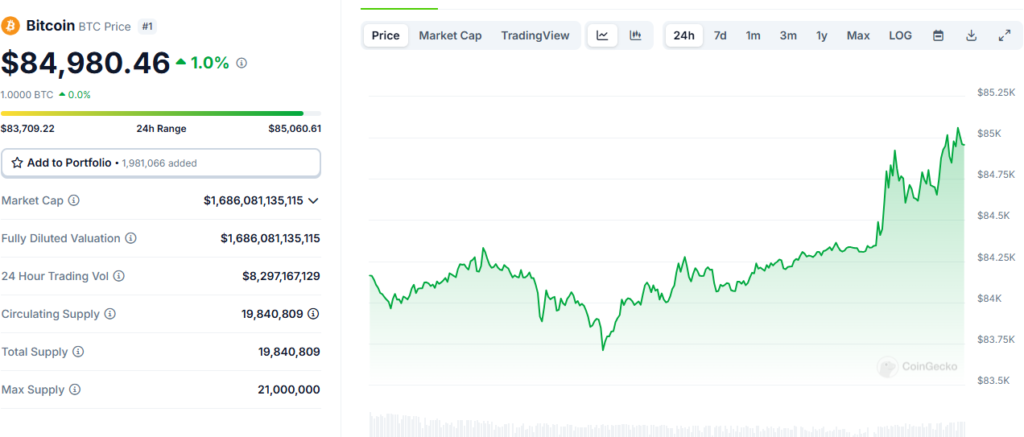
Live graph from Coingecko

You might also like: Ether’s Supply Dips to 10-Year Low—Will This Spark a Massive Price Surge?

So, Who’s Right? The Data or the Doomers?

At the end of the day, the crypto market is full of conflicting narratives. Some claim long-term holders are selling, but onchain data proves otherwise. Others say the bull cycle is dead, while some believe we’re just entering a different phase of the market.

One thing’s for sure—misinformation runs deep in crypto. So, before you let FUD (fear, uncertainty, and doubt) mess with your decisions:

Fact-check your sources.
Verify onchain data.
Stay ahead of the noise.

Because in the end, only the data tells the real story.

Exit mobile version