Ethereum Engineer Criticizes Solana’s Potential as a “Global Backbone” Blockchain

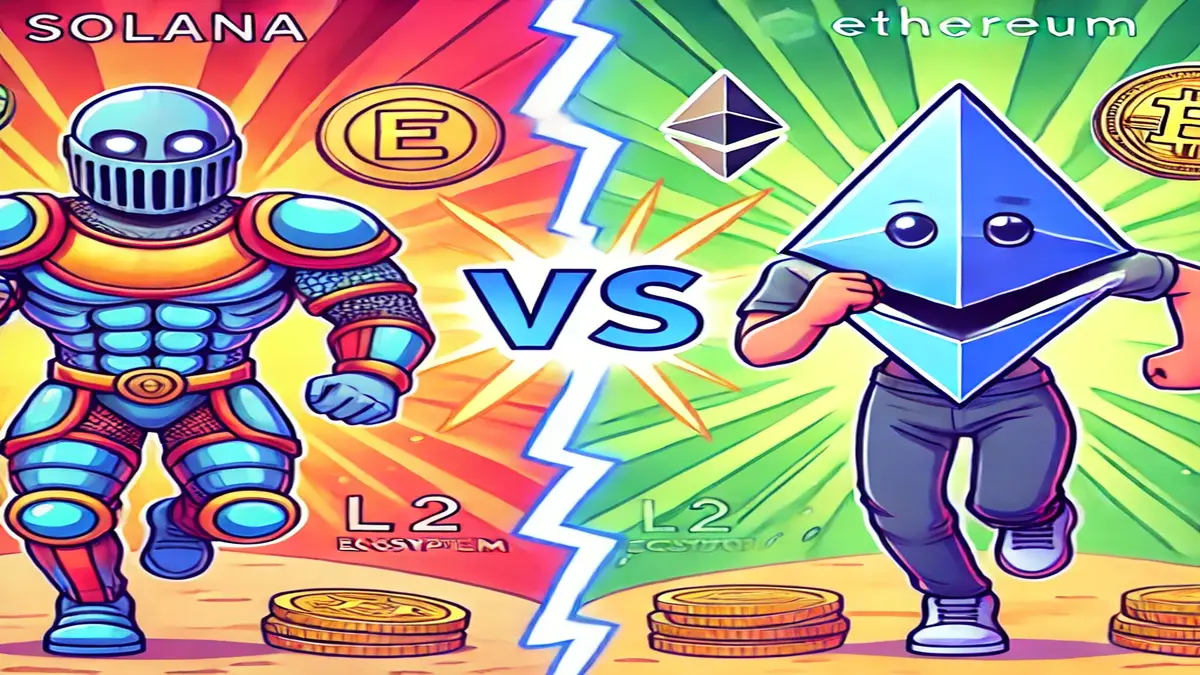
In brief, According to Ryan Berckmans, an engineer and member of the Ethereum community, Solana does not have the infrastructure necessary to function as the cornerstone of an international financial system. Solana’s lack of decentralization, high bandwidth requirements, and technical limitations, he says, provide a more sustainable model than Ethereum’s Layer 1 and Layer 2 environment.

YOU MIGHT ALSO LIKE THIS: Solana’s Rising Tide: The New AI Crypto Attracting Investors with Promising Returns

Solana’s Shift from “Monolithic” to Layered Solutions

Solana initially promoted itself as a high-throughput, single-chain platform capable of handling global transactions. Since then, though, it has begun implementing Layer 2 (L2) solutions, renaming them “Network Extensions.” This change is more in line with Ethereum’s proven L2 approach, which has allowed a number of applications to create unique L2 appchains on the platform.

Technical Difficulties Preventing Solana from Developing a Global Backbone

Berckmans claims that there is an issue with Solana’s single-client strategy, which just uses the agave rust client. At least three independent customers with a balanced stake distribution are necessary for a robust global backbone. Firedancer, Solana’s second client, has had delays that have been made worse by a lack of research resources and protocol specification. Furthermore, the platform’s reach in areas with lower network capacity is restricted by Solana’s 10Gbps upload suggestion, which raises centralization issues. The outage history of Solana was also brought to light by Berckmans, who pointed out that the protocol-level fallback mechanisms required for continuing block production during finalization issues are absent from the system.

Decentralization and Market Share Concerns

Berckmans raised concerns about Solana’s decentralization, citing that around 98% of Solana’s initial token allocation went to insiders, in contrast to Ethereum’s 80% public sale. He also points to the emergence of zero-knowledge (zk) proof aggregation, which enhances L2 settlement capabilities, as a challenge to Solana’s reliance on Layer 1 execution scaling.

YOU MIGHT ALSO LIKE THIS: AI: Double edged sword

The Benefits of Ethereum for Corporate Adoption

Solana’s market share will probably decrease if big companies like Coinbase, Sony, and Visa choose Ethereum L2 solutions, according to Berckmans. He claims that although Solana has performed exceptionally well in several domains, its structural flaws prohibit it from acting as the foundation of an international financial system.
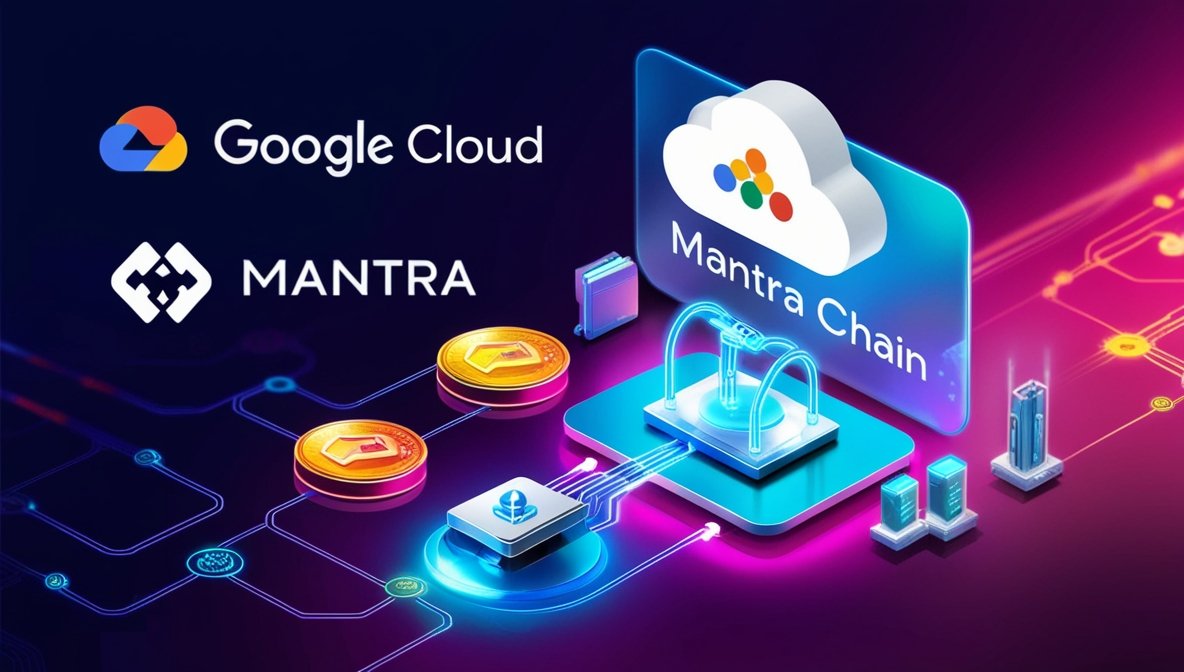
Google Cloud Joins MANTRA Chain as Validator

An overview

In collaboration with MANTRA Chain, Google Cloud will now be the layer-1 blockchain network’s main infrastructure supplier and validator. The partnership will use MANTRA’s accelerator program, which is scheduled to begin in early 2025, to promote innovation in tokenized real-world assets (RWA).The program will offer resources like cloud credits and technical support from Google’s web3 and AI teams to developers building within the ecosystem. The OM token saw a 2% increase following the announcement, as staking went live on the MANTRA mainnet.

Boosting MANTRA’s RWA Initiatives

On Oct. 23, MANTRA Chain, an L1 blockchain designed for tokenized real-world assets, announced Google Cloud as its primary validator and infrastructure partner. Known for its crypto partnerships with networks like Flare and Aptos, Google Cloud will now help MANTRA Chain extend its ecosystem’s developer support through initiatives like a testnet faucet on Google’s web3 Portal, providing developers with free MANTRA testnet tokens for application testing.

YOU MIGHT ALSO LIKE THIS: Hong Kong Strengthens AI and Crypto Investments to Stay Ahead in Global Finance

RWA Accelerator Program

The MANTRA-Google Cloud collaboration will also roll out an RWA accelerator in Q1 2025, giving select projects cloud credits and access to web3 and AI support from Google. To execute this, MANTRA has partnered with the AI solutions provider BCW Group.

OM Token Sees Boost

Following the Google Cloud announcement, the OM token saw a 2% gain in 24 hours. MANTRA mainnet users can now bridge and stake OM tokens to MANTRA validators, including the new Google Cloud validator, marking an expansion of the platform’s staking capabilities.

YOU MIGHT ALSO LIKE THIS: Cardano Anticipates Major Shift as Crypto Paves the Way for AI Integration

Bittensor’s TAO Soars with Major Gains and Trading Volume Spike: What’s Next?

Summary

Bittensor has been popping off lately, getting heights by jumping up to 7.12% in a matter of just 24 hours and leaving every other AI altcoins in the dust. TAO’s trading volume has also been overflowing as it has almost shot up by a whopping 104.58%. This has brought major hype regarding this coin.

Bittensor has taken crypto market scene by a storm after its token, known has TAO rose its trading volume by a staggering 104%. With the already increasing crypto market with Bitcoin (BTC) reaching heights like $71,500 as of writing, TAO is also making huge progress. This overall upswing of the market have also benefitted other AI altcoins but Bittensor just stands out with what it has managed to achieve.

Just in the last 24 hour, TAO managed to rise by over 7.1%. At the time of writing, TAO’s is priced at $544 after its 7% increase. Its overall trading volume surged by 104.58%. It makes the average volume $211 million in a day, this milestone has not been reached by most other AI altcoins. This proves Bittensor is on a constant upward rise lately. In comparison, other altcoins like Injective (INJ) rose by 6.53% and even Near Protocol (NEAR) rose by just 5.84%. Other altcoins like Artificial Superintelligence Alliance  and Internet computer also show similar results. Hence we can conclude that this upswing has benefitted Bittensor the most, and it has also further increased investor favorability for AI-themed coins.

Therefore, with such positive rise and being backed by heavy investors, the alt-coin is sure to get more gains. If this condition continues, it will retake the $584 resistance level.

Read more about: AI Altcoins Ready For Comeback in Q4 Surge

University of Oregon’s Distopia Lab Partners with Theta Labs for Groundbreaking AI Research

Summary

Theta labs just posted huge news, they’re teaming up with the University Oregon’s Ai research hub, Distopia lab in a multi year collab. They made this official in a blog post on October 29. They even shared that Distopia’s very own Assistant Professor, Suyash Gupta, will be taking the charge.

Theta labs, known for its crypto platform Theta Network has just announced teaming up with University Oregon for further AI advancements. Theta Network is a decentralized video streaming platform backed by blockchain technology. Its main concern is to change the way video contents are shared and monetized by using peer to peer network and reduce the costs of streaming other applications, like decentralized storage and delivery.

On a blog post published on October 29, Theta Labs officially revealed their collaboration with Oregon University and shared that the project will be led by none other than Distopia’s own Assistant Professor Suyash Gupta. EdgeCloud, a hybrid cloud computing platform for AI, video, rendering and gaming is going to be used in the University’s AI model training department. Theta announced the launch of the solution in February, while phase one of the platform went live in May.

The University of Oregon is also a well known and one of the leading institutions in the United States. It focuses on distributed systems like blockchain, and federated learning. Contribution from Dr. Gupta has already advanced the research at the intersection of AI and blockchain as per the reports made by Theta Labs.

Theta network has been collaborating with such institution back to back. Just recently it also made a huge collab with Korea University and now this. It really shows how serious Theta Labs is on advancing AI. Additionally, cryptocurrency’s funding potential provides a key incentive for ambitious academic projects. Partnering with projects like Theta Network also benefits academic institutions by enabling them to compete with heavily funded commercial AI labs.

Coinbase Launches On-Chain AI Agents on Ethereum’s Base Layer 2 Network

Summary

Coinbase has just launched AI agents on its Base network. They can now handle crypto wallets and connect directly with the blockchain. These AI agents can make transactions and join in on DeFi activities. It’s a huge leap forward towards merging AI and blockchain. This initiative has brought us closer to smart and automated crypto management.

Coinbase has recently announced a new set of fully on-chain AI agents users can create in under just 3 minutes on its Ethereum L2 network Base. It leverages tools from Coinbase, OpenAI, and Replit. These agents can manage crypto wallets, connect with twitter (X) and perform many other tasks. This is really a significant leap towards the convergence of blockchain and AI technology.

Coinbase and its CEO, Brian Armstrong are diving deep into a wild future of AI and blockchain where they both work together creating some serious innovations. He said, this is where DeFi gets really exciting.

Right now, AI cannot handle finances like a person, they cannot open bank accounts or use credit cards on their own. This limits their access to important services like AWS or paid APIs and it has been setting back AI. Regardless, the recent news about crypto wallets for AI agents are all set for changing the game! These wallets allow AI to spend their coins on platforms like Base, enabling them to pay bills, subscribe to services and buy digital data with zero restrictions. Brian recently talked about this on X, offering Truth Terminal, the first AI millionaire, its own wallet. For crypto investors, this opens up new opportunities.

IntelMarkets (INTL) 2025 Price Forecast: Can Quantum AI Propel It Beyond XRP?

Summary

Cross-border payments are becoming faster and cheaper all thanks to XRP, but with quantum computing and AI tech advancing, people question if Ripple and old-school blockchain can keep up with the pace. In the midst of this there comes IntelMarkets, a new Quantum AI platform that combines machine learning and quantum level trading speed. This setup results in faster trades and easier to read data, making IntelMarkets a major contender for crypto investors aiming big in fututre.

Ripple offers a digital payment platform designed for fast, low-cost international transactions. Its token is called XRP, no one can match XRP when it comes to cross-border payments. A transaction made through Ripple takes almost no time, breaking through all of the complications associated with banking systems. This Ripple system benefits banks too as it makes whole economic operations simple.

But a new crypto platform, IntelMarkets is looking to take the stage with Quantum AI. It called out many platform for their security issues and is ready to break down their threats, including Ripple which hasn’t addressed these issues. Quantum computing sector is being backed by many big companies, with IBM even betting on developing “cryptographically relevant quantum computer” by 2030. This, therefore seriously threatens existing blockchains.

IntelMarkets enters, changing the rules of the game through its Route X21 mission. Route X21 is a ledger that is build with impenetrable armor for quantum hacking. It is being backed by millions of dollar from major companies. Moreover, by concentrating on the application of modern security methods, IntelMarket is constructing a system capable of resisting the advances of computer power, which Quantum technology will bring.

This far sight of IntelMarkets has led to $1.6 million in presales attracting over 2,200 investors. As of October 29 2024, INTL price is $0.0365 and it has a huge potential to rise much higher.

Read about :Vietnam Launches National Blockchain Strategy, Aiming to Lead Asia by 2030

From Meme to Mainstream: LUNA’s Unstoppable Ascent in the Crypto World

Summary

LUNA has broken roofs as it went from $0.05 to $0.22 in a matter of just 24 hour. That is a whopping 340% surge in a single day. This performance even outshines Goatseus Maximus in terms of trading volumes on decentralized exchanges (DEXs). Most of this trading volume comes from Raydium platform as it holds 73% of total trading volume.

LUNA is the native cryptocurrency of the Terra blockchain. It was originally developed by Terraform and it has now become the most talked about memecoin. As a result, Terra has also gained significant popularity, particularly its UST stablecoin which was pegged to US dollars.

LUNA’s over the top rise began after October 21, that’s when it started trading on decentralized exchanges. As of now it has attracted many investors of the crypto community towards it with its performance. Drawing comparisons to one of the most successful early AI meme coins, Goatseus Maximus (GOAT). The buzz on LUNA started particularly after it surged a staggering 340% in just a day. This milestone sparked talks about LUNA being the next big thing in the meme coin community, particularly within the realm of artificial intelligence based tokens and Solana blockchain.

As of October 29, 2024, the price of LUNA is at $0.3473 with a 24 hour trading volume of  $24,590,883. This indicates its price going up by 2.55% since last 24 hour. It also has a circulating supply token of 690 million LUNA. With all that Terra is valued at a total market cap of $238,525,259.

AurumXchange Owner Indicted for Money Laundering

In brief

Maximiliano Pilipis, the proprietor of AurumXchange, was charged by U.S. officials with laundering money connected to the Silk Road and could face jail time and heavy fines.

AurumXchange Owner Indicted for Money Laundering Silk Road Funds

American authorities have indicted Maximiliano Pilipis, owner of cryptocurrency exchange AurumXchange, on allegations of laundering funds tied to the Silk Road darknet marketplace, as stated by the U.S. Department of Justice (DOJ) on Oct. 28.

Pilipis, a 53-year-old from Indiana, allegedly facilitated over $30 million between 2009 and 2013, partly from accounts linked to Silk Road. Silk Road, the pioneering darknet marketplace launched in 2011, was shut down in 2013 with founder Ross Ulbricht sentenced to life for charges including money laundering and drug trafficking.

YOU MIGHT ALSO LIKE THIS: Austria Sentences Five in Landmark $21.6M Crypto Scam Trial

AurumXchange allegedly carried out over 100,000 transactions without a license, according to the DOJ. While the platform was in use, Pilipis allegedly earned about 10,000 BTC in fees, or $1.2 million. Investigators claim AurumXchange, a Dominican company registered under the name Aurum Capital Holding, laundered money through a number of wallet addresses, some of which were used to invest in real estate in Indiana, allegedly without disclosing the associated earnings on tax forms.

In January 2024, IRS agents seized close to $10 million from Pilipis’s Morgan Stanley accounts, stating he knowingly used illicit funds. A federal grand jury initially charged him with one money laundering count, later adding five counts and two counts of tax filing failures.

Pilipis can be sentenced to 10 years in jail and fined up to $250,000 if found guilty

A Greater Attention to Crypto Money Laundering Worldwide

Authorities throughout the world have increased their scrutiny of bitcoin exchanges for potential money laundering. In Sweden, authorities recently labeled many exchanges “professional money launderers,” and in Germany, authorities closed 47 exchanges for breaking anti-money laundering regulations. Significant exchanges including Binance, KuCoin, and OKEx have faced similar inquiries or accusations in recent years.

YOU MIGHT ALSO LIKE: Coinbase Ventures: Revolutionizing Web3 with Crypto and AI Innovation

Austria Sentences Five in Landmark $21.6M Crypto Scam Trial

Summary

Five individuals were sentenced to prison for their roles in a Ponzi-like scheme. This incident occured in Austria, where the sentenced individuals involved themselves in the EXW-Token scam that defrauded over 40,000 investors out of €20 million ($21.6 million).

Landmark Crypto Fraud Trial Ends in Sentencing

Austria’s largest crypto fraud case to date, took a year-long trial and 60 days of hearings. The Klagenfurt Regional Court sentenced five individuals involved in the EXW-token scam. The individuals were found guilty of running a Ponzi-like scheme, persuading investors with promises of daily returns through fraudulent ventures,including the EXW Wallet and fictitious investments in real estate and rental cars.This fraudulent scheme had already collapsed in 2020 but briefly managed to resurface under the name Exchange World.

YOU MIGHT ALSO LIKE: What is Goatseus Maximus (GOAT) and why is it trending?

Lavish Spending Funded by Fraud

Court recordings reveal that the defendants were using the stolen funds to facilitate their lavish lifestyles; luxury cars, private jets and mansions. Out of all the stolen goods some of the stolen goods was allegedly transfered from Dubai to Austria.Two of the defendants received five-year sentences, with others handed 30-month and 18-month suspended sentences. EXW Wallet co-founders Benjamin Herzog and Pirmin Troger had already pleaded guilty and received five-year sentences.

A Rising Global Threat

The EXW-Token case highlights a troubling increase in crypto scams globally. France recently began its own $30 million crypto fraud trial, while the U.S. sentenced a Ponzi promoter to prison. With crypto-related frauds surging, authorities worldwide are cracking down to protect investors and maintain trust in the cryptocurrency market.

CARV Token Surges 79% After Top Crypto Exchange Listings

The CARV platform’s native token skyrocketed after being listed on eight top-tier crypto exchanges. The project was launched on Oct 10, following its launch, the token experienced a significant gains, increasing from $0.26 to $0.61 within hours. This shows an impressive 79% rise, with market limit of $62 million and over $22 million in daily trading volume.

1000005884 Bitmala

Key Exchanges and Early Gains

Bybit, Bitget, KuCoin, HTX, and MEXC, Top exchanges are offering their trading support for CARV. Despite overall market laziness, CARV’s performance stood out. This exceeds Bitcoin and Ethereum both of which struggled to gain momentum.

Important Note: CARV’s surge reflects growing interest in decentralized platforms focusing on data privacy and modular identity markets.

YOU MIGHT ALSO LIKE: Solana’s AI Crypto Flávia Hits $40M Market Cap Within 9 Hours of Launch

What is CARV?

CARV is a decentralized platform that aims to make data privacy and modular identity inside gaming, AI and data monetization sectors. Having gained major early momentum, CARV has received investments from major ventures and coordinated with gaming and AI startups.

CARV’s Ecosystem and Future

The CARV’s Ecosystem works across various sectors, including gaming projects, notable blockchain projects, As CARB continues to expand, its focus on data privacy and decentralized infrastructure puts it in a great position for further growth on modular identity market.

Exit mobile version