Crypto Hesitation: Only 30% of Institutional Traders Eye Investments

As the survey from JP Morgan shows, 71% of institutional traders refrain from crypto in 2025, though 30% are open but very skeptical.


A new survey from JP Morgan shows that institutional traders remain conservative when it comes to crypto. Though digital assets are attracting attention, 71% of traders said they would not be looking to trade crypto this year, this year, up only a notch from 78% last year-it is a telling indication that there is strong skepticism about crypto among institutions.

On the other hand, 30% of traders show some interest in engaging with crypto, a small but consistent uptick in interest. Very clearly, however, traditional finance is not yet embracing crypto in any big way.

A survey by JP Morgan among traders showed that the greater portion is still not on board. High volatility in the crypto market, along with a constantly changing environment of regulation, stands out as the major reason for such caution. Some firms experiment with Bitcoin ETFs and investments in blockchain, but now, big players are kept away from the game by concerns over regulation, security, and overall market stability.

Crypto remains a high-risk bet for institutional traders, and it takes more than hype to get them into the pool.

Also Read: Global Crackdown: Countries Ban Chinese AI DeepSeek

Global Crackdown: Countries Ban Chinese AI DeepSeek

It is banned in countries like the US, UK, Australia, and Taiwan, due to their security concerns as it may result in data leakage and threaten the privacy of the people.


DeepSeek AI faces huge bans globally as governments freak out over data security risks. The United States, United Kingdom, Australia, South Korea, Taiwan, and several European nations have completely blocked the service for allegedly being capable of leaking sensitive information.

The Korea Hydro & Nuclear Power of South Korea has already cut off access, while other ministries ban the AI tool on government networks. Australia went harder to ban DeepSeek across all government systems; their Home Affairs Minister, Tony Burke, said it’s a threat to national security.

Taiwan, also, joined in by banning the use of DeepSeek for its government agencies and critical infrastructures, citing colossal security risks. France, Italy, and some other European nations have cracked down due to several concerns about collecting data and related privacy policies. Even the US has blocked DeepSeek in the government and private sectors.

This makes the UK and Ireland raise the red flag for security leaks from this Chinese AI model. Though DeepSeek gives cheap services to AI, its security problems make it a controversial one worldwide. Unless DeepSeek improves this situation with such concerns, more countries might blackenlist it, making it turn into a challenge for the Chinese AI firm.

Also Read: Law Firms Take Legal Action Against Pump.fun for Misusing Memecoins and Logos

Law Firms Take Legal Action Against Pump.fun for Misusing Memecoins and Logos

Two major U.S. law firms are suing Pump.fun for allowing shady memecoins that misuse their names, logos, and employees’ images.


Two of the most prominent law firms in the United States, Burwick Law and Wolf Popper LLP, are taking action against Pump.fun, a wild memecoin platform on Solana. They fired off a cease-and-desist letter demanding the removal of more than 200 tokens allegedly ripping off their names, logos-even employees’ faces.

One token, humorously named “Dog Shit Going NoWhere” (DOGSHIT2), is receiving serious heat over allegedly copying the firms’ names and creating legal and financial chaos. The lawyers say these aren’t just joke coins; they are part of a bigger scam to confuse investors, tamper with litigation, and threaten people.

This drama dates back to Jan 30, this year, when the firms sued Pump.fun for pushing risky, unregistered securities and running pump-and-dump schemes. They claim the platform, run by UK-based Baton Corporation, made nearly $500M from sketchy tactics.

Pump.fun, which just hit $3.3B in trading volume thanks to Trump-themed memecoins, hasn’t responded yet. But if they don’t clean up, legal trouble could wreck them. The lawyers warn that any more IP violations will bring more lawsuits, hinting this could turn into a long, ugly legal battle.

Also Read: Ohio Wants a Bitcoin Stash—New Bill Pushes for Crypto Reserve

Helium Mobile Unveils First-Ever Free 5G Phone Plan in the U.S.

Helium Mobile drops the first free U.S. 5G plan, cutting out big telecoms with a community-powered network and epic rewards system.


Helium Mobile just dropped the first-ever free 5G phone plan in the U.S. — the “Zero Plan.” This plan gives users 3GB of data, 300 texts, and 100 minutes of call time each month for absolutely no cost. No contracts, no hidden fees, and definitely no surprises. How? Helium’s community-owned 5G network is replacing the big telecom companies, allowing them to offer this unheard-of deal. But there’s a catch: it’s invite-only, so if you want in, you’ll have to join a waitlist.

Alongside the free Zero Plan, Helium also offers paid options: the $15/month Air Plan with 10GB of data, and the $30/month Infinity Plan for unlimited everything. Whether you’re on a budget or need more data, Helium’s got your back.

What makes them even cooler is their Cloud Points system, which gave people points not only for checking in but for sharing location data, inviting friends, and taking surveys that can be changed for rewards such as Amazon gift cards, Uber rides, or food delivery places such as Starbucks and Nike.

Helium’s also got a BYOD (Bring Your Own Device) policy, letting you keep your phone and number, plus live Concierge Service to help with the switch. It’s all about affordable, community-powered connectivity.

Also Read: Banks Should Be Allowed to Offer Crypto, Says Coinbase

ETH Supply Rises Back to Pre-Merge Levels

ETH supply just bounced back to pre-Merge levels, thanks to blob transactions from the Dencun upgrade, reducing ETH burns and increasing inflation.


Ethereum’s supply just shot back up to where it was before the Merge, all thanks to a surge in blob transactions. According to UltraSound.Money, ETH’s circulating supply now sits at 120,521,600, wiping out the deflationary impact the Merge once had.

Before the Dencun upgrade, Ethereum’s fee-burning system kept supply in check—users paid gas fees, and a chunk of that ETH was burned, reducing overall supply. But now, blob transactions, designed to handle massive data loads for layer 2 networks, don’t burn fees, meaning less ETH is removed from circulation. With blob transactions booming, ETH inflation is creeping up again.

Things could get even crazier with the upcoming Pectra upgrade, which plans to increase both the blob target and max limit. This would mean even more ETH flooding the market.

From supply to large-scale structural changes, Ethereum is changing big time. Just very recently, the gas limit jumped to 36 million, accommodating more transactions in each block. Furthermore, even Vitalik Buterin himself has gotten directly involved in restructuring the team at the Ethereum Foundation.

As these steps keep jolting the network, predictions regarding the future dynamics of ETH’s supply become increasingly difficult.

Also Read: Has the Hawk Tuah Girl Been Arrested for Her Memecoin? Here’s the Truth

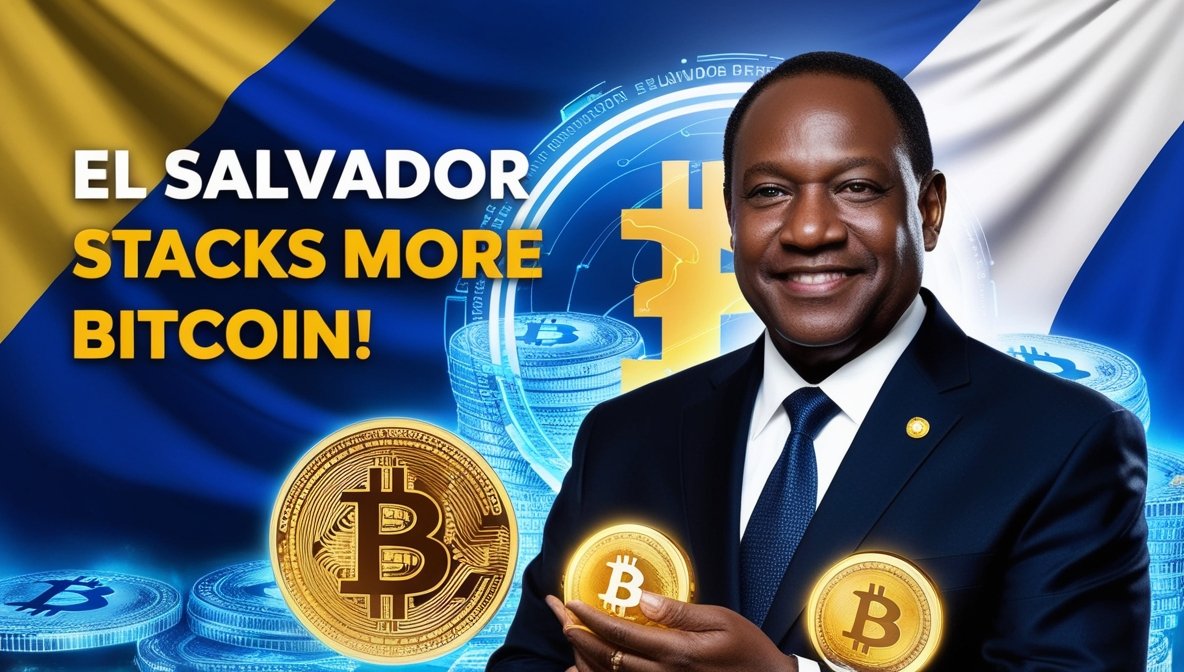
El Salvador Bolsters Bitcoin Reserves with 20 BTC Purchase This Week

El Salvador is stacking BTC fast, grabbing 21 more last week, pushing holdings to 6,068 BTC, worth $592M, despite IMF pressure.

El Salvador, the first country to make Bitcoin legal tender, is going all in on BTC again. Over the past week, it stacked 21 more BTC, bringing its total stash to 6,068 BTC—worth around $592 million. The country’s National Bitcoin Office (ONBTC) confirmed the latest buy, showing that El Salvador isn’t slowing down its Bitcoin strategy.

On Feb 4, 2025, the country copped 12 BTC in two separate buys—11 BTC at an average of $101,816 each and another 1 BTC at $99,114. This adds up to a solid 60 BTC purchase in just the last month. Originally, El Salvador planned to buy 1 BTC daily, but now it’s grabbing larger chunks, likely taking advantage of U.S. government Bitcoin auctions selling seized BTC for cheap.

The aggressive Bitcoin accumulation follows its $1.4B deal with the IMF, in which El Salvador loosened some Bitcoin policies; among them, the rule for mandatory BTC acceptance was lifted. Still, the country is doubling down on its Bitcoin future.

El Salvador’s moves are making waves around the world, with countries such as the United States, Brazil, the Czech Republic, and Poland watching intently, considering whether to start stacking BTC themselves.

Also Read: Canadian Hacker on the Run After $65M Crypto Heist

Has the Hawk Tuah Girl Been Arrested for Her Memecoin? Here’s the Truth

Hawk Tuah Girl’s $HAWK memecoin crashed 90%, sparking rumors of fraud and arrest, but fact-checks prove it’s false.


The Hawk Tuah Girl, also known as Haliey Welch, was an internet sensation this year, who blew up because of her viral “Hawk Tuah” sound. And just as quickly, it went sideways. It went to market like a bombshell and instantly hit a wild $490-million valuation. In what felt like a dream quickly turned nightmare, the price crashed 90% in 20 minutes, leaving investors in the dust.

Crypto fans weren’t happy, and rumors started swirling that Haliey was arrested for money laundering and securities fraud after the crash. Some wild claims even said she was facing charges for espionage related to the memecoin mess.

However, fact-checkers quickly shut down these rumors. A community note on X confirmed that the arrest claims were bogus, made by people trying to get more engagement for their own projects. The Crypto Times also clarified that Haliey’s still dealing with litigation from upset investors, but there’s no arrest news.

Even though things look bad, another X post suggests the Hawk Tuah Girl’s planning a comeback with a new coin called “Shaquille Oatmeal”, but she’s yet to make an official statement. Stay tuned!

Also Read: Banks Should Be Allowed to Offer Crypto, Says Coinbase

Trivago Teams Up with Travala to Enable Crypto Payments for Travel

Trivago partners with Travala, letting users book hotels with crypto. Crypto travel demand is booming, making blockchain adoption more mainstream!

Big news for travel and crypto lovers—Trivago just partnered with Travala, bringing crypto payments to hotel bookings! This means millions of Trivago users can now find, compare, and book over 2.2 million Travala properties worldwide and pay with 100+ cryptocurrencies, including Bitcoin, Ethereum, and AVA.


Timo Itterbeck, Trivago’s Head of Account Management, made it clear that their mission has always been to give travelers the most choice, and adding crypto with Travala.com definitely does that. The NASDAQ-listed Trivaga operates in more than 190 countries with upwards of 3 million monthly active users who would now be directly exposed to cryptocurrencies.

Meanwhile, Travala is killing it: sales last year reached $100M, doubling from last year, while a full 78% of its bookings were paid in Bitcoin-a clear indicator that crypto travel is trending.

Travala CEO Juan Otero sees this as a huge step toward mainstream crypto adoption. He says real-world use cases like travel legitimize crypto and make it more practical for everyday transactions.

Experts agree—mass adoption needs real-world blockchain applications. The Open Network Foundation’s Justin Hyun believes user-friendly apps like Telegram Mini Apps could be the Trojan Horse that brings in the next 500M crypto users.

Also Read: WLFI and Crypto Holdings Plunge as Market Crash Hits, Despite Trump’s Backing

Pectra Hard Fork Set to Double Layer-2 Throughput, Says Vitalik

Ethereum’s Pectra upgrade drops in March, doubling Layer-2 capacity, cutting fees, boosting staking, and making wallets smoother. ETH already pumping!

Ethereum’s next major upgrade, the Pectra hard fork, is dropping in March 2024, and it’s bringing some serious upgrades. Vitalik Buterin just confirmed that this update will double Layer-2 capacity by increasing the blob target from 3 to 6—meaning faster transactions and lower fees.

If you’re wondering, blobs are huge data chunks introduced in the Dencun hard fork last year. They help Layer-2 networks handle more transactions without blowing up gas fees. With Pectra, Ethereum will scale even further, making it more efficient and affordable to use.

Originally, Pectra was packed with 20 upgrades, but devs split it into two parts for a smoother launch. Besides boosting blob space, it’ll also increase validator staking limits and improve wallet experiences.

Meanwhile, Ethereum’s gas limit is back in the spotlight. Some think raising it will lower costs, while others worry about network stability.

Vitalik also floated an idea-let stakers vote on future blob capacity instead of relying on hard forks. That would make Ethereum more flexible, future-proof.

Market’s already reacting-ETH up 10% in a day and swinging back hard. The hype for Pectra is real, and Ethereum’s future is looking lit!

Also Read: Crypto Market Crash: Trump’s Tariffs or Overheated Top Signals?

Crypto Market Crash: Trump’s Tariffs or Overheated Top Signals?

Trump’s tariffs and crypto “top signals” caused a $500B market crash, with overbought conditions and geopolitical tensions fueling the downturn.

The crypto market just took a massive hit, dropping nearly $500 billion, and now everyone’s wondering: was it Trump’s tariffs or the crypto market getting too hyped? Some analysts think Bitcoin (BTC) and other cryptos were overdue for a correction. The market had been showing signs of overheating for a while, with “top signals” popping up everywhere. These top signals happen when the market feels way too exposed, like when crypto apps hit new download records or celebrities jump on the crypto hype train.

One big event was Trump launching his own memecoin, TRUMP, on January 18. The launch made major headlines, bringing tons of retail investors into the mix. On top of that, Bitcoin recently hit new all-time highs without any real corrections, and we all know what happens next—sharp pullbacks.

While Trump’s tariffs definitely shook up the markets, many experts believe the crypto sell-off was more about the market being overbought than anything else. When retail adoption spikes and everything seems too good to be true, it’s a sign that things might crash. If geopolitical tensions continue and the trade war worsens, the bearish trend could stick around for a while, with traders now eyeing Bitcoin and Ethereum’s key support levels.

Also Read: February’s Top 5 Cryptos to Watch: XRP, Solana, Trump Coin, Dogecoin, and Pi Network

Exit mobile version