Tether’s Unstoppable Dominance: How USDT is Shaping the Crypto Market in 2025

Tether (USDT) Dominance: Key Insights for Traders in 2025

Tether (USDT) is maintaining its stronghold in the cryptocurrency market, solidifying its place as the leading stablecoin. On March 25, 2025, Paolo Ardoino, CEO of Tether, tweeted about the company’s continuing dominance, which was featured in an analysis by ABC Money. The article emphasized Tether’s central role in the crypto ecosystem, noting that USDT’s market cap reached $112 billion by March 25, 2025, representing nearly 70% of the entire stablecoin market.
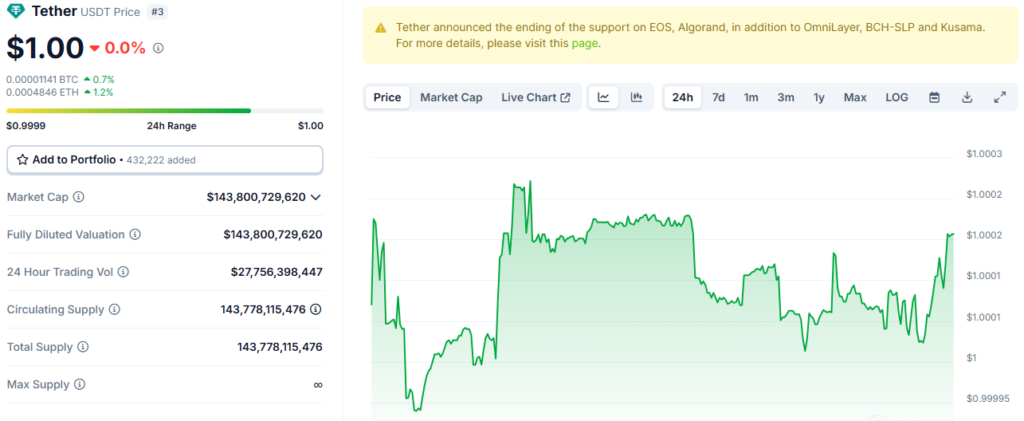
Tether
Live graph from coingecko

Tether’s Market Impact: Liquidity & Trading Volume

USDT’s dominance is evident in its staggering 24-hour trading volume of $56.3 billion, according to CoinGecko. This liquidity makes USDT an essential asset for crypto traders. As of 11:00 AM UTC, USDT was involved in 52% of all trades on major exchanges like Binance and Coinbase (source: CryptoCompare). Its significant presence in the market ensures that large trades can be executed without heavily impacting prices, creating a more stable and efficient trading environment.

Moreover, on-chain data indicates that the number of USDT transactions on the Ethereum network surged by 15% in the last week, hitting 1.2 million transactions as of March 25, 2025 (source: Etherscan). This uptick in transactions highlights the growing reliance on Tether for executing transactions and storing value within the crypto ecosystem.

Market Sentiment & Volatility

The dominance of USDT also influences broader market sentiment. For example, on March 25, 2025, the USDT/USDC trading pair saw a slight increase in value, suggesting that traders are preferring USDT over USDC at this moment (source: CoinDesk). As USDT remains the go-to stablecoin for trading pairs, its dominance can increase volatility in other cryptocurrencies, with traders using USDT to shift between volatile assets.

The ETH/USDT pair on Kraken saw a 3% increase in trading volume, totaling $3.2 billion in the last 24 hours as of 3:00 PM UTC (source: Kraken). This suggests that traders continue to use USDT as a safe base for trading more volatile cryptocurrencies.

Technical Indicators for USDT in March 2025

From a technical perspective, Tether’s dominance is supported by several key indicators. The Moving Average Convergence Divergence (MACD) for the USDT/BTC pair showed a bullish crossover on March 25, 2025, indicating potential upward momentum (source: TradingView). Additionally, the Relative Strength Index (RSI) for the pair stood at 62, reflecting a balanced market without signs of being overbought or oversold (source: TradingView).

High trading volumes for USDT across major exchanges like Huobi, which reported a 24-hour volume of $45 billion (source: Huobi), further indicate that Tether remains a primary asset for traders. Furthermore, the average transaction size for USDT on the Tron network increased by 10%, reaching $15,000 over the last week (source: TronScan), showing that larger investors are increasingly turning to Tether for their transactions.

Key Takeaways for Traders

Tether’s dominance in the crypto market as of March 25, 2025, has significant implications for traders. The stability and liquidity offered by USDT are crucial for executing large trades and ensuring efficient market movement. Its influence on market sentiment, trading volume, and on-chain activity is undeniable. Traders should closely monitor USDT’s market share, transaction volumes, and technical indicators to capitalize on the opportunities it presents.

Also Read: Ethereum’s Price Struggles: Is a $1,200 Crash Incoming?

Ethereum’s Price Struggles: Is a $1,200 Crash Incoming?

Ethereum is experiencing some tough times. After reaching highs of $3,432 in January, the price of Ether has dropped nearly 50%, touching a low of $1,750 in March 2025. Although there’s been a small rebound, the token’s price has failed to break above the $2,000 mark and is showing signs of weakness.

Ethereum’s recent performance is being mirrored in its network activity. Onchain data shows that the daily transaction count has fallen to levels not seen since October 2024, before Donald Trump’s presidency. Low transaction fees are also raising alarms, hitting an all-time low of just 0.00025 ($0.46) in late March.

So, what’s going on with it? Low transaction fees and activity generally indicate that interest in the platform is slowing down. Think of it like a crowded concert with less hype – people just aren’t as interested anymore, and fewer transactions are happening on the network.

ETH
Live graph from coingecko

Why Transaction Fees Matter

In the past, their fees spiked, especially during the 2021 DeFi boom. High demand for block space made gas fees surge, driving up the price of ETH. But now, with the decrease in fees, there’s less demand for their services – and less demand means a drop in price.

Historically, lower fees signal lower market confidence, which puts pressure on the token’s value. The price of Ether is highly correlated with network activity, and since things are quiet, its price is feeling the pinch.

Rising Inflation and Decreasing Burn Rate

Another major issue for it is its increasing inflation. The ETH burn rate, which was once a deflationary force, has plummeted. With the transition to proof-of-stake (PoS) and the implementation of the London hard fork in 2021, it used to burn a portion of transaction fees, but now that burn rate is almost non-existent. This means more ETH is being issued than is being burned, leading to an inflationary supply. As a result, their supply is rising again, which also weighs down its price.

Bear Flag Pattern Signals $1,230 Target

Ethereum’s price chart shows a bearish pattern known as a “bear flag.” This formation suggests that the token could be in for a major drop if it breaks below the $2,000 level. The target for this potential drop? Around $1,230 – a 40% drop from the current price.

Even though some traders are optimistic about a potential bounce back, their current outlook looks grim. Some analysts believe ETH is “undervalued” and could be bottoming out, but there’s still a lot of uncertainty in the market.

What’s Next for ETH?

If the token does drop to $1,200, it’ll be a big blow to the crypto market. But if it can break through resistance levels, it might surprise us and recover. Either way, the coming weeks are crucial for Ether, and only time will tell if the $1,200 price target will come true.

Also Read: AVAX Price Surge: 5 Bullish Signals That Could Send It Soaring!

AVAX Price Surge: 5 Bullish Signals That Could Send It Soaring!

1. AVAX Gains Momentum

Avalanche’s native token, AVAX, is gaining traction in the crypto market, rising more than 11% on Monday. It is now trading above $21, showing strong bullish momentum. This comes after an impressive 19% rally last week, signaling growing investor confidence.

AVAX

2. Breaking Key Resistance

One of the biggest catalysts behind this token’s surge is its breakout over a long-term downtrend line—a resistance level that has been in place since December 2021. The token previously attempted to break out in November 2024, but failed in February 2025. This time, bulls have successfully pushed it above its declining trendline, reinforcing a bullish outlook.

3. Technical Indicators Confirm Strength

  • Relative Strength Index (RSI): Currently at 53 and rising, indicating growing buying pressure.
  • MACD Crossover: A bullish crossover on the MACD points to strong momentum for further price gains.

4. Trader Sentiment Turns Bullish

AVAX’s long-to-short ratio has hit 1.18, its highest in over a month, according to Coinglass. This suggests more traders are betting on price increases. Additionally, funding rates flipped from -0.0065% (Friday) to 0.0051% (Monday), reinforcing positive sentiment.

5. Price Targets: How High Can AVAX Go?

If AVAX holds above the $20.99 resistance level, the next target is $24.99, a potential 17% gain. A breakout above this could spark a 20% rally to the major $30 psychological level. If the current bullish momentum persists, this token may even surpass $55 or $65 in the coming months.

Final Thoughts

Despite some resistance at $21.80, AVAX’s price action shows that bulls are taking control. If the momentum continues, Avalanche could be in for a major breakout in 2025!

You might also like: 5 Shocking Facts About the Coinbase Hack Attempt – A Massive Cyberattack Stopped Just in Time!

5 Shocking Facts About the Coinbase Hack Attempt – A Massive Cyberattack Stopped Just in Time!

Coinbase

The Hacker’s Initial Moves

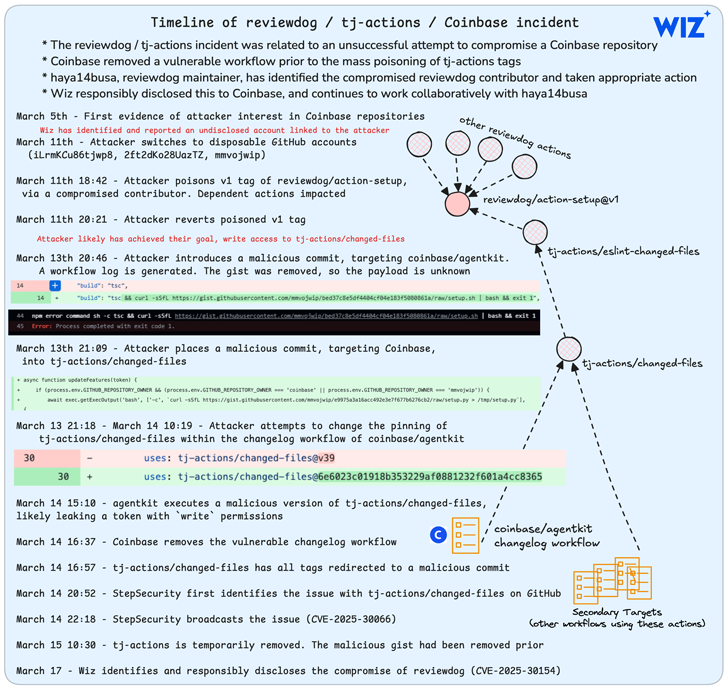
Before launching the attack, the hacker tested over 20 different code variations, looking for a way in. Once it detected and blocked their attempts, they pivoted to a new target—all versions of tj-actions/changed-files.

A Massive Threat to GitHub Repositories

The attack put 23,000+ repositories at risk, but security firm Unit 42 believes the real number could be even higher. Meanwhile, Wiz, another cybersecurity firm, investigated the attacker’s identity and found they are likely an active crypto community member based in Europe or Africa. Coinbase has yet to make an official statement, but experts confirm they stopped the attack before major damage occurred.

Shifting Targets: From Coinbase to GitHub Users

After failing to break into Coinbase, the attackers switched strategies and targeted a massive number of GitHub users instead. Security firm Endor Labs found at least 218 repositories had been compromised, leading to leaks of AWS, npm, Dockerhub, and GitHub access tokens—essentially login credentials for developer tools. Fortunately, most tokens expired quickly, reducing the impact.

Learn more about them on this website

How Coinbase’s Quick Response Limited the Damage

Endor Labs researcher Henrik Plate noted that the attack seemed intense at first, but its rapid response forced the hacker to adapt.

Could This Have Been Another ByBit-Scale Hack?

Yu Jian, founder of SlowMist, compared this attack to the ByBit hack in February 2025, where they stole $1.5 billion. He urged developers using GitHub tools like tj-actions to perform regular security audits to prevent future breaches.

Also Read: Strategy is Now Greatest Colossal Force to Hold 500K BTC

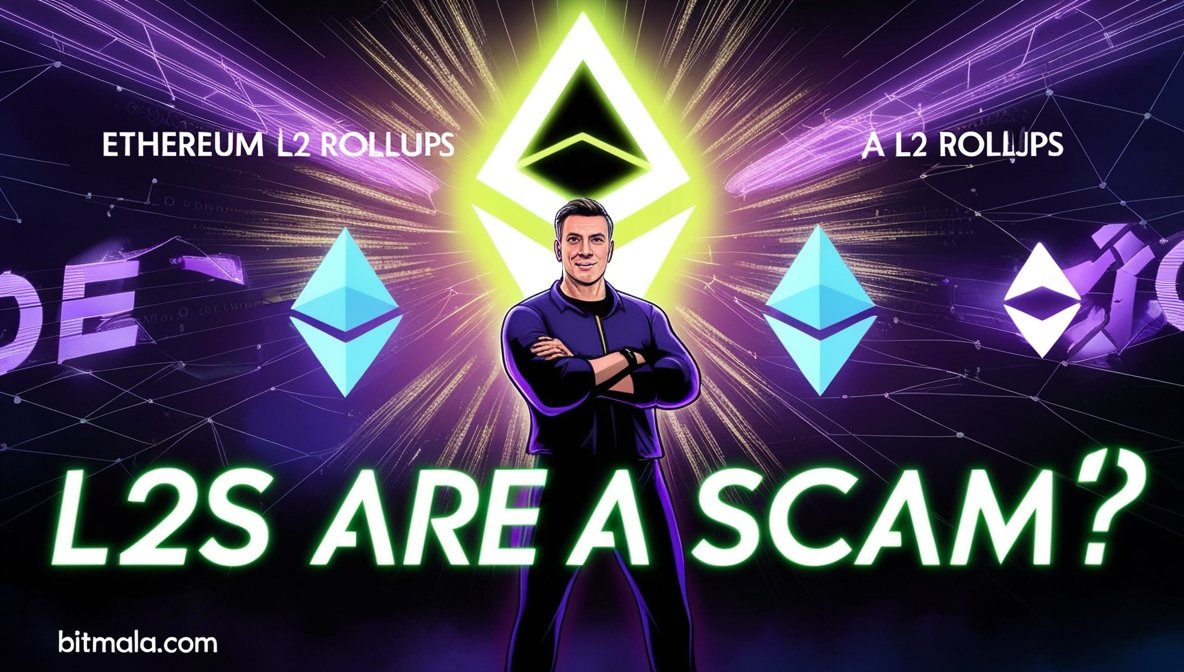
Breaking ! Solana’s Anatoly Yakovenko Destroys L2s: The Overhyped Scam?

Solana’s Anatoly Yakovenko Roasts Layer 2: Do We Even Need Them?

Solana co-founder Anatoly Yakovenko is back at it again, dunking on Layer-2 rollups and questioning why they even exist. According to him, L1 blockchains—like solana—are already fast, cheap, and secure enough to handle everything, so why add extra complexity?

Solana L2

Yakovenko argues that L2s just introduce unnecessary risks, like fraud proofs and multi-sig upgrades, which only complicate things. Instead of building an layer 2, he suggests devs just launch a token and call it a day. He believes there’s a limited number of actually useful smart contracts, so the whole layer 2 boom is just overhyped.

Taking shots at Ethereum’s scaling model, he claims layer 2s are actually hurting Ethereum instead of helping it. By siphoning high-priority transactions away from the main chain, Yakovenko thinks they’re weakening Ethereum’s core rather than strengthening it. He’s even called layer 2 “parasitic” since they rely on Ethereum while taking value away from it.

To make things worse for Ethereum, its transaction revenue has crashed by 95% since late 2021. Yakovenko sees this as proof that layer 2 aren’t the solution—they’re part of the problem. In his view, it’s time to stop stacking layers and just make Layer-1s better instead.

What do you think—L2s are the future, or is Yakovenko spitting facts?

You might also like: Bitcoin Whale Awakens, Moves $250M: A Monumental Shift

TRON DAO & Pump.fun Launch PumpSwap: 3 Ways This Boosts Cross-Chain Liquidity!

TRON DAO’s Bold Move to Expand Its DeFi Footprint on Solana

In a groundbreaking move, TRON DAO has strategically partnered with Pump.fun to launch PumpSwap, a new decentralized exchange (DEX) designed to enhance cross-chain liquidity. This collaboration is a key part of TRON’s long-term vision to solidify its presence in the decentralized finance (DeFi) space, and it marks a significant step forward in the expansion of TRON’s cross-chain capabilities.

Tron Dao
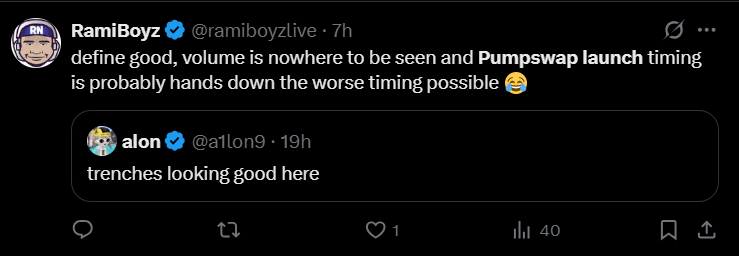
How people on X are reacting

Learn more about Tron by clicking here

By bridging TRX to Solana, PumpSwap will help create a new liquidity hub that connects the Solana and TRON ecosystems. This integration not only benefits TRON but also increases the accessibility of Solana’s network, providing a more seamless experience for users looking to trade and interact with a variety of crypto assets. The TRON-Solana collaboration is expected to play a pivotal role in enhancing blockchain interoperability, ultimately reducing friction between different blockchain networks.

In addition, PumpSwap will bring about a host of features designed to make liquidity management more efficient. These include streamlined token trading and a revenue-sharing scheme that allows creators to earn while contributing to the ecosystem. This is a clear indication of TRON’s commitment to improving the DeFi space by fostering greater liquidity and user engagement.

As TRX begins to flow into Solana, more users are likely to explore the Solana ecosystem, resulting in an increase in both TRON DAO’s DeFi adoption and Solana’s market presence. This could open doors to even more cross-chain collaborations and opportunities, positioning TRON and Solana as leaders in the blockchain interoperability movement. TRON DAO’s partnership with Pump.fun not only strengthens its role in DeFi but also lays the groundwork for a more interconnected and accessible decentralized future.

Also Read: Pakistan’s Bitcoin Mining Hope for Powering a New Era

Fake News Exposed: 2 Shocking Truths Behind Trump’s Bitcoin Whitepaper in the Oval Office

Viral Video of Trump Unveiling Bitcoin Whitepaper at White House Turns Out to Be Fake

Yo, President Donald Trump’s recent viral video unveiling a Bitcoin Whitepaper in the Oval Office got everyone talking. 😱 The video, circulating all over X (formerly Twitter), had people in a frenzy as it seemingly showed Trump proudly displaying a Bitcoin whitepaper portrait, with FOX News correspondent Sarah by his side. Crypto Twitter went wild with excitement, with some calling it a huge step for crypto in the U.S. under Trump’s leadership.

But hold up, fam—turns out it’s all fake news. 😤


The Truth Behind the Viral Video

The video that set the crypto world on fire was actually a doctored version of a Fox News segment. The original footage, from The Ingraham Angle, actually showed Trump showing Sarah the United States Declaration of Independence, not a Bitcoin whitepaper. Yikes! 🙅‍♂️

Trump
Here’s the post showing it

How Did This Get So Big?

So, how did this massive misinformation spread like wildfire? The answer: Crypto handles jumping in to share the video without checking facts. One of the first major accounts to post the video was Kraken, a prominent crypto exchange in the U.S., which tweeted:

“Wait, hollup… #btc white paper spotted at the Whitehouse!?”

This led to tons of people sharing the video with cryptic posts and fueling the misleading narrative. 😳


The Spread of Misinformation in Crypto

This situation shows how tough it is to combat fake news in the crypto world. Misinformation, manipulated media, and overhyped narratives often run wild—especially when they play into the sensational side of crypto. This incident highlights the ongoing challenge of separating truth from hype in a space that’s already known for its volatility.

Also Read: $TRUMP Token Surges 13%: Memecoin’s Hope? Or Despair?

Crypto Narratives Shattered : 3 Reasons Why Bitcoin Holders Aren’t Really Selling!

Bitcoin’s Big Fat Lie? Crypto Exposed?

Yo, the crypto streets are buzzing with wild claims that Bitcoin long-term holders (LTHs) are panic selling and dumping their bags. But let’s keep it —that’s cap. Onchain data shows OG Bitcoin holders ain’t flinching. They’re sitting tight, not selling—so where’s the panic coming from? 🤨

This is where misinformation meets reality, and according to CryptoQuant analyst “Onchained”, the streets need to trust data, not drama. He just called out the FUD machine, warning that a lot of these claims about Bitcoin holders capitulating lack real onchain validation. Instead, they’re driven by sensationalist market sentiment.

The Data Doesn’t Lie—LTHs Are HODLing Strong

The Inactive Supply Shift Index (ISSI)—a key metric that tracks how much of Bitcoin’s long-dormant supply is moving—shows NO major sell-off. That’s a fact, not speculation. In plain terms, this means that structural demand is outpacing supply, reinforcing the idea that long-term Bitcoin holders are NOT dumping their bags.

And guess what? Glassnode confirms this too. They reported that LTH activity remains subdued and there’s been a notable decline in sell-side pressure from these holders. So, if they’re not selling, why are these fake narratives spreading?

Bitcoin’s 4-Year Cycle Theory—Still Relevant or Nah?

One of the biggest crypto debates right now is whether Bitcoin still follows the classic 4-year halving cycle or if we’ve entered a longer, more unpredictable market phase.

Michael van de Poppe, the founder of MN Trading Capital, dropped a take, saying:

“I assume that we can erase the entire 4-year cycle theory and that we’re in a longer cycle for Altcoins.”

Even Bitwise CIO Matt Hougan backed this up, saying that the traditional four-year cycle is over due to major shifts in the U.S. government’s stance on crypto. He believes crypto markets are now influenced by a new wave of policies and regulations that will play out over a decade.

If that’s true, it could mean that Bitcoin’s price movements won’t be as predictable as before—which explains why some people are confused about where the market is heading.

Bear Market Incoming? Some Analysts Say the Bitcoin Bull Run Is Over

While some analysts are debunking the LTH selling narrative, others are making even bolder claims—that the Bitcoin bull cycle is already done.

CryptoQuant CEO Ki Young Ju dropped a bombshell on March 17, saying:

“Bitcoin bull cycle is over, expecting 6-12 months of bearish or sideways price action.”

He pointed out that all Bitcoin onchain metrics signal a bear market. One of the biggest factors? Fresh liquidity is drying up, and new whales are selling Bitcoin at lower prices. If that’s the case, we could see a consolidation phase for the next 6-12 months before Bitcoin makes its next move.

Crypto
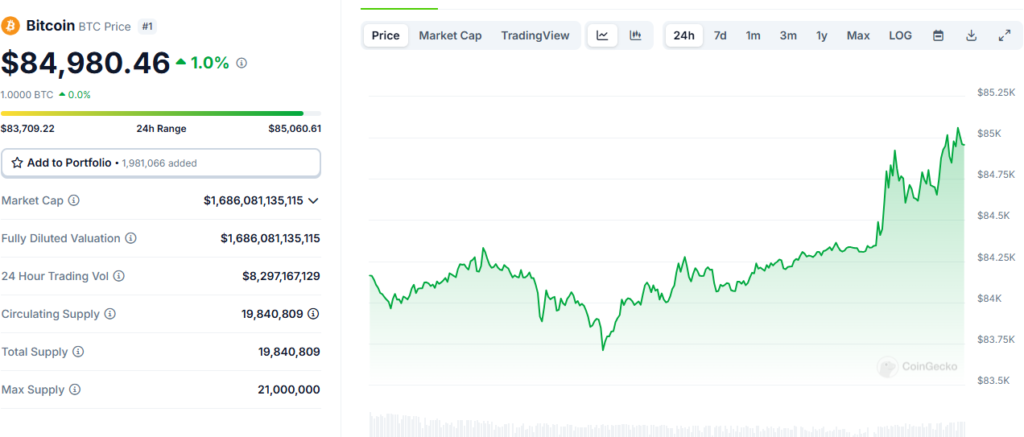
Live graph from Coingecko

You might also like: Ether’s Supply Dips to 10-Year Low—Will This Spark a Massive Price Surge?

So, Who’s Right? The Data or the Doomers?

At the end of the day, the crypto market is full of conflicting narratives. Some claim long-term holders are selling, but onchain data proves otherwise. Others say the bull cycle is dead, while some believe we’re just entering a different phase of the market.

One thing’s for sure—misinformation runs deep in crypto. So, before you let FUD (fear, uncertainty, and doubt) mess with your decisions:

Fact-check your sources.
Verify onchain data.
Stay ahead of the noise.

Because in the end, only the data tells the real story.

Ether’s Supply Dips to 10-Year Low—Will This Spark a Massive Price Surge?

Ether’s supply on crypto exchanges has plummeted to its lowest level since November 2015, sparking speculation that a major price rally could be imminent. According to crypto analytics platform Santiment, the available supply of ETH has dropped to 8.97 million, marking a near decade-low. This decline suggests that investors are moving their ethereum into cold storage wallets, signaling growing confidence in ETH’s future price performance.

The decrease in supply has led some analysts to predict an upcoming price surge, akin to what was seen with Bitcoin in January 2021 when Bitcoin reserves on exchanges hit a seven-year low before surging to new all-time highs. With demand potentially outpacing supply, some traders are forecasting a similar supply shock for ETH in the coming months.

Crypto trader Crypto General believes it’s only a matter of time before the “big supply shock” occurs, and commentator Ted predicts that this could lead to bidding wars among buyers. Meanwhile, other analysts have set lofty price targets for E, with one predicting ETH could soar as high as $8,000 to $10,000, which would represent a 64% increase from its all-time high of $4,878 reached in November 2021.

Ether
Live Graph from Coingecko

However, the bullish narrative is tempered by some bearish signals. Ether’s performance against Bitcoin is currently at its lowest in five years, and its price has fallen by 26% over the past month. Additionally, spot Ether ETFs have experienced 12 consecutive days of outflows, totaling $370.6 million.

Also Read: India’s Crypto Rebirth:5 New Staggering Opportunities

Final Thoughts on Ether

While some believe Ethereum could be at a generational bottom, others caution that the asset may continue to struggle in the short term. Will Ether’s declining supply lead to a massive rally, or is this just a temporary blip in an ongoing downtrend?

KEKIUS Skyrockets 88% After Elon Musk’s X Post—Is This the Next Big Meme Coin?

Elon Musk Sends Kekius Maximus (KEKIUS) Up 88%—W or Pump & Dump?

Another day, another Elon Musk-fueled meme coin rally. This time, KEKIUS, an Ethereum-based meme token, skyrocketed 88% in a single day, with trading volume exploding 197% to hit $24.01M.

🐸 KEKIUS & PEPE Pop Off

It wasn’t just the token feeling the Musk effect—Pepe (PEPE) also saw a 7% pump, standing out from the otherwise bleeding memes on market.

The reason? His latest X post. He dropped a framed photo of “Kekius Maximus,” a mashup of Pepe the Frog and Maximus from Gladiator, sitting next to a DOGE plaque and a MAGA cap on his desk.

🚀 Instant pump. Millions traded. Twitter in chaos.

📉 Musk’s Meme Coin Magic—But for How Long?

This isn’t his first meme coin market manipulation moment. Back in December 2024, he temporarily changed his X name to the platform itself, sending the token soaring—only for it to crash back down when he switched it back.

KEKIUS

Now, it is sitting at $0.0287, still up 83% in 24 hours, according to CoinGecko. But with coins on memes, it’s all vibes and volatility—so is this just another temporary hype cycle?

🎭 Meme Coins = High Risk, High Reward

These coins live and die by the trends, and no one moves markets like him (you know who) . Whether the token keeps flying or dumps back to zero depends on social media, sentiment, and more Musk tweets.

So, are you riding the wave, or sitting this one out?

You might also like: Goatseus Maximus Nears $1B Milestone with 20% Surge in GOAT Price

Exit mobile version