
No, Ripple Is Not Burning 10% of XRP: Viral Rumor Debunked

No, Ripple Is Not Burning 10% of XRP—Here’s the Real Story
XRP

Rumors sparked by an X user, CryptoGeek, claimed that Ripple would burn 10% of XRP supply within 48 hours, supposedly leading to a price spike to $125.98. He referenced old chats and historic burns from 2017 to support the claim.

But here’s the truth:

🔸 XRPScan confirms that only 13.9 million tokens has ever been burned—and that’s over the entire life of the Ledger.
🔸 That burn happens automatically via small transaction fees—not through planned supply cuts.
🔸 Burning 10% would mean removing 10 billion XRP—over 700 times more than what’s been burned in total. That’s simply not realistic.

This rumor most likely came from confusion around RealFi, a token project on the Ledger that announced it would burn 10% of its own supply—not the token’s. Since the post mentioned “XRP Ledger” and “burn,” it created major FUD online.

Fact check: Ripple has no mechanism or history of burning the token on this scale. The network’s design only allows for micro-burns via usage-based fees.

Always verify before you buy into the hype.

You might also like: GOUT Memecoin Explodes 1000% in a Week — Hits New All-Time High

Tether CEO Launches PearPass: Offline Password Manager After Record 16B Credential Leak

Tether CEO Fights Back After 16B Password Leak: Meet PearPass

In response to the largest credential breach in history—reportedly affecting platforms like Google, Meta, and Apple—Tether CEO Paolo Ardoino has introduced PearPass, a fully offline, open-source password manager. Ardoino slammed cloud security, declaring, “The cloud has failed us. Again.”

tether

PearPass is designed to store all credentials locally on your device, eliminating the risks of centralized storage. The announcement echoes a larger movement toward decentralized, user-first security tools—a trend gaining traction as online identity theft skyrockets.

This isn’t just another password manager—PearPass signals a shift away from vulnerable cloud-based solutions. Expect a public release in the coming months, with its offline nature poised to reshape the cybersecurity space.

You might also like: GOUT Memecoin Explodes 1000% in a Week — Hits New All-Time High
GOUT Memecoin Explodes 1000% in a Week — Hits New All-Time High
GOUT Memecoin Rockets Over 1000% in a Week — But Is It Headed for a Cooldown?

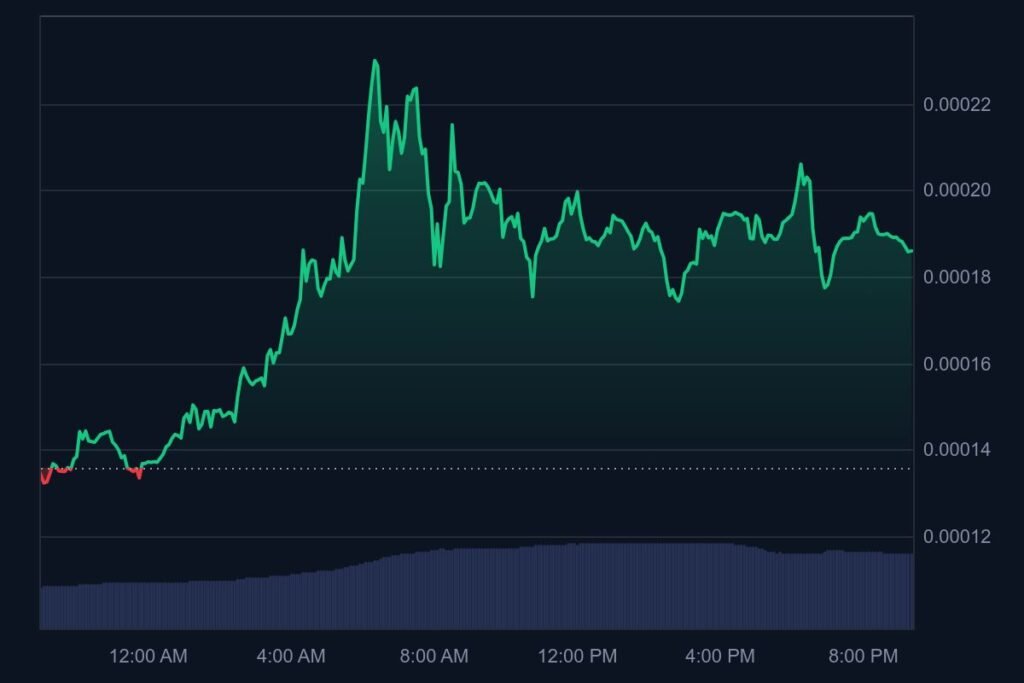
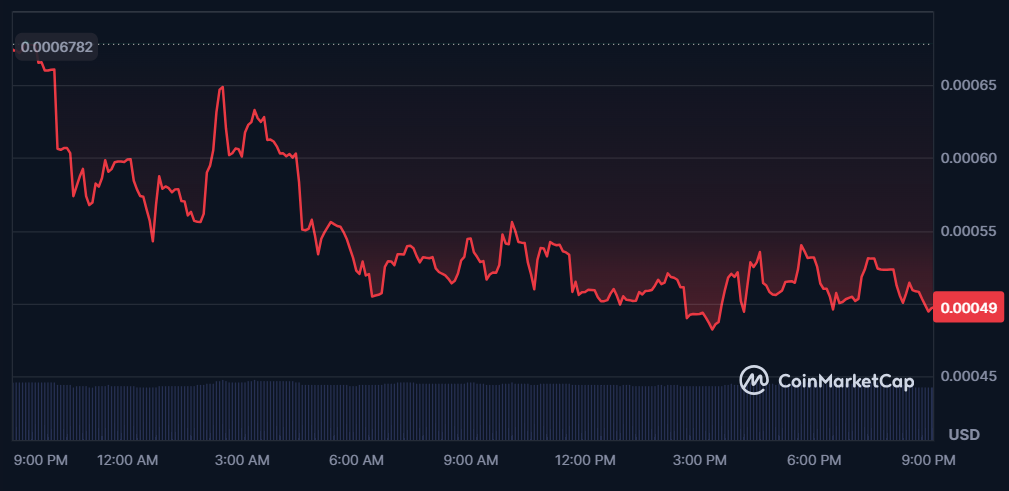
GOUT, a memecoin born on the BNB Chain, has just pulled off one of the most explosive rallies in recent crypto history — shooting up over 1000% in just seven days. Originally listed at $0.00000435, it hit a new all-time high of $0.00005458 before sliding slightly after an intense run-up.

gout

With a market cap of $6.67 million and a holder base nearing 140,000, GOUT recently smashed through a key resistance at $0.00003725. However, today’s 11% dip — following a 35% intra-day surge — suggests that a short-term correction may already be kicking in.

Despite the dip, trading volume jumped 64% to $3.87 million, reflecting heavy retail participation. The broader market sentiment is still in the “greed” zone (Fear & Greed Index: 61), and BTC dominance remains steady, indicating that GOUT’s breakout was largely coin-specific rather than market-wide.

But not all is bullish:
🔸 No recent updates or roadmap releases from the team
🔸 Top 10 wallets hold over 30% of the supply — sparking fears of a major dump
🔸 Memecoin volatility remains high

While the rally has turned heads, caution is advised as speculative frenzy meets sell-off risks. GOUT may be flying now, but gravity in memecoins always hits fast.

You might also like: 4 Sharp Solana Price Analysis Triggers Ready to Fire This Week

Federal Reserve Holds Rates Steady at 4.25%-4.50% — Bitcoin Slips Below $104K

Bitcoin Slips as Fed Holds Rates Steady — What’s Next for the Markets?

The U.S. Federal Reserve has decided to leave interest rates unchanged at 4.25%-4.50%, marking the sixth straight meeting without a hike. The decision reflects caution amid a cooling economy, but also dashed hopes of more aggressive rate cuts in the coming years.

bitcoin

The Fed’s updated outlook cuts 2025 GDP expectations to 1.4%, while raising the inflation forecast to 3% — a combo that signals slower growth and sticky prices. Their “dot plot” now projects just two rate cuts in 2025, fewer than previously anticipated, and only minor reductions into 2026 and 2027.

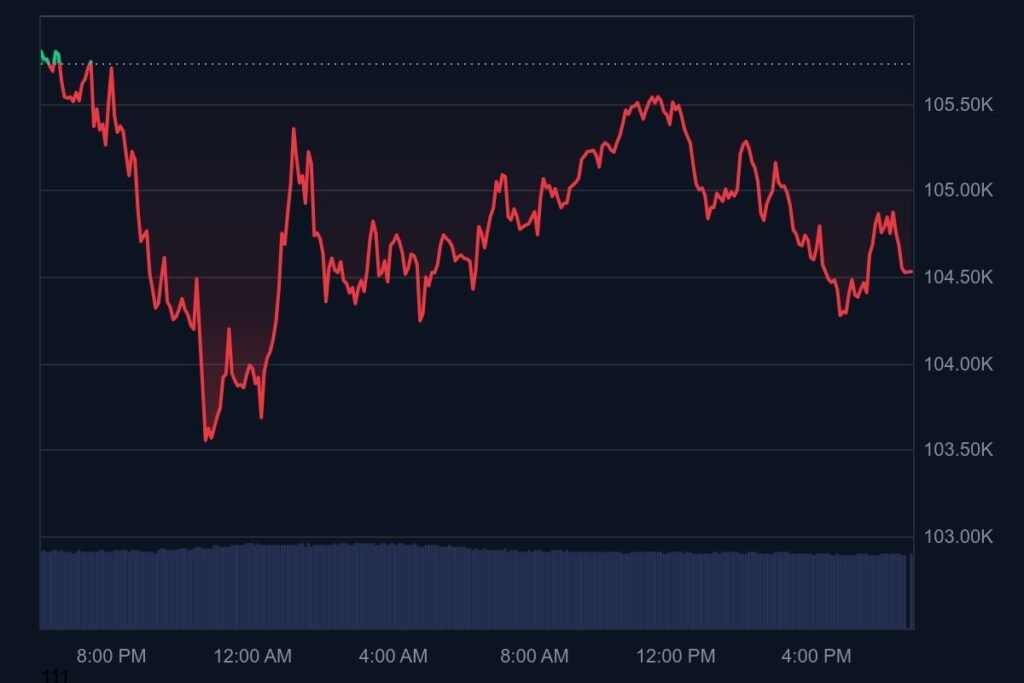
Bitcoin (BTC), which had been hovering above $104,500, slipped to $104,128 following the announcement. The drop came after the Fed signaled a more hawkish stance than markets were expecting.

Adding political heat, former President Donald Trump called Fed Chair Jerome Powell “stupid” just hours before the update, accusing him of over-tightening the economy.

One notable change: the Fed’s statement removed previous concerns about unemployment and inflation, noting that while uncertainty has “lessened,” it’s still a factor. 7 of the 19 Fed officials now expect no rate cuts at all this year, compared to 4 in March.

Despite the disagreement, the committee voted unanimously to hold rates steady, highlighting how the Fed remains cautious amid mixed economic signals.

For Bitcoin and broader markets, the outlook stays bumpy — but with less hope for cheap money anytime soon.

You might also like: 4 Bullish AVAX Price Analysis Signals You Need to Know Today

Is XRP Powering the FedNow System? Here’s the Truth Behind the Hype

XRP and FedNow: The Viral Rumor That’s Shaking Up Crypto Twitter

Crypto Twitter is on fire again — this time with a bold claim: that the U.S. Federal Reserve is using XRP for all transactions on its new FedNow instant payment system.

XRP

The buzz originated from a post on X (formerly Twitter), where a user confidently asserted that Ripple’s XRP is being used through FedNow, Faster Payments, and Volante’s cloud systems. The post, which declared the claim “100% confirmed,” quickly gained traction.

But here’s the reality check:
Yes, Volante Technologies—a FedNow pilot program participant—has integrated Ripple’s blockchain tech into its solutions for cross-border payments. However, there’s zero official confirmation that the Federal Reserve is directly using XRP for all FedNow transactions.

Volante’s infrastructure is versatile, supporting SWIFT, Ripple, ISO 20022, and even CBDC integrations. While this adds credibility to blockchain’s growing role in mainstream finance, equating that with the token being the exclusive or dominant token in FedNow is speculative at best.

With FedNow set to embrace the ISO 20022 messaging standard on July 14, blockchain-based solutions are indeed gaining momentum. But until there’s formal proof, claims that it powers all FedNow payments remain exaggerated.

So, is the token secretly running the Fed’s payments?
Not yet. But it’s definitely getting a seat at the table.

You might find interesting: Breaking ! 4 Strategic Bitcoin Price Analysis Signals Every Trader Should Track Today

Binance & OKX Dominate Proof-of-Reserves Game — Coinbase Still Ghosting Transparency

Proof-of-Reserves (PoR) is quickly becoming the crypto industry’s version of a trust badge — and some platforms are flashing it proudly, while others… not so much.

Binance

CryptoQuant, the on-chain data pros, just ranked five major exchanges based on transparency, using reserve ratios and monthly PoR reports as key metrics. The results? Binance and OKX are flexing accountability — Coinbase, not so much.

🔍 Here’s how the major players stack up:

🥇 Binance:

The big boss of crypto exchanges is leading the transparency charge. Binance consistently keeps its Reserve Ratio >100%, meaning it has more assets than user liabilities — that’s healthy AF. Plus, they’ve been clockwork-consistent with their monthly PoR drops. ✅

🥈 OKX:

Running right behind Binance, OKX also posts 100%+ reserve ratios and has matched Binance’s monthly PoR cadence. It’s clear they’re gunning for long-term trust. 🧾

🥉 Bybit:

Bybit’s doing fine with ratios between 105%-115%, and they just upgraded their PoR reports from every two months to monthly. Big W for transparency. 📈

🤷 Kraken:

Still above 100% but lagging in consistency. Since Nov 2022, only 4 reports have dropped. Feels more like a ghosted situationship than a reliable partner. 👻

🚨 Coinbase:

Here’s where things get weird. Zero Proof-of-Reserves reports. Yep, none. For a publicly traded giant in the U.S., that’s a serious L in terms of transparency and leadership. 🧊

As regulation tightens and users get smarter, PoR is no longer a “nice-to-have” — it’s a must-have. Binance and OKX are showing how it’s done. Meanwhile, Coinbase’s silence? It’s speaking volumes.

📌 TL;DR: Binance & OKX = 💯 Proof-of-Reserve kings. Coinbase? Still ghosting PoR reports like it’s 2019.

You might also like: Ethereum Whales Go Wild: 871K ETH Scooped in a Day — Biggest Grab Since 2017

Ethereum Whales Go Wild: 871K ETH Scooped in a Day — Biggest Grab Since 2017

Something big is brewing on the Ethereum front. On June 12, 2025, wallets holding between 1,000 and 10,000 ETH went on a buying spree — scooping up a jaw-dropping 871,000 ETH in a single day. That’s the biggest whale inflow since 2017, and it’s not a one-time event.

ethereum

For the past week, these heavy hitters have been adding 800K+ ETH daily, pushing their collective bag to over 14.3 million ETH — now accounting for 27% of all ETH in circulation, according to Glassnode.

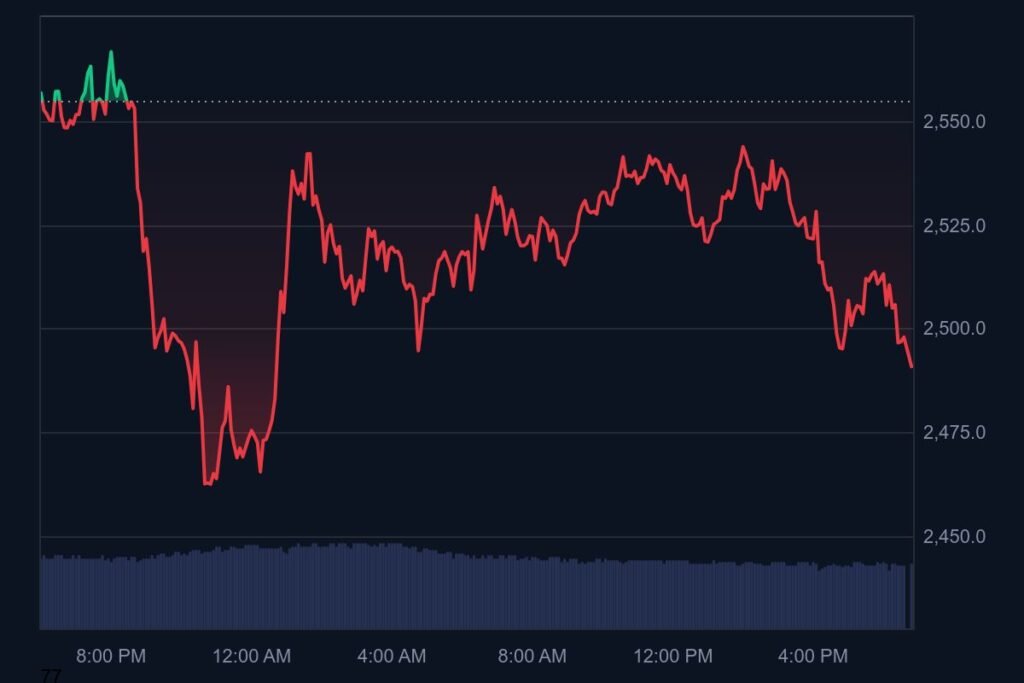
What’s wild is this is happening while Ethereum chills around $2,548, stuck under the $2,700 resistance zone. The charts are meh, the RSI’s at 54, and both bulls and bears are hesitating. But whales? They’re stacking. Hard.

Analysts say this might be whales gearing up for:

  • Big ETH upgrades
  • Ethereum’s growing role in real-world asset tokenization
  • And more institutions sliding into crypto

Also — Ethereum staking is booming. Over 35 million ETH is staked, and “accumulation addresses” (wallets that never sell) are now holding 22.8M ETH. Translation: long-term conviction is very real.

Meanwhile, Ethereum’s Layer 2s are buzzing too:

  • USDC transfers on Arbitrum & Optimism? Skyrocketing.
  • ENS whale activity? Up 313.5%.
  • Lending protocol whales? +203.8%.

TL;DR: Whales are making moves. Price isn’t pumping yet, but behavior like this tends to front-run bull runs. Eyes on ETH.

You might also like: Ripple XRP Burn Rumors Debunked: No 10% Supply Burn Confirmed

French Tech Firm The Blockchain Group Snaps Up $19M in BTC, HODLing 1,653 Bitcoin Now

In a bold move signaling growing corporate faith in Bitcoin, The Blockchain Group (TBG), a publicly traded company in France, has acquired 182 BTC worth €17M (~$19M) — bringing their total stash to 1,653 Bitcoin.

blockchain bitcoin

This isn’t a one-off. It’s part of their Bitcoin Treasury model, launched back in November 2024, aiming to convert surplus capital into digital gold. With BTC hovering at its weekly lows, the blockchain group saw a window to stack sats smartly — and their bet’s paying off. The company reports a 1,173.2% YTD yield and currently sits on roughly $173.56M worth of BTC.

They’re not alone. Following in MicroStrategy’s footsteps, the blockchain group and other firms are betting on Bitcoin as a hedge and long-term asset. Their plan? Use excess cash and financing via TOBAM’s €300M capital program to increase Bitcoin per share.

Even with the EU’s MiCA regulations kicking in, the French crypto space is still thriving. Giants like Ledger, Coinhouse, and now The Blockchain Group are doubling down on BTC — proving that regulation doesn’t mean retreat, it means playing smarter.

📌 TL;DR: TBG just turned a dip into a win. Institutions aren’t just watching — they’re buying.

You might also like: 4 Key Solana Price Analysis Clues That Could Spark a Major Upside

SharpLink Gaming Buys $462.9M in Ethereum, Becomes Largest Public ETH Holder After Foundation

In a groundbreaking move, SharpLink Gaming, Inc. has acquired 176,271 Ethereum (ETH) valued at approximately $462.9 million, making it the largest publicly traded Ethereum holder — second only to the Ethereum Foundation itself.

sharplink

A First for Nasdaq

SharpLink is now the first Nasdaq-listed company to adopt Ethereum as its primary treasury reserve asset. This strategic pivot marks a significant milestone for institutional crypto adoption, with Ethereum — not Bitcoin — at the center of a major corporate treasury plan.

How They Funded the ETH Move

The company raised funds in two phases:

  • A PIPE deal closed on May 26, 2025
  • A $1 billion ATM equity program, from May 30 to June 12, raising around $79 million

The majority of this capital has been deployed to purchase Ethereum.

ETH as Yield-Bearing Capital

Since June 2, SharpLink’s ETH-per-share has grown 11.8%. Over 95% of the ETH is staked or involved in liquid staking, allowing the company to earn staking rewards while contributing to the security of the Ethereum network.

Leadership Speaks

Rob Phythian, CEO of SharpLink Gaming, explained:

“Our decision to make ETH our primary treasury reserve asset reflects deep conviction in its role as programmable, yield-bearing digital capital.”

Joseph Lubin, Ethereum Co-Founder and Chairman of SharpLink, added:

“SharpLink’s bold ETH strategy marks a turning point in how institutions adopt Ethereum.”

Lubin emphasized that this move aligns with broader trends in U.S. regulation, including ongoing legislative efforts around stablecoins and digital assets.

You might also like: Fold Holdings Launches $250M Equity Facility to Fuel Bitcoin Treasury Strategy

Ripple XRP Burn Rumors Debunked: No 10% Supply Burn Confirmed

XRP Burn Rumors Are False: Here’s the Truth Behind the 10% Supply Speculation

The XRP community is currently grappling with viral rumors claiming Ripple will burn 10% of its total supply in the next 48 hours — an event that would supposedly spike the price to $125.98 overnight. The speculation originated from an X (formerly Twitter) post by a user named CryptoGeek, who also referenced a 2017 price jump linked to an alleged major burn.

XRP

But here’s the truth: No such its burn is happening, and the data proves it.

What’s Actually Happening?

According to verified data from XRP Scan, a total of approximately 13.98 million XRP has been burned — but that’s over the entire lifetime of the XRP Ledger. These burns happen due to tiny fees charged per transaction, not via a massive, manual burn event.

“The XRP burn mechanism is automatic and designed to prevent spam, not reduce supply at scale,” says XRPScan.

Given that XRP has a total supply of 100 billion tokens, burning 10 billion XRP would require a historic intervention — one that Ripple has not announced or supported.

Where Did the Rumor Start?

The confusion stems from a misinterpreted post by RealFi, which mentioned the burn of 10% of its own token supply on the Ledger. The mention of both “burn” and “XRP Ledger” in one sentence led to viral confusion, with users mistaking RealFi’s burn for a major XRP supply burn.

Did it Ever Experience a Big Burn?

No. The XRP Ledger does not support large manual burns the way some tokens like Shiba Inu or BNB do. XRP’s value dynamics are not dependent on supply-reduction events, and Ripple does not routinely buy back or destroy tokens.

The Math Doesn’t Add Up

To burn 10% of its supply (~10 billion tokens) would require over 700 times more XRP than has been burned in its entire operational history. At the current rate of automated fee-based burns, it would take centuries to achieve such a reduction.

You might also like: Fact Check: Did Elon Musk Really Offer to Buy $50 Billion Worth?

Exit mobile version